Loading…
Recovery guide
Is whole-body cryotherapy worth it? — A cost-benefit look
Whole-body cryotherapy costs several times more per minute than a cold plunge, and the research behind it is thinner than most people assume. Whether it's worth it depends on what you're actually buying: the physiology, or the three-minute, no-wet-hair convenience. The math below separates the two.
A cryotherapy session typically runs several times what a cold plunge costs per minute, and it's priced like boutique fitness — walk-in rates, discounted packages, membership tiers that assume you'll keep coming back. That's a reasonable way to price convenience. It's a shakier way to price physiology, because a lot of what cryo gets credit for is borrowed from cold-water research, not proven in its own right.
So the more useful question isn't "does cryotherapy work" — cold exposure, broadly, does plenty of things worth wanting. The question is whether the premium you're paying over a cold plunge buys you a stronger effect, or just a faster, drier way to get a comparable one. That distinction is the whole guide.
What a cryo session actually is (and how it differs from cold water)
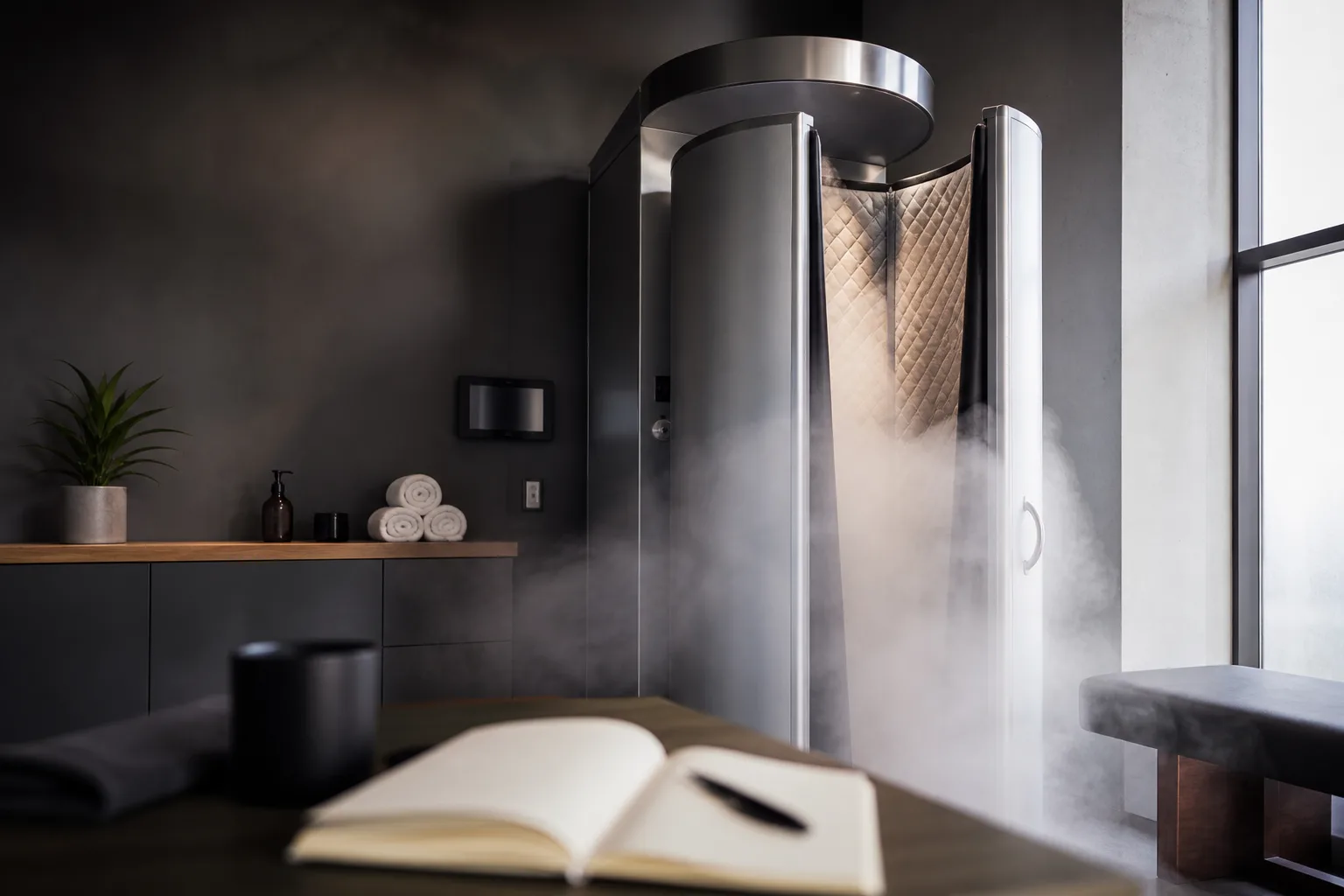
Strip away the branding and a cryotherapy session is simple: you stand in a walk-in chamber or a single-person tank, wearing gloves, socks, and not much else, while it fills with air chilled far past anything you'd tolerate in liquid form. The session lasts two to four minutes, not a marketing flourish, but a real limit, since air that cold isn't safe to stand in much longer, and the exposure doesn't need to be longer to register.
The reason cryo and cold-plunge get treated as interchangeable, and shouldn't be, comes down to basic physics. Water pulls heat out of your body far more efficiently than air does, because water molecules pack tightly against skin and carry heat away fast. A plunge at a comparatively unremarkable water temperature stresses your system aggressively for that reason. Cryo's air, even though the number on the display is far more extreme, is a much weaker conductor, so the stimulus is real but shallower and shorter-acting than the thermostat reading implies. A colder number on the wall doesn't automatically mean a stronger hit to your physiology; it means a different, and smaller, way of delivering one.
What you're paying for
Cryo studios price sessions and memberships the way boutique gyms do: a per-visit walk-in rate, discounted multi-session packages, and often a higher membership tier for people who want to go several times a week. What that actually costs varies a lot by city and by whether you're buying single sessions or a membership. Check the operator's current booking flow and compare nearby studios directly; a national median can hide the local price you will actually pay.
What's safe to say without a specific figure: cryo is reliably one of the pricier line items on a studio's menu. Chambers are expensive to buy, house, staff, and, for nitrogen-cooled units, keep supplied, and those costs get passed to the person standing inside for three minutes.
What the evidence supports at that price
The part cryo marketing tends to skip: most of the well-studied "cold exposure helps with X" research is cold-water-immersion research, not whole-body cryotherapy research. When cryo gets compared directly against simpler cold methods, it doesn't come out ahead. A 2022 systematic review in the Journal of Clinical Medicine, pooling whole-body and partial-body cryotherapy trials, found the two produce statistically similar effects on maximal strength, jump performance, soreness, and creatine kinase — a walk-in chamber and a smaller, cheaper partial-body unit land in the same neighborhood — and the review's authors graded the underlying evidence very low to low quality.[1] A separate 2021 review in Sports covering 12 studies of cryo used before exercise called the performance answer "currently unclear with a paucity of good quality research available," pointing to chamber protocols spanning −10 °C to −170 °C and to the impossibility of blinding a participant to a cryotherapy chamber.[2]
There's a more encouraging, if narrow, signal on inflammation: a 15-person pilot cohort found each additional session in the prior month associated with a 0.14 mg/L fall in hs-CRP, a blood marker of systemic inflammation.[3] But it is a pilot cohort with no control group, and one small study isn't a verdict; it's a lead worth watching, not a reason to buy a package today.
None of that means cryotherapy does nothing. It means the case for whole-body cryo specifically, as distinct from cold exposure generally, is thinner than the price tag implies; there's no strong controlled-trial evidence that a cryo chamber beats a cold plunge or a simpler cold method at the things people buy cryo for. It's also worth treating skeptically any claim that goes beyond recovery and comfort — immune-system boosts, metabolism spikes, disease treatment — since those medical-sounding claims run well ahead of anything in the research above.
When cryo is the right call
None of this makes cryo a bad buy; it makes it a specific one. It earns its price when you're genuinely short on time and can't build a habit around a plunge's longer soak-and-dry routine; three minutes fully clothed and back to your day is a real advantage. It earns its price if cold water itself is the barrier — the gasp reflex, the wet hair, the towel-off — and dry cold gets you to actually show up. It's a reasonable stack for athletes layering recovery sessions into a hard training block, where doing the session consistently matters more than which flavor of cold you chose. And sometimes the plainest answer holds: you just like it more, and you'll keep coming back. Adherence is a real variable in any recovery habit: a modality you'll actually repeat beats a theoretically superior one you quit after three weeks.
When to plunge instead
Choose the plunge when budget is the constraint. Cold-water immersion is the better-evidenced cold-exposure option, and it's available at a fraction of cryo's per-minute cost, down to free, with a cold shower or a backyard tub. Choose it if you want the longer, more gradual immersion some people find genuinely calming rather than the brief, sharp shock of a chamber door opening and closing. And choose it if your specific goal is one the research has actually studied in cold water rather than cold air — for a full side-by-side on how a plunge and a cryo chamber stack up feature by feature, see our head-to-head comparison of cryotherapy and cold plunge.
The short version: if you're optimizing for proven physiology per dollar, the plunge wins. If you're optimizing for a three-minute routine you'll actually keep, cryo is a legitimate way to buy that.
Frequently asked questions
Is cryotherapy better than an ice bath or cold plunge?
Not according to the current evidence. The 2022 pooled review comparing whole-body and partial-body cryotherapy found statistically similar effects on strength, soreness, and muscle-damage markers, suggesting a chamber doesn't outperform simpler cold methods like a plunge, and the authors rated that evidence very low to low quality under GRADE, with the included trials averaging 4.3 out of 10 on the PEDro scale. Cryo wins on speed and staying dry, not on proven physiological superiority.
How much does whole-body cryotherapy cost per session?
It varies by city and by whether you're buying single sessions or a membership, but it's reliably one of the pricier items on a studio's menu because chambers are expensive to buy, staff, and run. Check each operator's current booking flow and compare nearby studios directly rather than relying on a national estimate.
How often do you need to do cryotherapy for it to work?
There's no single proven frequency: the research is too thin and too inconsistent across protocols to name one. In practice, people chasing a recovery or mood boost tend to go a few times a week, and athletes in a heavy training block sometimes go closer to daily. Picking a cadence you'll actually sustain matters more than hitting a specific number.
Does cryotherapy help with weight loss?
No good evidence supports that. A two-to-four-minute cold-air exposure is too brief to meaningfully move metabolism or body composition, and none of the controlled research on whole-body cryotherapy backs a weight-loss claim. Treat that particular marketing angle with real skepticism.
Is whole-body cryotherapy safe?
For most healthy adults, yes, when a studio caps session time and has staff who screen for contraindications first. It's not appropriate for people with uncontrolled heart conditions, Raynaud's or other cold-sensitivity disorders, pregnancy, or open wounds or skin conditions in the treated area; anyone unsure should get medical clearance first, the same as before a cold plunge.
References
- Different Cryotherapy Modalities Demonstrate Similar Effects on Muscle Performance, Soreness, and Damage in Healthy Individuals and Athletes: A Systematic Review with Metanalysis · Journal of Clinical Medicine · 2022 · limitedWhole-body and partial-body chambers produced statistically similar effects on maximal strength, jump performance, soreness and creatine kinase. The authors graded that evidence very low to low quality, with included trials averaging 4.3 of 10 on the PEDro scale.
- Pre-Exercise Whole- or Partial-Body Cryotherapy Exposure to Improve Physical Performance: A Systematic Review · Sports (Basel) · 2021 · not-establishedTwelve studies of cryotherapy used before exercise. The authors concluded the effect is 'currently unclear with a paucity of good quality research available', with blinding impossible and chamber protocols spanning −10 °C to −170 °C.
- Whole-Body Cryotherapy Reduces Systemic Inflammation in Healthy Adults: Pilot Cohort Study · Interactive Journal of Medical Research · 2024 · emergingFifteen adults, no control group. Each session in the month before a blood draw was associated with a 0.14 mg/L fall in hs-CRP (p<0.01); the authors name the small sample and missing control arm as the study's main limits.
What changed
- Updated August 7, 2026: Named the journals and years in the prose, replaced 'a modest drop in a blood marker' with the figure the pilot reported, and moved the inline citations out of the route's presentation registry into this file.
Keep exploring
Related modalities
Related goals
Related guides
Put this guide into practice
Explore local studios or build a goal-based recovery routine.