Loading…
Operator guide
Recovery studio startup cost — how to build the number for your space
Nobody can quote you a credible all-in figure for opening a recovery studio, and the ranges circulating online trace back to each other rather than to any survey or filing. What can be built is your number: four variables set the total, and a standard cost method turns them into a budget you can take to a lender.
If you are pricing out a recovery studio, the first thing worth knowing is that the confident dollar ranges you will find are not measurements. They circulate between operator blogs, each citing the last, and none of them traces back to a survey, a lender dataset, or a set of filings. We published one of those ranges here for a year. It is gone, and this guide will not replace it with another.
What is buildable is your own number, and it is not hard. Four variables move almost all of it: how many square feet you are leasing, how many modalities you are running, whether the space already carries the plumbing and electrical service your equipment needs, and how many months of operating cost you can cover before memberships carry the rent. Pin those down and the budget stops being a guess.
Build the budget the way a lender expects to see it
The Small Business Administration's method is the one a bank, an SBA-backed lender, and your own accountant will all recognise, and it starts by splitting the budget in two. One-time costs are the things you buy once to open the doors: major equipment, permits, licences, fees, design work. Monthly costs are what recurs: salaries, rent, utilities. The SBA is explicit that you should count at least one year of monthly expenses, but counting five years is ideal[1], and that you should throw a little extra, say 10%, into your break-even analysis to cover miscellaneous expenses that you can't predict.[1]
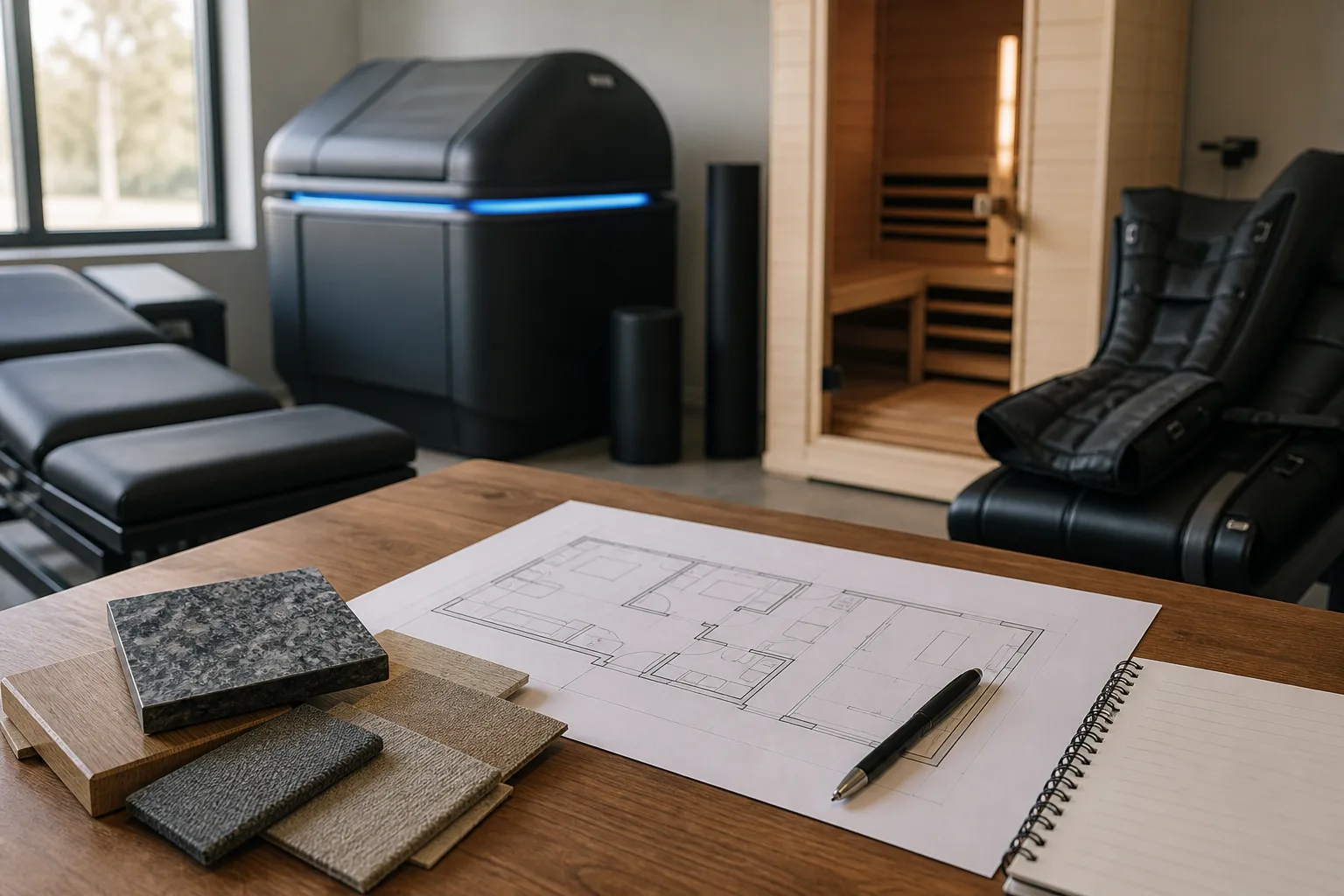
For a recovery studio the one-time column is unusually infrastructure-heavy, which is why equipment quotes mislead. A cold plunge needs water supply, drainage and filtration. A sauna needs high-amperage electrical and dedicated exhaust. Both want dehumidification the retail shell almost certainly does not have. Price the room, not the chamber.
- One-time: equipment, per-station finish-out, drainage and waterproofing, electrical and HVAC upgrades, restrooms and changing areas, architectural drawings, permits and inspections, signage and branding.
- One-time: deposits that hit before revenue does, including first and last month rent, security deposit, utility deposits and insurance binders.
- Monthly: rent, payroll, insurance, booking and membership software, water treatment and consumables, utilities, loan service.
- Monthly, counted separately: the operating runway you will draw down while membership revenue ramps.
The four variables that decide your total
Square footage sets rent and build-out surface area at the same time, so every extra room costs twice: more drainage, more ventilation, more finish. Modality count multiplies equipment spend and the infrastructure behind it, and the infrastructure is the larger multiplier.
The shell question is the single biggest swing between two studios with identical equipment lists. Taking over a former spa, gym or med-spa that already carries commercial plumbing, upgraded electrical service and compliant restrooms removes the most expensive and least visible part of the build. A raw retail or warehouse shell means paying to bring all of it in. Location tier compounds this: a high-rent corridor costs more in lease and in build-out standard than a light-industrial space, though it may repay the difference in walk-in demand.
For what studios in a given market actually charge once open, audit current operator websites and booking flows in that market. Record the date, offer terms, and modality behind each observed price, then use that local comparison in your revenue model instead of an assumed national price point.
Runway: the line that gets underbudgeted
The common failure is not a bad build. It is opening with enough cash to build and not enough to survive the ramp. Membership revenue does not arrive the day the door unlocks; it accumulates as the founding cohort grows and word of mouth compounds, while rent, payroll, utilities and loan payments stay due in full.
Carry the runway as a separate, untouchable line, sized in months of full operating expense, and follow the SBA's counsel to count at least a year of monthly costs when you build it. Studios that pre-sell founding memberships before opening fund part of that runway and, more usefully, test demand before the lease is signed rather than after.
Financing, and what the paperwork will ask you
Most independents fund an open with some blend of owner capital, an SBA-backed loan, equipment financing or leasing, and pre-sold memberships. Equipment financing keeps a large share of capex off the opening cash requirement and matches payments to the revenue the equipment generates, at the cost of interest. Leasing versus buying is a cash-flow-versus-ownership decision rather than a pure cost one.
If you are weighing a franchise instead, read the disclosure document before anything else. The SBA's guidance is blunt about the asymmetry: a franchisee gains brand recognition and marketing but has to follow rules from the larger brand, generally needs to meet sales quotas and buy specified equipment and inventory, and the contract between the two parties usually benefits the franchisor more than the franchisee.[3] That is not an argument against franchising; it is an argument for reading Item 19 and hiring an attorney and an accountant before signing.
Cost control that does not cost you members
- Prioritise a space with inherited infrastructure over a prime raw shell. It is the cheapest square footage you will ever find.
- Phase modalities. Open with the two that carry the concept and add the third when revenue supports it, rather than financing all three up front.
- Negotiate a tenant-improvement allowance into the lease so the landlord funds part of the build-out.
- Model break-even the SBA way before signing: total the benefits and the costs over the same period, then subtract[2], and add the 10% margin for what you did not foresee.
For studio operators
Run a recovery studio?
List your studio free so people searching for these modalities can find you. When you want your menu turned into plans your team runs every shift, request a studio fit check.
Frequently asked questions
How much does it cost to open a recovery studio?
There is no verified industry figure, and this guide deliberately does not publish a range. The credible answer is a budget you build: split one-time costs from monthly costs, count at least a year of the monthly column, add about 10% for the unpredictable, and let your square footage, modality count, shell condition and runway set the total.
Why won't you quote a startup cost range?
Because the ranges in circulation, including the one this page used to carry, cite each other rather than any survey, lender dataset or set of filings. Publishing a number we cannot trace would make the page more quotable and less true. Where Praxium does have measured figures, such as listed session prices by modality, they appear with the number of studios behind them and the date they were observed.
What's the most underbudgeted cost when opening a recovery studio?
Operating runway. Operators budget carefully for build-out and equipment, then open without enough cash to cover the months before membership revenue ramps. After that, the infrastructure behind equipment (water, drainage, electrical upgrades, ventilation) is the next most commonly missed line, because people price the chamber and forget what it takes to run one.
Should I lease or buy the equipment?
It depends on your cash position. Buying outright is cheaper over the equipment's life and gives you an asset, but front-loads a large share of opening capex. Financing or leasing keeps that cash available for runway and matches the payment to the revenue the equipment produces, at the cost of interest. Many operators buy their signature modality and finance the rest to protect opening cash.
Is a franchise cheaper to open than an independent studio?
Not reliably, and the comparison is not only about cost. The SBA notes that a franchisee generally needs to meet sales quotas and buy specified equipment and inventory, and that the contract usually benefits the franchisor. Read the disclosure document, look hard at the earnings claims section, and price the ongoing royalty alongside the opening cost rather than against it.
References
- Calculate your startup costs · U.S. Small Business AdministrationMethod, not a number: split one-time costs (equipment, permits, licences, design) from monthly costs (salaries, rent, utilities), 'count at least one year of monthly expenses, but counting five years is ideal', and add roughly 10% for what you cannot predict.
- Manage your finances · U.S. Small Business AdministrationFrames the balance sheet as 'the foundation of managing your finances' and sets out a cost-benefit method: total benefits and costs over the same period, then subtract. Contrasts accrual accounting ('more complex to manage') with cash accounting ('limits predictive value').
- Buy an existing business or franchise · U.S. Small Business AdministrationSays a franchisee gains brand recognition and marketing but 'ha[s] to follow rules from the larger brand', generally needs to meet sales quotas and buy specified equipment and inventory, and warns that 'the contract between the two parties usually benefits the franchisor more than the franchisee'.
What changed
- Updated August 7, 2026: Removed the $75k–$350k range, the $12k-per-suite unit cost and the 6–18 month break-even. All three were recycled across three sibling guides with no source behind any of them. The page now teaches the SBA's costing method and points at directory-measured prices instead.
Keep exploring
Related guides
Turn recovery expertise into a better member experience
See how Praxium helps studios and recovery brands turn complex choices into clear protocols.