Conditions

Psoriasisand Recovery Modalities

Psoriasis is a chronic, immune-driven skin condition, and no wellness modality substitutes for dermatologist-guided care. Some modalities have early or mixed evidence for supporting symptoms as complements to standard treatment.

Updated July 20264 modalities graded7 sources
plaque psoriasispsoriasis vulgaris

This page provides general wellness information, not medical advice, diagnosis, or treatment. Modalities described are complementary options with varying and often limited evidence, not cures. Medical phototherapy (UVB) is distinct from consumer red-light or sauna devices. Always consult a qualified healthcare professional before starting any new therapy for psoriasis.

01The condition

What psoriasis is

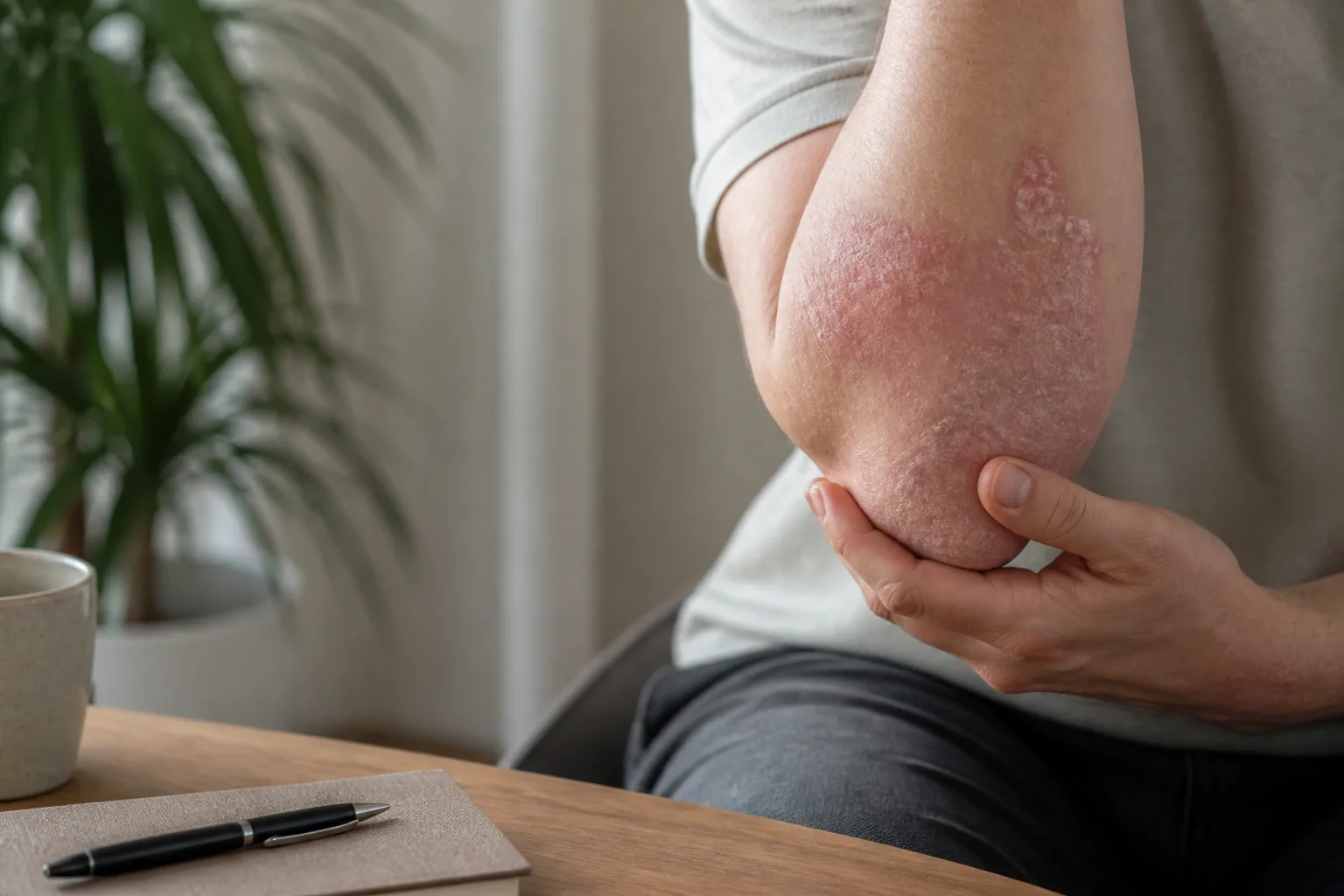
Psoriasis is a chronic, immune-mediated inflammatory condition that speeds up the skin-cell life cycle, producing raised, scaly plaques that can itch, crack, and sometimes affect the joints. It has no cure, and standard care ranges from topical treatments and moisturizers to medical phototherapy (notably narrowband UVB) and systemic or biologic medications. A handful of recovery modalities have preliminary or mixed evidence for supporting psoriasis-prone skin, but the strongest phototherapy evidence is for medical UVB, which differs from consumer red-light devices. These modalities may be worth discussing with a clinician as complements to, not replacements for, standard treatment.

Common symptoms

  • Raised plaques of thickened skin covered with silvery or white scale
  • Discolored patches that may appear red, pink, purple, or gray depending on skin tone
  • Dry, cracked skin that may itch, burn, or bleed
  • Pitted, thickened, or crumbling nails
  • Joint pain or stiffness (possible psoriatic arthritis)
  • Flares triggered by stress, infection, skin injury, or certain medications

02The evidence

What might help, graded honestly

Each modality below is graded on the strength of its research for this condition specifically — strongest first, with what every cited study actually found.

Red light therapy

Mixed findings

Why it might help

Red and near-infrared light (photobiomodulation) penetrates skin and may modulate mitochondrial activity and inflammatory signaling in plaques. This differs from medical narrowband UVB phototherapy, which is the established, dermatologist-delivered light treatment for psoriasis.

What the research shows

Evidence for red/near-infrared light in psoriasis is mixed and early: some small studies of combined red plus near-infrared LED report meaningful clearance, while a randomized comparison found red light less effective than blue and plateauing quickly. Medical narrowband UVB, not consumer red light, remains the established phototherapy.

Sources & what they found (2)

Float therapy

Mixed findings

Why it might help

Float tanks use magnesium-rich (Epsom) salt water; mineral-rich salt-water bathing (balneotherapy), as studied at the Dead Sea, may soften scale and reduce inflammation, often as part of combined salt-plus-light (balneophototherapy) protocols.

What the research shows

Mineral salt-water bathing has mixed evidence in psoriasis: a systematic review found Dead Sea balneotherapy especially effective, yet a randomized trial found adding salt soaks to narrowband UVB gave no clinically important extra benefit. Float tanks use a comparable magnesium salt solution but haven't themselves been studied for psoriasis, so this is an indirect, hedged extrapolation.

Sources & what they found (2)

Hyperbaric oxygen

Anecdotal only

Why it might help

Breathing pressurized oxygen raises tissue oxygen levels and is thought to exert anti-inflammatory and immune-modulating effects, which some authors propose could influence psoriatic plaques and arthritis.

What the research shows

Evidence for hyperbaric oxygen in psoriasis is limited to case reports describing improvement; the authors themselves caution that because psoriasis can remit spontaneously, these reports cannot establish benefit, and controlled trials are lacking.

Source & what it found

Infrared sauna

Not established

Why it might help

Infrared saunas deliver radiant heat and induce sweating; marketed skin benefits for psoriasis lack a validated mechanism, and this differs fundamentally from the ultraviolet wavelengths used in medical phototherapy.

What the research shows

There is no clinical evidence that infrared saunas benefit psoriasis, and their dermatologic risks are poorly characterized; any perceived benefit should not be confused with medically supervised UV phototherapy, which is an entirely different treatment.

Source & what it found

Grades run from established (consistent human trials) down to not established(no good evidence) and reflect research quality for this condition specifically — not whether a modality “works” in general.

03Safety first

Check before you book

When these modalities can be risky

  • Hyperbaric oxygen is contraindicated with an untreated pneumothorax and requires medical screening for lung disease, ear/sinus problems, and certain medications; it must be delivered in a supervised clinical setting
  • High-salt float water can sting or burn cracked, fissured, or bleeding plaques and open skin; avoid immersion on broken skin
  • Sauna heat carries the usual cautions for uncontrolled hypertension, cardiovascular disease, and pregnancy, and heat can occasionally aggravate psoriasis in some people
  • Consumer red-light devices are not a substitute for medically supervised UVB phototherapy; photosensitizing medications also warrant caution with any light exposure
  • None of these modalities should replace prescribed topical, phototherapy, or systemic/biologic treatment for psoriasis or psoriatic arthritis

When to see a doctor

See a doctor or dermatologist if plaques are spreading, painful, cracking or bleeding, not responding to over-the-counter care, or affecting large areas, and seek prompt care for joint pain, swelling, or stiffness (possible psoriatic arthritis) or for sudden widespread redness and skin shedding, which can signal serious forms such as erythrodermic or pustular psoriasis needing urgent evaluation.

04Where to try it

Where to try red light therapy near you

Studios offering red light therapy — the modality with the strongest evidence grade on this page (mixed findings). If any caution above applies to you, talk to your clinician first.

DOC's

5 modalities

Wall, NJ

5.0· 1 reviews

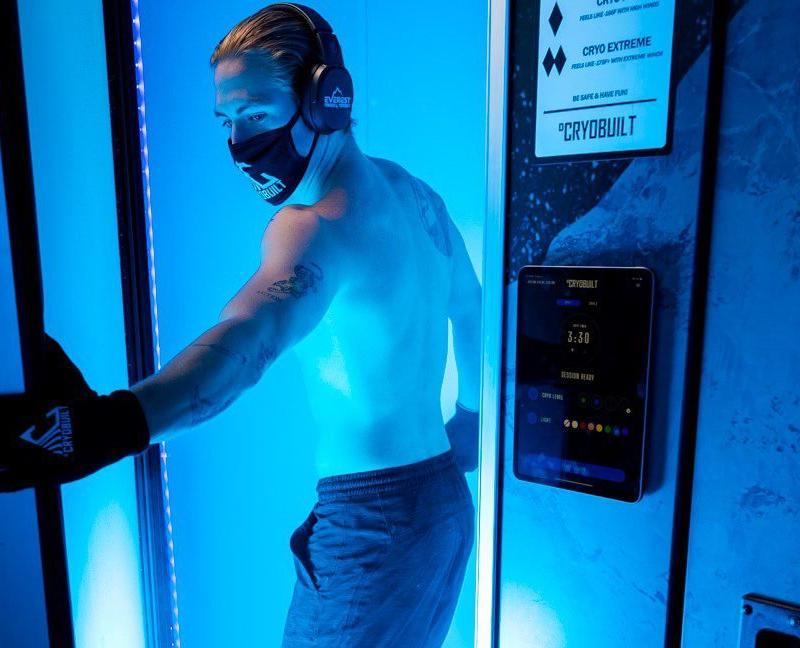
DOC's is a Wall, NJ recovery facility offering innovative holistic therapies for athletic performance and life extension — whole-body cryotherapy, hyperbaric oxygen, Normatec compression, Sunlighten infrared sauna, and Theralight red light.

CryotherapyHyperbaric oxygenCompression therapyInfrared sauna+1
Website ↗
Next Health West Hollywood — recovery studio in West Hollywood, CA

West Hollywood, CA

5.0· 2250 reviews

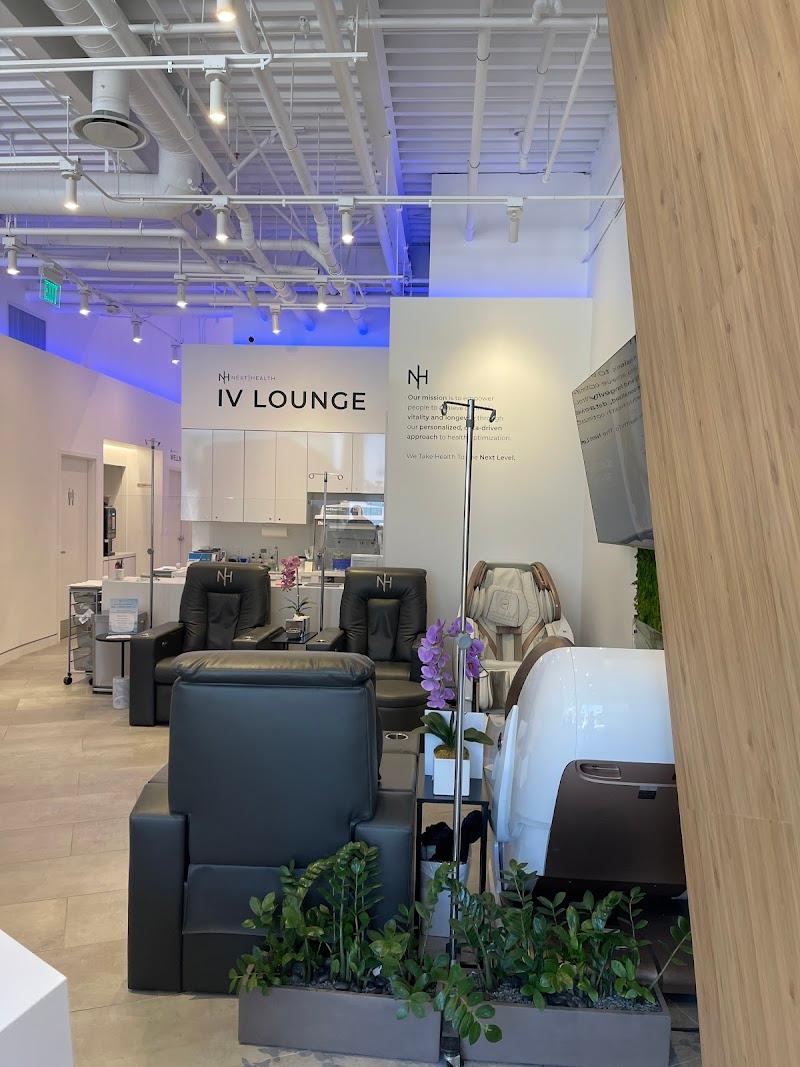
West Hollywood wellness center for NAD+, IV drips, hormone therapy, infrared therapy, hyperbaric oxygen, EBOO ozone & plasma exchange on the Sunset Strip.

CryotherapyHyperbaric oxygenInfrared saunaRed light therapy+1
Website ↗
Next Health — recovery studio in Los Angeles, CA

Next Health

4 modalities

Los Angeles, CA

5.0· 1493 reviews

Wellness center in Century City with IV drips, NAD+ infusions, hormone optimization, hyperbaric oxygen, infrared therapy, EBOO ozone & plasma exchange.

CryotherapyIV & hydrationHyperbaric oxygenRed light therapy
Website ↗

Next Health

5 modalities

New York, NY

5.0· 1217 reviews

Advanced wellness & longevity center on Madison Ave

CryotherapyIV & hydrationHyperbaric oxygenInfrared sauna+1
Website ↗
Restore Hyper Wellness - Houston, TX - West University — recovery studio in Houston, TX

Houston, TX

5.0· 1163 reviews

Personalized, science-backed recovery therapies in Houston West University including whole-body cryotherapy, red light therapy, infrared sauna, compression, IV drip therapy, and mild hyperbaric oxygen therapy to decrease inflammation, optimize sleep, and boost energy.

CryotherapyRed light therapyInfrared saunaCompression therapy+2
Website ↗

Kansas City, MO

5.0· 1047 reviews

Full-service hyper-wellness studio in Kansas City's Zona Rosa offering cryotherapy, infrared sauna, IV drips, red light, compression, and mild hyperbaric oxygen therapy.

CryotherapyLocalized cryotherapyInfrared saunaRed light therapy+3
Website ↗

05Questions

Frequently asked questions

Does red light therapy work for psoriasis?

The evidence is mixed and early. Some small studies of combined red and near-infrared LED report meaningful plaque clearance, while a randomized trial found red light less effective than blue and quick to plateau. Importantly, the established medical light treatment is narrowband UVB delivered by a dermatologist, which is not the same as a consumer red-light device.

Are salt baths or float tanks helpful for psoriasis?

Mineral salt-water bathing has mixed evidence: a systematic review found Dead Sea balneotherapy especially effective, but a randomized trial found adding salt soaks to UVB gave little extra benefit. Float tanks use a similar magnesium salt solution but haven't been studied directly for psoriasis, and salt water can sting cracked plaques, so discuss it with your clinician.

Can hyperbaric oxygen therapy treat psoriasis?

Only case reports describe improvement, and the authors themselves caution that psoriasis can clear on its own, so these reports cannot prove benefit. There are no controlled trials establishing hyperbaric oxygen for psoriasis, and it should only ever be used under medical supervision.

Is an infrared sauna the same as UV light therapy for psoriasis?

No. Medical phototherapy uses ultraviolet (UVB) light under supervision and is an established treatment; infrared saunas use heat-producing infrared light and have no clinical evidence for psoriasis. Don't substitute a sauna for prescribed phototherapy.

Can these modalities replace my psoriasis medication?

No. Psoriasis is a chronic immune-mediated condition, and these are complementary options with limited or mixed evidence. Standard care (topicals, medical phototherapy, and systemic or biologic drugs when indicated) remains the foundation. Always talk to your dermatologist before adding anything new.

Turn the evidence into a plan

Take the 60-second Fit Check and get an evidence-aware starting point — which modalities to look at first, and which to run past your doctor.

Wellness information, not medical advice. Recovery modalities do not treat or cure any condition and never replace care from a qualified clinician.