Conditions

Lymphedema: Recovery Modalities and the Evidence

Lymphedema is chronic swelling caused by a compromised lymphatic system. Compression is the established cornerstone of management, and a few recovery modalities have been studied as adjuncts alongside medical care.

Updated July 20263 modalities graded5 sources

This page is wellness information for general education and is not medical advice, diagnosis, or treatment. Lymphedema is a chronic medical condition; always consult a qualified healthcare professional or certified lymphedema therapist before starting, stopping, or combining any therapy.

01The condition

What lymphedema is

Lymphedema is long-term swelling, most often in an arm or leg, that develops when lymph fluid cannot drain normally, frequently after cancer surgery, lymph-node removal, or radiation. It is a chronic condition managed rather than cured, and the established backbone of care is complete decongestive therapy, which combines compression, manual lymphatic drainage, skin care, and exercise. Some recovery modalities have been studied as possible adjuncts, but they are complements to supervised medical care, not replacements for it. Anyone with new or worsening swelling should be evaluated by a clinician before starting any modality.

Common symptoms

  • Persistent swelling in an arm, leg, hand, or foot
  • A heavy, full, or tight feeling in the affected limb
  • Skin that feels thickened, firm, or less flexible
  • Reduced range of motion in a nearby joint
  • Clothing, jewelry, or shoes feeling tighter on one side
  • Recurring aching, tingling, or discomfort in the limb

02The evidence

What might help, graded honestly

Each modality below is graded on the strength of its research for this condition specifically — strongest first, with what every cited study actually found.

Compression therapy

Established evidence

Why it might help

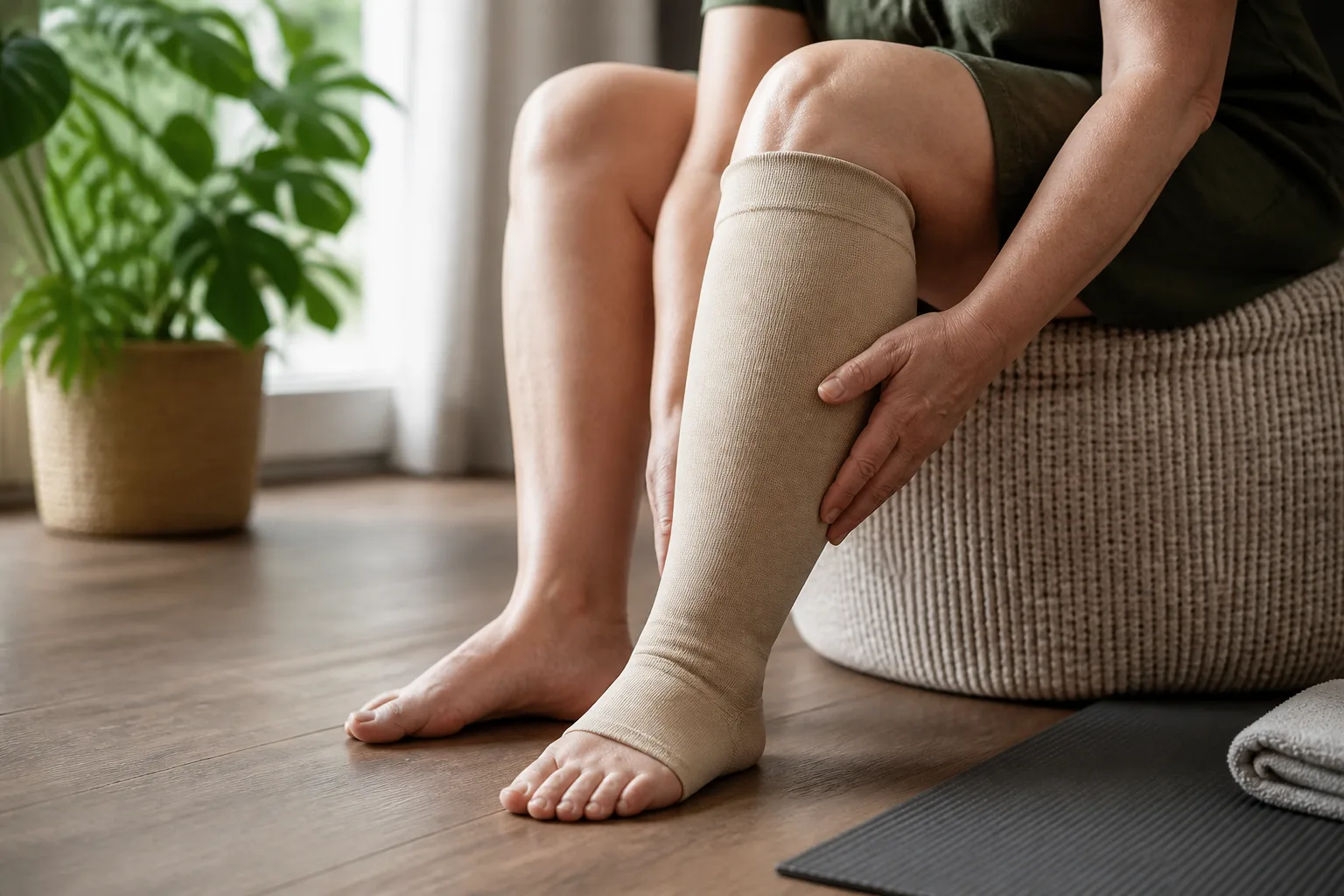
Graduated compression garments and multilayer bandaging apply external pressure that helps move lymph fluid out of the limb and limits its reaccumulation, and they are a core component of complete decongestive therapy.

What the research shows

Compression garments and bandaging are an established, standard-of-care component of lymphedema management rather than an optional add-on. They are typically prescribed and fitted as part of a supervised complete decongestive therapy program.

Source & what it found

Red light therapy

Emerging evidence

Why it might help

Low-level laser therapy (photobiomodulation) delivers specific wavelengths of light to tissue and is thought to influence inflammation and fibrosis, which some studies associate with reduced limb volume in breast-cancer-related lymphedema.

What the research shows

Small-to-moderate-quality trials suggest low-level laser (photobiomodulation) therapy may be associated with short-term reductions in limb volume and pain in breast-cancer-related lymphedema versus sham. The number of trials is limited and it should be considered an experimental adjunct discussed with a lymphedema specialist.

Source & what it found

Lymphatic compression

Mixed findings

Why it might help

Intermittent pneumatic compression devices use an inflatable sleeve that cycles on-and-off pressure to encourage lymph fluid to move out of the swollen limb, often used as an adjunct to complete decongestive therapy.

What the research shows

Evidence for intermittent pneumatic (lymphatic) compression is mixed: meta-analysis suggests it may help reduce the incidence of breast-cancer-related lymphedema when used early, while its benefit for already-established lymphedema is inconsistent and appears to depend on protocol. It is generally positioned as an adjunct to, not a substitute for, supervised decongestive therapy.

Sources & what they found (3)

Grades run from established (consistent human trials) down to not established(no good evidence) and reflect research quality for this condition specifically — not whether a modality “works” in general.

03Safety first

Check before you book

When these modalities can be risky

  • Active skin infection (cellulitis) in the affected limb is a reason to pause compression and seek medical care rather than continue
  • Known or suspected acute deep vein thrombosis (DVT) is a contraindication to pneumatic compression until cleared by a clinician
  • Uncontrolled or decompensated congestive heart failure, because moving large fluid volumes can strain the heart
  • Significant peripheral arterial disease or reduced limb circulation, where compression may cause harm
  • Broken, ulcerated, or numb (neuropathic) skin over the compression area
  • Any new modality should be introduced only after review by your lymphedema therapist, not self-started

When to see a doctor

See a healthcare provider promptly for new, sudden, or rapidly worsening swelling, or for warmth, redness, fever, or skin that is hot and tender, which can signal a skin infection (cellulitis) that needs urgent treatment. Any first evaluation of unexplained limb swelling should be done by a clinician.

04Where to try it

Where to try compression therapy near you

Studios offering compression therapy — the modality with the strongest evidence grade on this page (established evidence). If any caution above applies to you, talk to your clinician first.

DOC's

5 modalities

Wall, NJ

5.0· 1 reviews

DOC's is a Wall, NJ recovery facility offering innovative holistic therapies for athletic performance and life extension — whole-body cryotherapy, hyperbaric oxygen, Normatec compression, Sunlighten infrared sauna, and Theralight red light.

CryotherapyHyperbaric oxygenCompression therapyInfrared sauna+1
Website ↗
Restore Hyper Wellness - Houston, TX - West University — recovery studio in Houston, TX

Houston, TX

5.0· 1163 reviews

Personalized, science-backed recovery therapies in Houston West University including whole-body cryotherapy, red light therapy, infrared sauna, compression, IV drip therapy, and mild hyperbaric oxygen therapy to decrease inflammation, optimize sleep, and boost energy.

CryotherapyRed light therapyInfrared saunaCompression therapy+2
Website ↗

Kansas City, MO

5.0· 1047 reviews

Full-service hyper-wellness studio in Kansas City's Zona Rosa offering cryotherapy, infrared sauna, IV drips, red light, compression, and mild hyperbaric oxygen therapy.

CryotherapyLocalized cryotherapyInfrared saunaRed light therapy+3
Website ↗

Lancaster, PA

5.0· 759 reviews

Recovery & Wellness Optimization Center

Compression therapyCryotherapyHyperbaric oxygenInfrared sauna+2
Website ↗

Pinecrest, FL

5.0· 698 reviews

Advanced Recovery & Wellness

CryotherapyInfrared saunaRed light therapyCompression therapy+2
Website ↗
iCRYO Jacksonville — recovery studio in St Johns, FL

iCRYO Jacksonville

7 modalities

St Johns, FL

5.0· 628 reviews

iCRYO Jacksonville is a recovery and wellness studio offering whole-body cryotherapy, red light therapy, infrared sauna, compression therapy and IV drip infusions.

CryotherapyLocalized cryotherapyRed light therapyInfrared sauna+3
Website ↗

05Questions

Frequently asked questions

Can compression sleeves or pumps cure lymphedema?

No. Lymphedema is managed rather than cured. Compression garments and bandaging are an established, core part of daily management that helps control swelling, and pneumatic pumps are sometimes added as an adjunct, but they work alongside ongoing medical care rather than eliminating the condition.

Is a pneumatic compression pump better than a compression garment?

They are not really substitutes. Garments and bandaging are standard-of-care and worn regularly, while intermittent pneumatic compression is typically an adjunct with mixed evidence, most convincing for prevention and less consistent for established lymphedema. Which combination fits you is a decision for your lymphedema therapist.

Does red-light or laser therapy help lymphedema?

Some small-to-moderate-quality studies suggest low-level laser (photobiomodulation) therapy may be associated with short-term reductions in limb volume and pain in breast-cancer-related lymphedema, but the evidence base is limited. It is best viewed as an experimental adjunct to discuss with a specialist, not a primary treatment.

Are cold plunges or saunas safe if I have lymphedema?

There isn't strong evidence supporting whole-body heat or cold immersion for lymphedema, and extreme heat in particular is often discouraged because it can increase swelling. Because responses vary and skin integrity matters, check with your lymphedema clinician before trying temperature-based modalities.

When should compression therapy be paused?

Compression should generally be paused, and a clinician contacted, if you develop signs of infection such as spreading redness, warmth, or fever, or if you suspect a blood clot. Compression is also not appropriate over broken or infected skin or in certain circulatory and heart conditions.

Turn the evidence into a plan

Take the 60-second Fit Check and get an evidence-aware starting point — which modalities to look at first, and which to run past your doctor.

Wellness information, not medical advice. Recovery modalities do not treat or cure any condition and never replace care from a qualified clinician.