compress-k11: Medical IPC reduces lymphedema limb volume — Grade A Strong [MEDICAL-IPC]
Strong evidence· Points toward a benefit
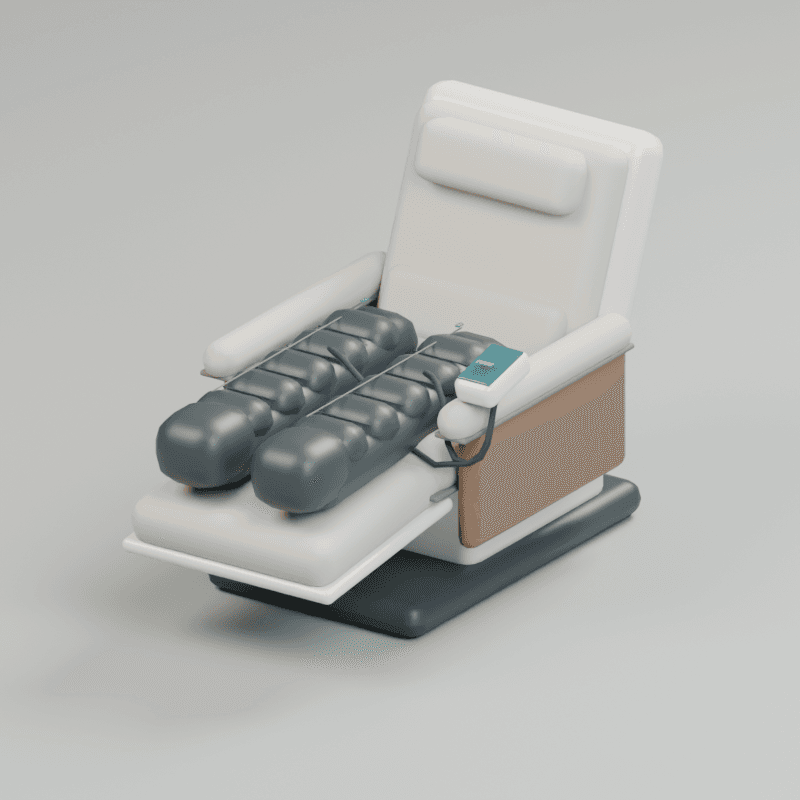
Medical IPC significantly reduces limb volume/circumference in lymphedema; 7/7 RCTs in a 2024 systematic review showed statistically significant reduction, with additive benefit when combined with complete decongestive therapy (CDT). MEDICAL USE.
Studied in Cancer survivors with lymphedema; primary lymphedemaclinical studies
How strong the finding is
Systematic review 7 RCTs (JVS Venous 2026 S2213333X26000600); meta-analysis PMC11399013 (2024). Source: S2213333X26000600. Dossier claim id compress-k11. Category MEDICAL-IPC.
How it may work
Rhythmic graduated compression moves interstitial fluid into lymphatic capillaries.
What complicates this
Medical lymphedema evidence (A) substantially stronger than wellness edema data (k9, B).
Safety notes
Clinically supervised; medical use.
A meta-analysis of seven randomized trials found that adding an intermittent pneumatic compression pump to routine breast-cancer-related
Moderate evidence· Mixed findings
A meta-analysis of seven randomized trials found that adding an intermittent pneumatic compression pump to routine breast-cancer-related lymphedema management did not produce a statistically significant improvement over routine management alone.
Studied in Adults with breast-cancer-related lymphedema (287 patients pooled across 7 RCTs)clinical studies
How it may work
Cyclic pneumatic pressure is intended to mechanically propel interstitial fluid into functioning lymphatic and venous channels on top of whatever routine compression and decongestive care patients already receive.
What complicates this
The reviewers concluded the pump 'could alleviate lymphedema, but no significant difference between routine management of lymphedema with or without pneumatic pump existed,' and stated plainly that current trials fail to show the effectiveness of adding IPC to routine BCRL management.
Safety notes
Screen for suspected DVT, active infection, or cardiac decompensation before any pneumatic compression device; findings here concern added benefit, not device safety.
Intermittent pneumatic compression significantly reduces incident breast-cancer-related lymphedema when used preventively after surgery
Moderate evidence· Points toward a benefit
Across 14 RCTs (1,397 patients), preventive intermittent pneumatic compression after breast-cancer surgery significantly reduced lymphedema incidence (RR 0.36, 95% CI 0.22–0.58) and improved affected-limb extension function (SMD 2.77, 95% CI 0.41–5.12) versus standard care without IPC.
Studied in Adults post breast-cancer surgery involving axillary intervention, lymphedema-free at baseline — a prevention population, distinct from members with already-established chronic lymphedema.clinical studies
How strong the finding is
Larger and more recent synthesis (14 RCTs, 1,397 patients) than the existing approved 7-trial meta-analysis on this same modality; effect is concentrated in prevention rather than treatment of chronic disease.
How it may work
Regular compression cycling supports lymphatic and venous return during the early post-surgical window, before secondary lymphedema becomes established.
What complicates this
No significant effect was found on subjective patient-reported symptoms or on movement of joints outside the treated limb; benefit was much smaller or absent once lymphedema was already chronic/established.
Safety notes
Requires medical/oncology clearance after cancer surgery; IPC is an adjunct, not a substitute for oncologic follow-up. Existing contraindications for uncleared active malignancy and uncleared lymphedema apply.
Dosing: lower pressure (≤40 mmHg) sustained beyond 2 weeks is associated with better lymphedema-prevention outcomes from intermittent pneumatic compression
Moderate evidence· Points toward a benefit
In post-surgical breast-cancer patients without baseline lymphedema, intermittent pneumatic compression protocols using pressures ≤40 mmHg and treatment duration greater than 2 weeks are associated with better lymphedema-prevention outcomes than higher-pressure or shorter-duration protocols.
Studied in Adults post breast-cancer surgery (axillary node dissection/sentinel node biopsy), lymphedema-free at baseline, used preventively rather than for established lymphedema. Wellness/recovery framing: general post-surgical or post-immobility limb-swelling prevention, not disease treatment.clinical studies
How strong the finding is
Derived from subgroup analysis across 14 pooled RCTs (1,397 patients), not from a dedicated head-to-head dose-finding RCT; treat the pressure/duration thresholds as association-level findings.
How it may work
Lower sleeve pressures combined with longer sustained wear are thought to support lymphatic and venous return without exceeding tissue pressure tolerance or provoking the rebound/reflux effects seen with higher-pressure, shorter-duration protocols.
What complicates this
IPC was most effective for prevention; the same synthesis found no significant effect on subjective patient-reported symptoms or on joint movement outside the treated limb, and limited efficacy once lymphedema was already chronic/established.
Safety notes
Pressures above 40 mmHg did not show added benefit in this population and prolonged high-pressure wear carries plausible soft-tissue risk (see the compartment-syndrome safety claim for this modality). Standard IPC screening for DVT, PAD, and skin integrity still applies regardless of pressure setting.
In a small pilot trial of adults with diabetes-related lower-limb lymphedema, adding active pneumatic compression to manual lymphatic
Limited evidence· Mixed findings
In a small pilot trial of adults with diabetes-related lower-limb lymphedema, adding active pneumatic compression to manual lymphatic drainage improved every measured outcome within the active group, but only joint range of motion and quality-of-life scores separated significantly from the sham (very-low-pressure) comparison group; limb-volume reduction did not show a significant between-group difference.
Studied in Adults with type 2 diabetes and stage II-IV lower-limb lymphedema (pilot RCT, n=30)clinical studies
How it may work
Therapeutic-pressure pneumatic compression (60-80 mmHg) is intended to add mechanical lymph propulsion beyond what manual drainage alone provides, in a population where lymphatic and microvascular function is already affected by diabetes.
What complicates this
The sham-controlled design is a genuine strength, but the swelling outcome itself did not separate the groups. The abstract reports significant within-group improvement across all outcomes in the active arm, while between-group significance at one month is limited to passive range of motion at the hip, knee, and ankle and to the EQ-VAS and EQ-5D-3L quality-of-life indices. The trial is also small (n=30), single-center, and one month in duration, so durability and generalizability beyond a diabetic lower-limb population are not established.
Safety notes
Small pilot study; results need replication before generalizing outside supervised clinical care for diabetes-related lower-limb lymphedema.
Rare but serious adverse event: bilateral compartment syndrome reported after combined intermittent pneumatic compression and compression stocking use
Limited evidence· Points toward a benefit
A published case report documents bilateral lower-limb compartment syndrome after combined perioperative use of intermittent pneumatic compression and graduated compression stockings, requiring emergency fasciotomy.
Studied in Adults using combined IPC plus graduated compression stockings on the same limb, particularly during prolonged or immobile use (documented case: perioperative plastic-surgery patient). Relevant to any recovery/wellness user layering IPC over another tight compression garment.clinical studies
How strong the finding is
Single published case report (n=1); true incidence is unknown and likely rare, but the case establishes a plausible mechanism and a concrete screening/protocol implication for combined-modality sessions. Graded 'limited' to reflect the case-report design, not extrapolated as if it were population-level data.
How it may work
Concurrent compression from an inflating IPC sleeve applied over a graduated compression stocking may transiently raise limb tissue pressure past the threshold for adequate compartment perfusion, especially with prolonged, continuous, or immobile wear.
What complicates this
The broader IPC RCT literature generally reports IPC as low-risk in screened, ambulatory populations used alone; this event occurred in a higher-risk perioperative combined-compression context, not typical single-modality wellness-studio use.
Safety notes
Compartment syndrome is a medical emergency; the reported case required fasciotomy (recovery was uneventful afterward). Studio protocols should avoid layering an IPC sleeve directly over a tight compression garment, limit continuous session length, and stop immediately and seek medical care for escalating limb pain, tightness, tingling, or numbness during or after a session.