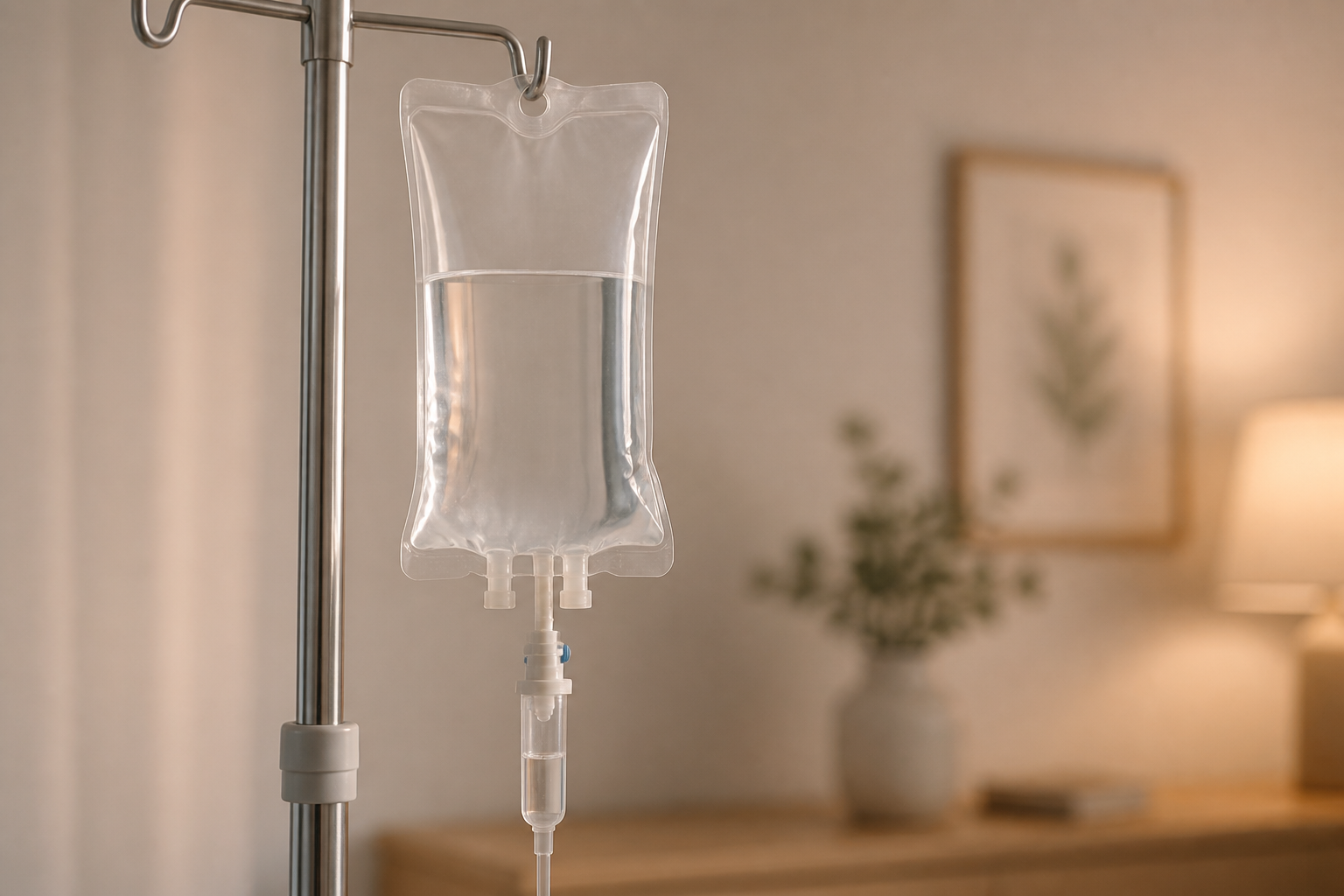
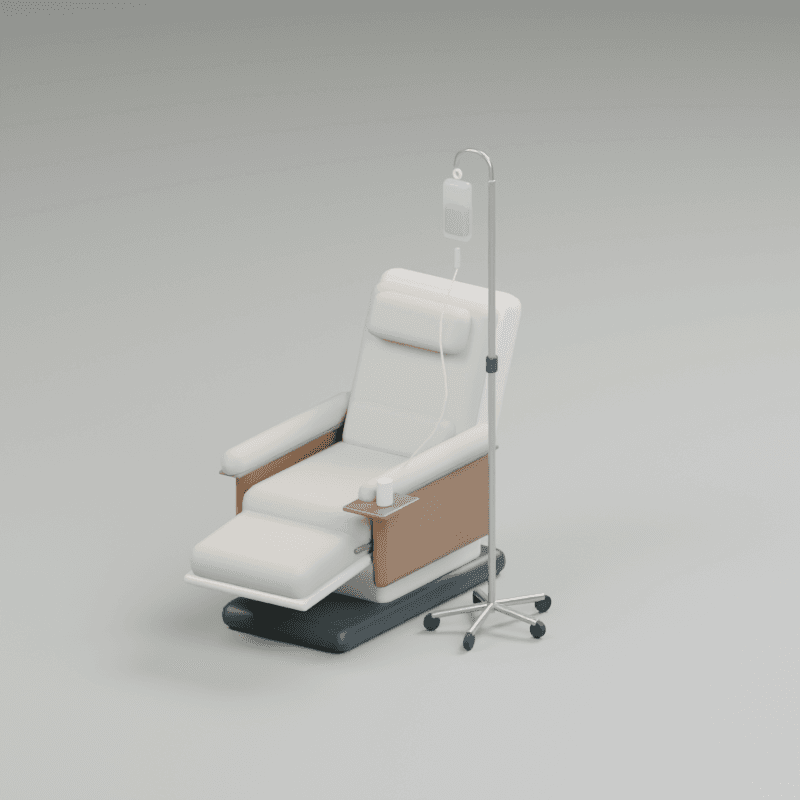
A NAD+ IV infusion delivers nicotinamide adenine dinucleotide, a coenzyme every cell uses in energy metabolism and DNA repair, directly into a vein at a med spa, longevity clinic, or wellness practice. The defining feature of the visit is how long it takes. Unlike a 30-minute vitamin drip, a NAD+ infusion is deliberately run slowly, commonly 2 to 4 hours for a standard dose, because infusing it faster reliably produces chest tightness, abdominal cramping, nausea, and flushing. The slow drip is not a premium-experience choice; it is the standard way of managing a well-documented, rate-dependent side effect.
Studios market NAD+ infusions for energy, brain fog, athletic recovery, longevity, and support during addiction recovery. The biological reasoning behind those claims is real: NAD+ is genuinely central to cellular energy production, and tissue NAD+ levels do decline with age. What is missing is the step that connects that biology to an outcome you would notice. There are no published placebo-controlled trials showing that intravenous NAD+ improves energy, cognition, aging markers, or recovery in healthy adults. Listing this modality here reflects that studios offer it, not an endorsement of the claims attached to it.
Product quality is a separate issue worth understanding on its own terms, independent of whether the therapy works. There is no FDA-approved injectable NAD+ product, so what goes into the bag is compounded. In November 2024 the FDA publicly reminded compounders that some were using food-grade NAD+ powder to make intravenous products, and noted it had received adverse event reports of severe chills, shaking, vomiting, and fatigue, some requiring medical treatment, in a pattern consistent with excessive endotoxin levels. Where the product was compounded, and by whom, is a fair and important question to ask before booking.
How nad+ iv infusion works
Evidence for intravenous NAD+ is emerging and, for wellness outcomes specifically, essentially absent at the level of controlled trials. What exists is a small pharmacokinetic literature, one retrospective tolerability study, an uncontrolled case series, and a much larger body of research on oral NAD+ precursors that does not transfer to the intravenous route.
The pharmacokinetic picture comes from a 2019 pilot study in Frontiers in Aging Neuroscience. Eleven healthy men (8 receiving NAD+, 3 saline control) were given 750 mg of NAD+ intravenously over six hours at 3 µmol/min. Plasma NAD+ did not rise at all for the first two hours, the authors concluded NAD+ was being rapidly and completely removed from plasma over that window, before climbing to roughly 398% above baseline at six hours, with parallel increases in nicotinamide and other metabolites and a large rise in urinary excretion. This establishes that the infusion changes blood chemistry. It does not establish that anything clinically meaningful follows: the study measured no health outcomes at all, and the sample was small and male-only.
Tolerability is the best-documented part of the category, and the findings are not flattering. A 2026 retrospective pilot in Frontiers in Aging reviewed 14 clients at a commercial wellness clinic who received either 500 mg NAD+ or 500 mg nicotinamide riboside intravenously over four consecutive days. All six NAD+ clients reported moderate to severe abdominal cramping, diarrhea, nausea, vomiting, increased heart rate, throat pain, and chest pressure during infusion, with symptoms resolving once the infusion finished. NAD+ infusions also ran far longer (97 ± 56 minutes versus 37 ± 13 minutes for nicotinamide riboside). The study was retrospective, very small, had no placebo arm, and was conducted by researchers employed by the commercial entity, all reasons to read the head-to-head comparison cautiously, but the side-effect pattern matches what clinics describe independently.
The addiction-recovery claim rests on weaker ground still. The most-cited human report is a 2022 series of 50 substance-use-disorder cases treated with NAD+ and enkephalinase inhibition. A case series has no control group and no blinding, so it cannot separate any treatment effect from the natural course of detoxification, from the surrounding treatment program, or from expectation. Intravenous NAD+ is not an established treatment for substance use disorder.
Finally, the randomized evidence people cite for NAD+ is generally about oral precursors, not infusions. A 2024 systematic review in Cureus pooled 10 randomized controlled trials of oral nicotinamide mononucleotide covering 437 participants at 150–1,200 mg/day for 4 to 12 weeks. It reported non-significantly improved physical performance overall, with scattered significant findings for gait speed, six-minute walking distance at higher doses (600–900 mg), and perceived health scores, alongside a reassuring safety profile (adverse events in 8.2% of participants, none serious). Heterogeneity was high enough that the authors could not perform a meta-analysis. That is a modest and mixed result, for a different molecule, by a different route, it is not evidence for intravenous NAD+.