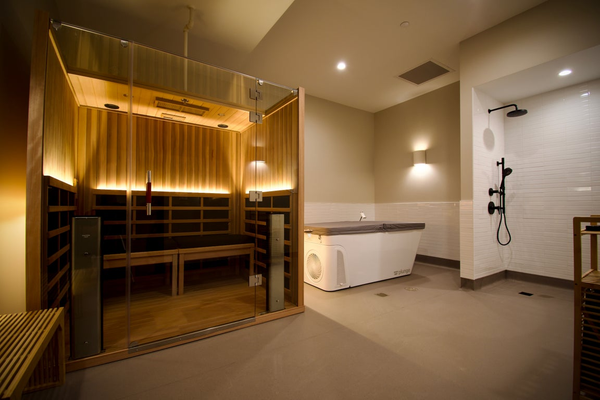
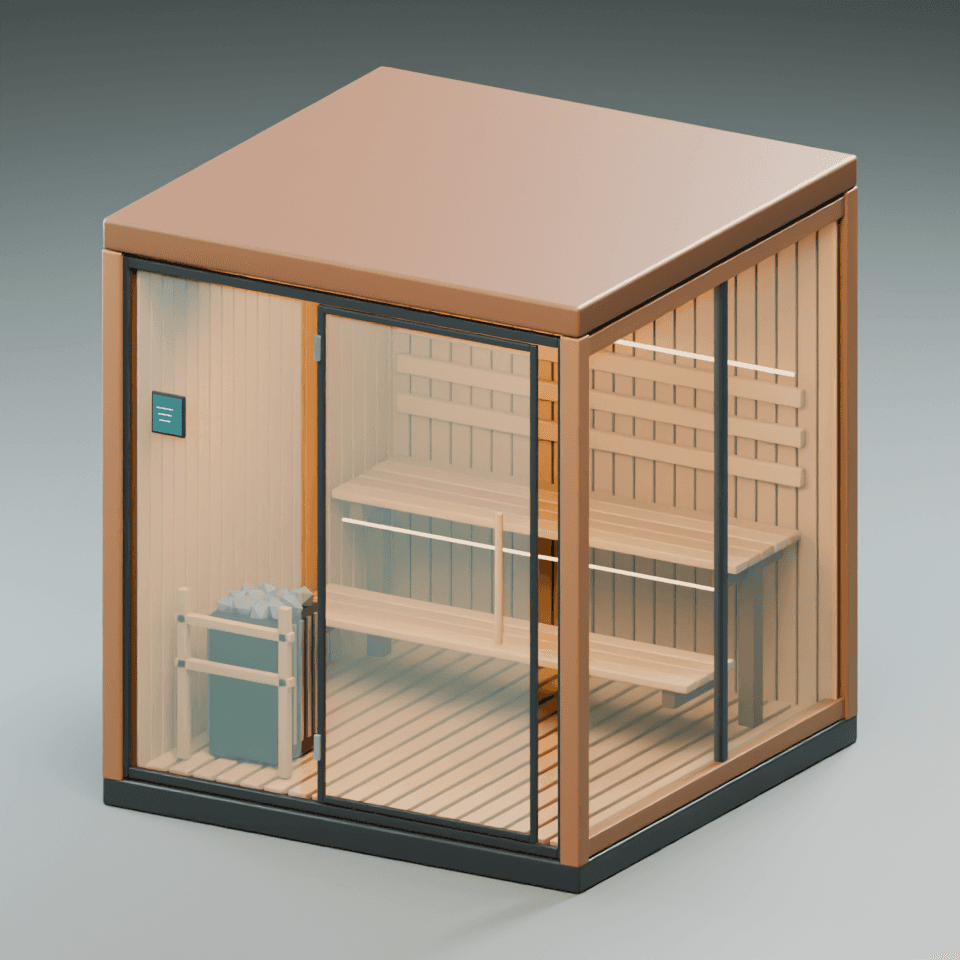
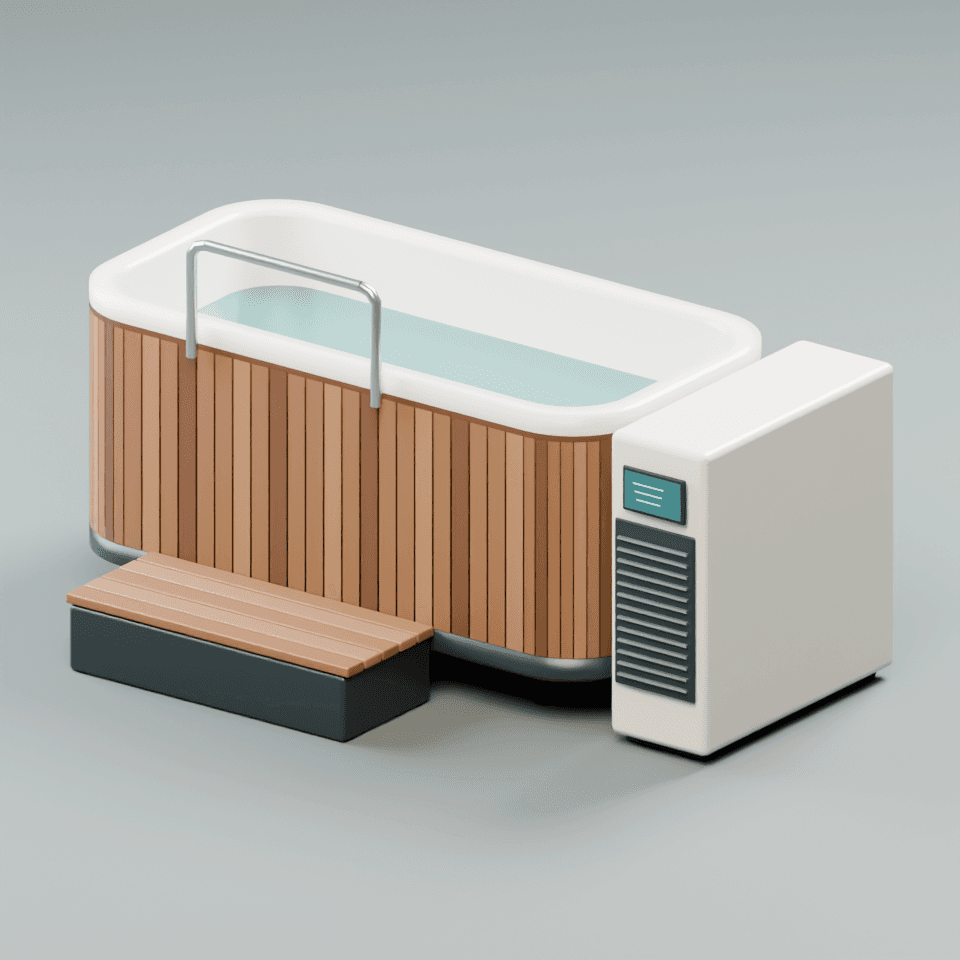
Sauna and cold exposure sequencing is the Nordic bathing pattern: a round of whole-body heat in a traditional or infrared sauna, then a short whole-body cold exposure in a plunge tub, cold shower, or open water, repeated for two to four rounds with rest and rehydration between. It is close kin to contrast therapy and the two labels are often used interchangeably, but the sequencing name is anchored to sauna culture specifically: the heat load comes from a sauna rather than a hot tub or steam room, and the cold phase is an immersion or dousing rather than a warm-water bath. Studios build the circuit around a cedar or infrared cabin paired with a plunge tub, and many run it as a guided group session with a host calling the rounds. In the US it appears mostly inside bathhouses, Nordic-style spas, recovery lounges, social sauna clubs and full-service gyms rather than as a standalone storefront, and it has grown quickly alongside the mainstreaming of sauna and cold-plunge content. The framing that matters most for anyone new to it: heat and cold each have their own research literature, and the sequence stacks both loads into one session, so the combined cardiovascular demand is greater than either half alone.
How sauna / cold exposure sequencing (cross-modality) works
Each half of the sequence has a well-described acute response. Sauna heat raises skin and core temperature, increases heart rate, raises cardiac output and shifts blood flow toward the skin while blood pressure falls. Cold immersion does close to the opposite: an immediate cold-shock response of gasping, rapid breathing, peripheral vasoconstriction, tachycardia and a blood-pressure spike, followed by a large rise in circulating noradrenaline. Alternating the two is often described as a vascular pumping effect, and it is the plausible mechanism most often cited for the sequence. Plausible is the right word: the mechanism is described in review literature rather than demonstrated as the cause of any specific outcome.
Direct research on the sequence as a discrete practice is thin but real. A 2026 crossover trial in 16 healthy adults compared two 15-minute 85°C sauna rounds cooled by 23°C air against the same rounds cooled with a 90-second whole-body immersion at 20°C; the immersion condition ended with lower core temperature (37.55°C vs 38.03°C), lower heart rate (108 vs 125 bpm) and lower skin temperature, and participants tolerated the second sauna round more comfortably. In other words, the cold phase reduced the thermal strain of repeated heat rather than adding to it. A study of 37 men, including participants with stable chronic heart failure and coronary artery disease, found that two 80°C sauna rounds followed by 12°C immersion produced haemodynamic changes broadly similar to healthy controls without excessive adrenergic activation, in a supervised research setting. A 2025 study of 28 young normotensive women running three 10-minute 90°C rounds with 15°C cooling found systolic pressure rose in the first round and then attenuated round to round, diastolic pressure fell, and heart rate rose by roughly 40 bpm in every heat phase.
What the evidence does not yet support is more interesting than what it does. No randomised trial has compared heat-first against cold-first ordering, or tested where to end the sequence, for any health outcome, so the familiar sauna-then-plunge convention and the advice to finish on cold are tradition and practitioner opinion rather than trial results. A 2018 systematic review of 40 dry-sauna studies concluded there is insufficient evidence to recommend a specific temperature, frequency or duration for any specific health outcome. On the cold side, a 2025 meta-analysis of 11 randomised trials found reduced stress at 12 hours after immersion but not immediately or at 24 to 48 hours, a modest sleep-quality advantage over passive recovery, no difference in mood, and an acute rise in inflammatory markers, with the authors flagging few trials, small samples and almost no female participants. Separately, pooled data indicate that cold immersion taken immediately after resistance training may attenuate muscle-size gains, which is a timing question rather than a reason to avoid the circuit. Detox, fat-loss and disease-prevention claims for the sequence are not supported.