Loading…
Float therapy · for sleep
Float therapy for sleep: why floating mimics the brain state just before sleep
Float therapy doesn't just relax you. It shifts the brain toward the hypnagogic state, the threshold between wakefulness and sleep that eludes many poor sleepers. Here's what makes floatation worth trying for sleep, how to use it, and how strong the evidence actually is.
279
studios listed
215
cities
During a float session, brain wave activity tends to progress from beta waves (normal waking consciousness) through alpha waves (relaxed wakefulness) and toward theta waves, the same brainwave pattern that characterizes the hypnagogic state: the drift between waking and sleep. Many people who sleep poorly can't reach theta easily, because the cognitive and physical activation that prevents sleep onset is difficult to quiet. The float environment removes most of those inputs mechanically.
The body-temperature solution eliminates thermal perception. The darkness eliminates visual processing. The sound isolation removes auditory inputs. Weightlessness removes proprioceptive signals from muscles and joints. What remains is the brain itself, with dramatically fewer external signals to process, and it tends to do much of what it would do as you fall asleep.
Cortisol, stress, and what the studies actually measured
Floatation REST research has looked closely at cortisol, the stress hormone that, when elevated in the evening, works against the melatonin rise needed for normal sleep onset. The findings are inconsistent: some studies report reductions after a session and others do not, and effect sizes are modest. Praxium's evidence records grade the broader relaxation response as moderate (reductions in blood pressure and self-reported stress replicate across the Swedish flotation-REST program) while flagging cortisol findings specifically as inconsistent. So the honest version is that floating reliably produces a relaxation response, and the cortisol story is less settled than it is often told.
The studies that measured sleep alongside float sessions are small and mostly rely on self-report. A nonblinded randomized waitlist-controlled pilot of 12 floatation-REST sessions over seven weeks in adults meeting questionnaire-based generalized-anxiety criteria reported improved sleep-difficulty scores (PSQI 10.58 to 5.71, versus 9.73 to 8.68 in the waitlist group), a result carried in Praxium's evidence graph at limited grade. That is an encouraging signal rather than a settled result, and Praxium's evidence review separately notes that dedicated sleep-disorder trials for float therapy haven't been conducted yet. Because float sessions are not practical nightly, the pattern most often studied and used is two to four sessions per month as a reset, particularly after periods of high stress or disrupted sleep.
Timing for sleep benefit
- Evening sessions suit this goal best: a float ending 1–2 hours before bedtime lets you carry the relaxed state directly into sleep.
- Don't plan demanding activity after: the post-float state is one of unusual calm, so use it.
- Consider the first session a calibration. Many first-time floaters spend energy adjusting to the environment, and sleep benefits are more often reported from the second or third session.
- Pair with sleep hygiene: floating won't compensate for caffeine after 2pm, bright screens until midnight, or an irregular sleep schedule, so use it within a broader sleep strategy.
- Screen first: float studios ask about open wounds, recent hair coloring, ear infections, epilepsy, and pregnancy, and Praxium's evidence records list practical safety screening as a standing requirement for float services.
Praxium organizes goal-based recovery sequencing — this is not medical advice. Check contraindications with a qualified professional before starting any modality.
Is float therapy right for you?
Float therapy is well-suited to people managing high stress, anxiety, or chronic pain, as well as anyone seeking a deep meditative experience without prior meditation training.
Wellness guidance, not medical advice.
Often a great fit if…
Athletes use it for muscle and mental recovery; creative professionals use it for focus and idea generation.
Worth a quick check first if…
Float therapy is not recommended for people with open wounds, skin infections, epilepsy, or severe claustrophobia. Individuals with kidney disease should consult a clinician, as high magnesium exposure may be a concern. Pregnant individuals should discuss float therapy with their healthcare provider before booking.
What a first session feels like
Standard sessions run 60 or 90 minutes. You'll shower before entering the tank and again immediately after. The first 10–15 minutes involve adjusting to the unusual sensation; by the 20–30 minute mark most first-timers experience a profound shift in relaxation. Tank water is filtered and sanitized between each session.
Where to try it
Try float therapy near you
279 studios listed across 215 cities.

Enhance Image Med Spa and Float Therapy
Lexington, SC
5.0· 695 Google reviews
Lexington med spa with a private float-therapy suite, pairing sensory-deprivation floats with aesthetic and massage services.
Float therapyBody sculpting
Blissful Waters Float Center
Spring, TX
5.0· 645 Google reviews
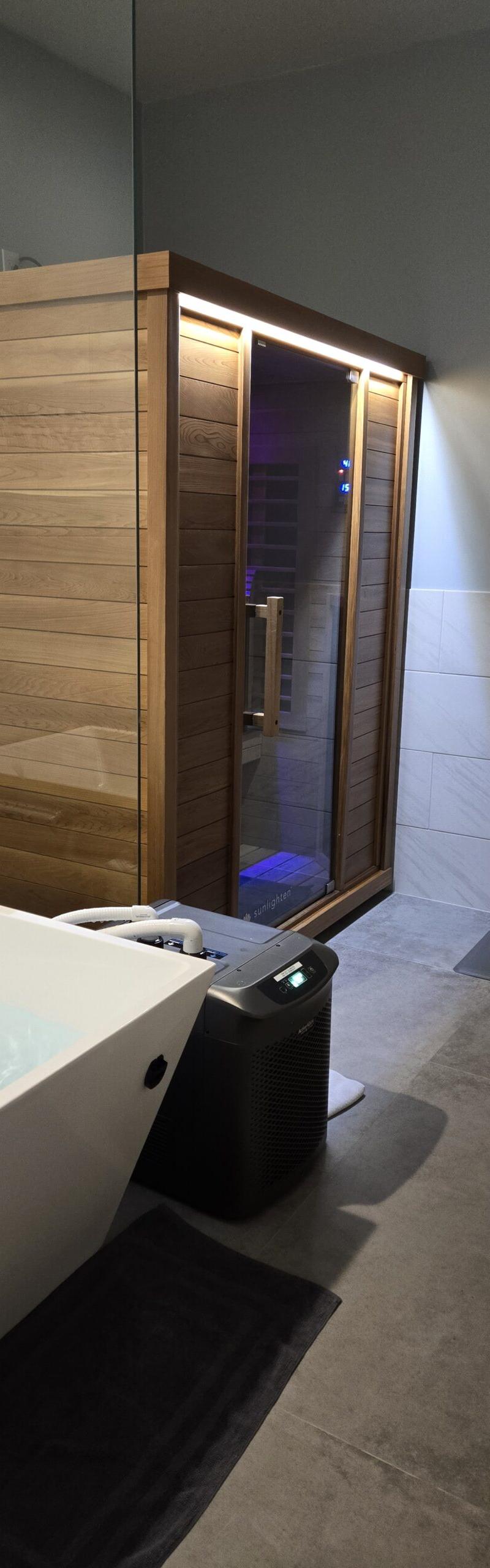
Float and recovery wellness center featuring sensory-deprivation float therapy, infrared sauna, cold plunge, and PEMF modalities for stress relief and nervous system balance.
Float therapyInfrared saunaCold plungeRed light therapy+1

iCRYO Westminster
Orchard Town Center · Westminster, CO
5.0· 517 Google reviews
iCRYO Westminster is a recovery and wellness center offering cryotherapy, red light therapy, infrared sauna, compression, IV drip, and hyperbaric oxygen therapy.
CryotherapyRed light therapyInfrared saunaCompression therapy+3

Therapeutic Massage & Wellness, LLC.
Newtown · Newtown, CT
5.0· 469 Google reviews
Day Spa in Newtown, CT Therapeutic Massage & Wellness
Cold plungeRed light therapyFloat therapyCompression therapy+1

The Well VB
Virginia Beach, VA
5.0· 362 Google reviews
The Well VB is a Virginia Beach wellness spa with private contrast rooms (infrared sauna plus cold plunge), sensory-deprivation float pods, red light therapy, assisted stretch, and lymphatic drainage.
Contrast therapyInfrared saunaCold plungeFloat therapy+3
Frequently asked questions
Does float therapy improve sleep?
Small studies and user reports point toward better self-reported sleep quality: faster onset, deeper sleep, better subjective rest. The evidence base is limited and largely subjective, so this is a reasonable thing to try rather than an established result. The plausible mechanisms (a relaxation response, lower self-reported stress, a theta-range brain state) are all relevant to sleep. Evening sessions timed 1–2 hours before bed appear to work best.
How long after floating do you sleep better?
The calm state from a float often carries through for 4–8 hours. For sleep, the ideal is to float in the evening and go to bed within a couple of hours, while the relaxation response and brainwave shift are most useful.
Is floating before bed good?
Yes, if you time it so you're finishing the session 60–90 minutes before your target bedtime. Finishing too close to bedtime can mean you're still in the transition out of the float state. Many studios offer late-afternoon and early-evening slots specifically because customers report them as the most sleep-supportive timing.
Can float therapy help with insomnia?
It may help some people, particularly when a racing mind or high evening stress is the main obstacle. Floating supports a relaxation response and shifts the brain toward the theta-range state associated with sleep onset, which can interrupt a stress-driven cycle. Dedicated clinical trials for insomnia and other sleep disorders specifically haven't been run yet, so use floating within a broader sleep strategy and seek clinical evaluation if poor sleep persists.
How often should I float for sleep benefits?
Because nightly floating isn't practical, the approach most often studied is two to four sessions per month as a reset, especially after stressful or sleep-disrupted periods. Some people benefit from a more regular evening rhythm; the right frequency depends on how long the post-float sleep improvement lasts for you.
Is float therapy better than meditation for sleep?
They overlap but aren't interchangeable. Floating mechanically removes sensory input, which lets many people reach the deep relaxed brain state that meditation takes practice to achieve. For people who struggle to quiet their minds on their own, the tank can be an easier route to the pre-sleep state, though meditation is free and can be done nightly. Neither has strong sleep-disorder evidence behind it.
Want float therapy as part of a full plan?
Float therapy for sleep is one input. The quiz asks how you train and how you sleep, then puts it in an order — which modality, on which day, and what it should sit next to.