Oral rehydration is first-line; IV fluids are a clinical fallback, not a premium upgrade
Strong evidence· Mixed findings
For physically active people needing fluid replacement, oral rehydration is the recommended first-line approach; professional guidance reserves IV fluids for people who cannot tolerate oral intake or who need rapid correction under medical supervision, not as a superior routine option for otherwise healthy people.
expert opinion
How strong the finding is
Professional-association position statement synthesizing the broader rehydration evidence base, not a single new trial.
Peripheral IV placement carries a real, low, non-zero complication risk
Strong evidence· Points toward a benefit
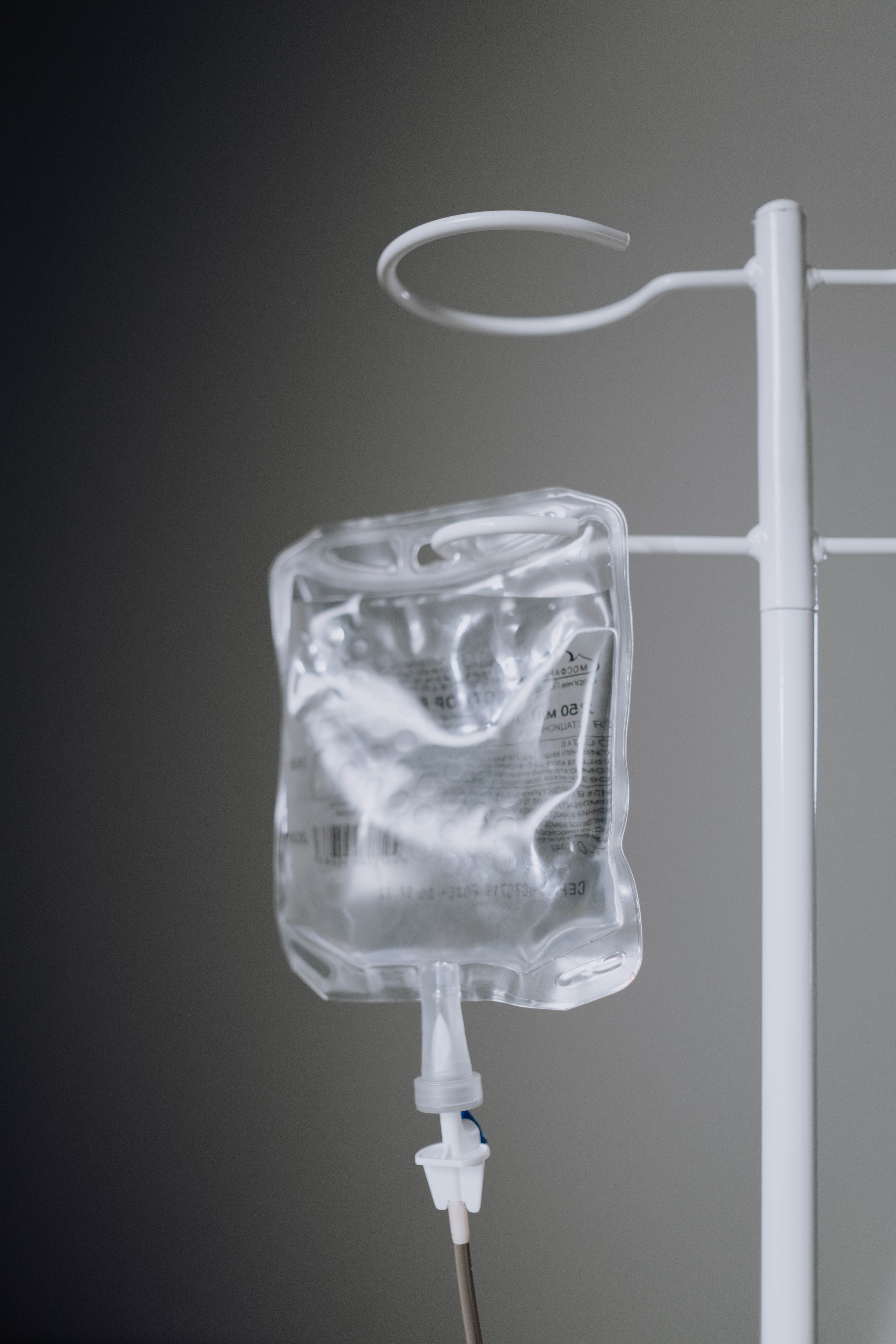
Placing a peripheral IV catheter carries a real, low, but non-zero risk of infiltration, catheter occlusion, and, rarely, catheter-related bloodstream infection, independent of what fluid or nutrient is infused through it.
clinical studies
Safety notes
Across 14 RCTs and over 11,000 patients, catheter-related bloodstream infection rates were low with either routine or clinically-indicated removal strategy, but not zero; for an elective wellness IV in a healthy person, this small risk is incurred for a procedure that is not medically necessary.
Peripheral IV catheters fail before session completion in roughly 1 in 3 placements, even though serious infection is rare
Strong evidence· Mixed findings
Across 41 observational studies and 28 RCTs (478,586 peripheral IV catheters), all-cause catheter failure before treatment completion occurred in 36.4% of catheters (95% CI 31.7-41.3%), while catheter-associated bloodstream infection occurred in only 0.028% and local infection in 0.150% of catheters.
Studied in General adult and pediatric populations receiving peripheral IV catheters across inpatient, outpatient, and community settings (not wellness-clinic-specific, but the device and technique are identical to IV hydration bars).clinical studies
How strong the finding is
Large systematic review and meta-analysis with nearly half a million catheters pooled; consistent effect across dozens of studies.
How it may work
Peripheral catheters are prone to mechanical failure (infiltration, occlusion, dislodgement, phlebitis) that stops or interrupts an infusion long before the rarer but more serious bloodstream or local infections occur.
Safety notes
Studios should set member expectations that a stick may need to be re-sited mid-session (common, low-severity) even though bloodstream infection from a single peripheral IV in a wellness setting is genuinely rare. Aseptic technique and single-use supplies remain the controlling factor for the rare-but-serious outcomes.
Indiscriminate post-race IV hydration risks worsening exercise-associated hyponatremia
Moderate evidence· Points toward a benefit
Administering IV fluids to ultramarathon finishers after a race, without first assessing sodium status, risks exacerbating exercise-associated hyponatremia (EAH) in runners who over-hydrated or lost little body weight during the event; in one cohort of 627 finishers, nearly half of the runners found to have EAH were at risk of the condition worsening from indiscriminate post-race IV hydration.
Studied in Ultramarathon and endurance-race finishersclinical studies
Safety notes
IV hydration after an endurance event should follow assessment of sodium status/weight change, not be given indiscriminately for perceived dehydration.
IV fluid bypasses the body's own thirst and fluid-balance signaling
Moderate evidence· Points toward a benefit
Because intravenous fluid administration bypasses oropharyngeal and gastrointestinal signaling, it does not trigger the thirst sensation, antidiuretic hormone release, and cutaneous vasodilation that oral fluid intake normally uses to help regulate the body's own fluid balance.
clinical studies
How it may work
Oral rehydration engages oropharyngeal receptors and gut stretch/osmotic signals that modulate thirst, ADH release, and peripheral vasodilation as part of normal fluid-balance regulation; IV delivery skips these afferent pathways entirely.
IV rehydration: faster but not clearly better than oral in athletes
Moderate evidence· Mixed findings
In athletes needing rehydration, intravenous fluid restores measured hydration status somewhat faster than oral fluid intake, but produces only small differences in hydration markers and no consistent advantage in subsequent exercise performance compared with oral rehydration.
Studied in Athletes with exercise-induced fluid lossclinical studies
How strong the finding is
Single narrative review of a small, heterogeneous body of studies; direction is consistent but magnitude of any IV advantage is limited and inconsistent.
Re-siting a peripheral IV on a fixed schedule is not safer than re-siting only when clinically indicated
Moderate evidence· Points toward a benefit
In nine RCTs (7,412 participants), replacing peripheral venous catheters only when clinically indicated produced no significant difference in catheter-related bloodstream infection, thrombophlebitis, or all-cause infection compared with routine replacement every 72-96 hours; routine replacement showed lower infiltration/blockage but at higher cost and more unnecessary re-sticks.
Studied in Adults and children receiving peripheral IV catheters for short-course therapy; directly applicable to single- and multi-visit wellness IV hydration sessions.clinical studies
How strong the finding is
Cochrane systematic review, moderate-certainty evidence per GRADE, 9 RCTs.
How it may work
Catheter failure risk is driven more by individual catheter condition (site inflammation, patency, dwell comfort) than by elapsed time alone, so time-based replacement removes working catheters without a matched safety benefit.
What complicates this
Routine time-based replacement did show somewhat lower rates of infiltration and catheter blockage, so the review frames this as a trade-off (cost and patient comfort vs. slightly higher mechanical-failure rate), not a one-sided result.
Safety notes
This supports clinically-indicated re-siting (visible inflammation, infiltration, occlusion, or patient discomfort) rather than an arbitrary fixed interval between IV hydration sessions or mid-session re-sticks; it does not establish a safe maximum session frequency, which remains a genuine gap.