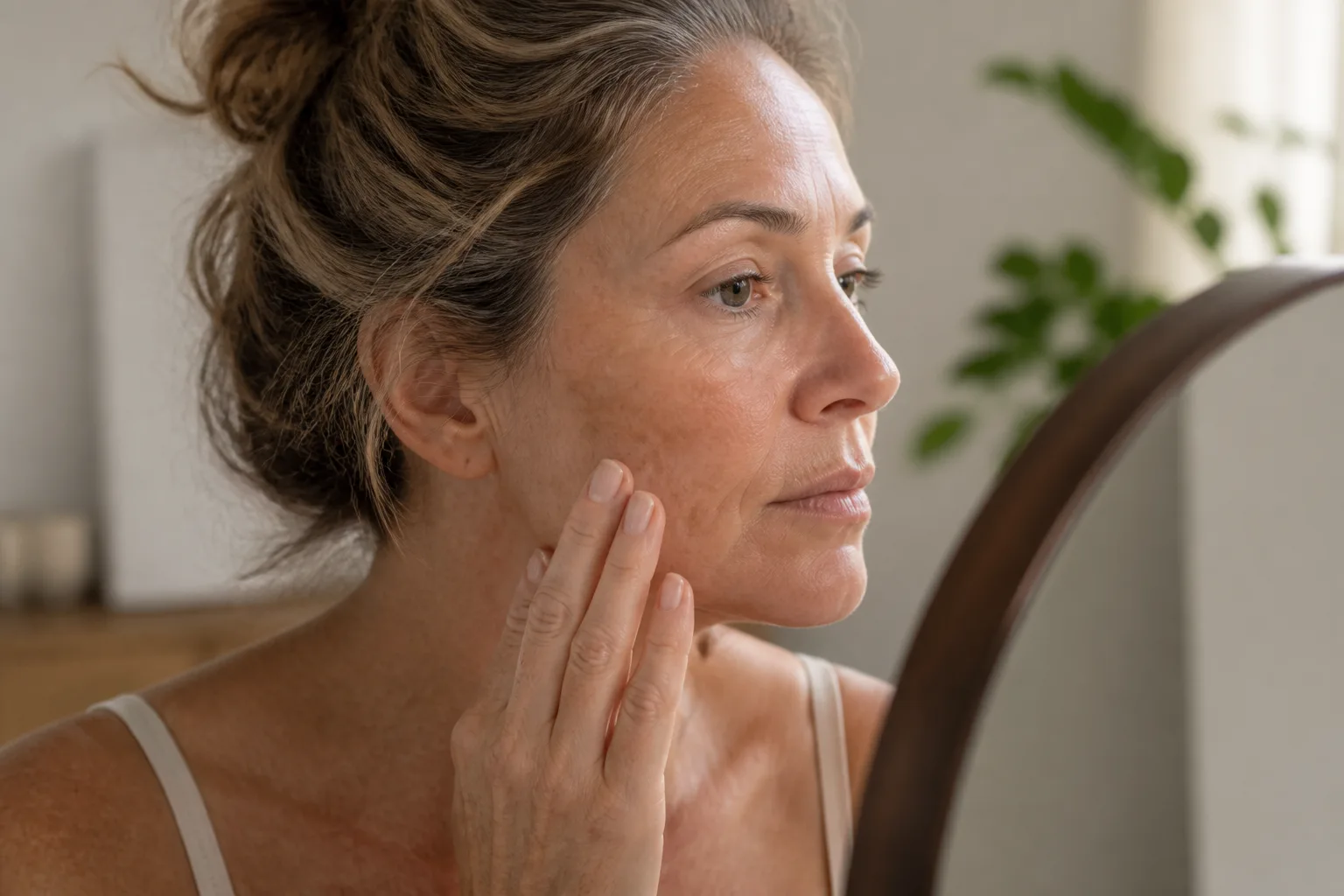
Red light therapy
Emerging evidenceWhy it might help
Red and near-infrared light can influence mitochondrial signaling and fibroblast activity, which may affect collagen production and remodeling when wavelength, irradiance, dose, and schedule are appropriate.
What the research shows
In a prospective randomized controlled study of 136 adult volunteers, 113 participants received large-area red or red/near-infrared light twice weekly for 30 sessions and 23 served as untreated controls. Treated groups improved selected blinded appearance ratings, measured skin roughness, and ultrasound collagen density versus controls. The trial did not establish equivalence across devices or reversal of UV-related cellular damage, so the evidence is promising but protocol-specific.
Sources & what they found (2)
A Controlled Trial to Determine the Efficacy of Red and Near-Infrared Light Treatment in Patient Satisfaction, Reduction of Fine Lines, Wrinkles, Skin Roughness, and Intradermal Collagen Density Increase — Photomedicine and Laser Surgery (via NCBI PMC), 2014
Prospective randomized controlled study of large-area red and red/near-infrared light with 113 treated volunteers and 23 untreated controls over 30 sessions.
Unlocking the Power of Light on the Skin: A Comprehensive Review on Photobiomodulation — International Journal of Molecular Sciences (via NCBI PMC), 2024
Review of skin photobiomodulation mechanisms, protocols, clinical findings, and the lack of agreement on optimal dosing.