Assisted stretch
Mixed findingsWhy it might help
Passively lengthening the cramping muscle is proposed to increase inhibitory feedback from the Golgi tendon organs and interrupt the abnormal reflex activity behind the cramp.
What the research shows
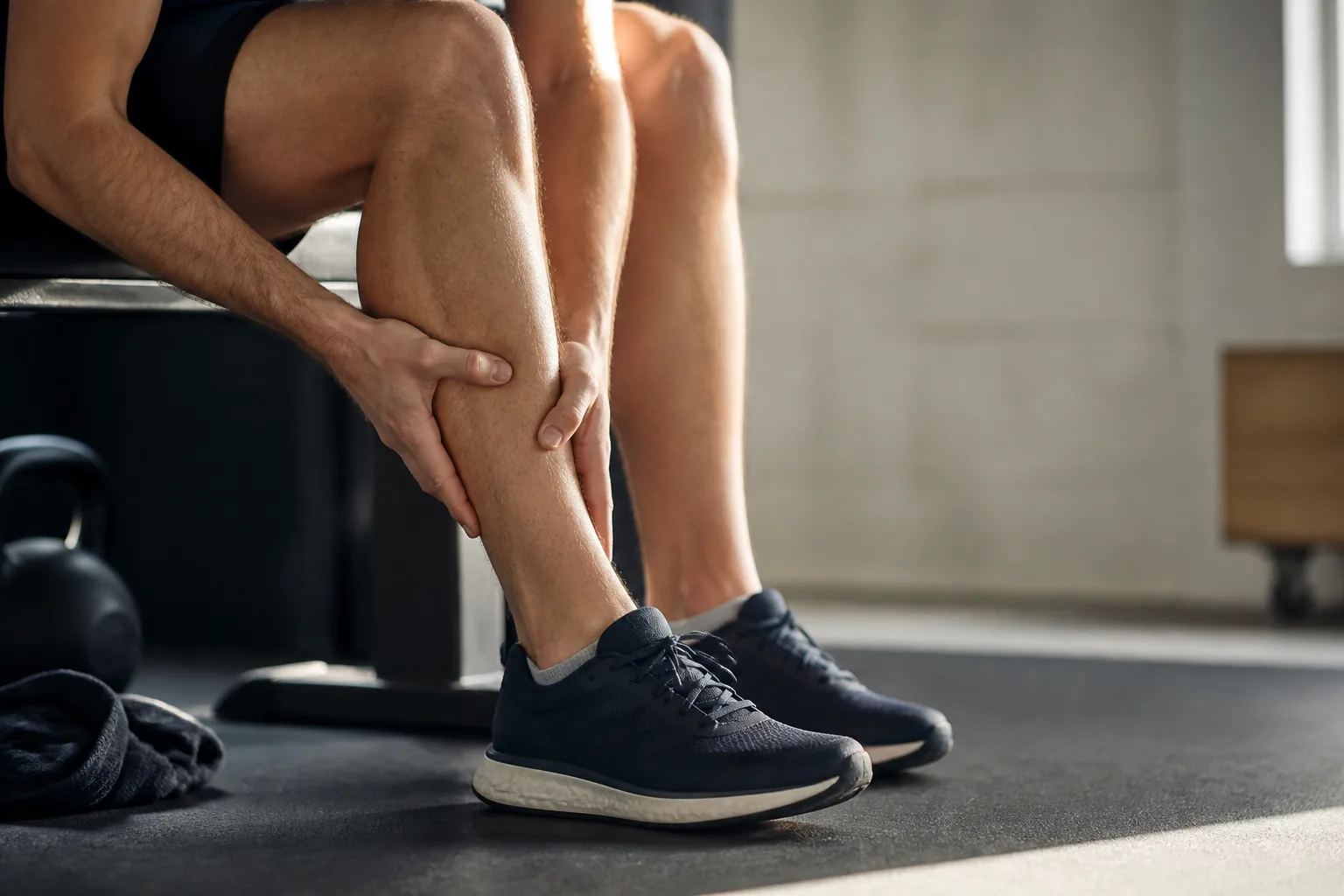
Stretching is the standard field response and the 2022 evidence-based review recommends gentle static stretching until symptoms abate as the acute treatment. The 2019 review is more sceptical: it notes that although stretching has dramatic effects in anecdotal reports, recent controlled studies found no significant difference between stretching and not stretching. Both can be true if stretching helps some cramp types and not others, which is roughly where the field currently stands. Worth doing in the moment; not a prevention plan.
Sources & what they found (3)
An Evidence-Based Review of the Pathophysiology, Treatment, and Prevention of Exercise-Associated Muscle Cramps — PubMed / Journal of Athletic Training, 2022
Evidence-based review concluding cramps arise from a confluence of intrinsic and extrinsic factors rather than a single cause; recommends gentle static stretching until symptoms abate as acute treatment, cautions against generalized advice such as simply drinking more fluid, and argues individualized prevention based on a thorough history will outperform blanket recommendations.
Muscle Cramping During Exercise: Causes, Solutions, and Questions Remaining — PMC / Sports Medicine, 2019
Review synthesising work from 1960 to 2019. Finds neither the hydration/electrolyte nor the altered neuromuscular control hypothesis fully explains cramping and suggests different cramp types with different mechanisms. Notes that despite dramatic anecdotal reports, recent controlled studies found no significant difference between stretching and no stretching, and concludes no prevention strategy or treatment is consistently effective.
Muscle Spasms (Muscle Cramps): Causes, Treatment & Prevention — Cleveland Clinic
Condition overview: involuntary contraction a muscle cannot relax out of, with insufficient stretching, muscle fatigue, heat, dehydration and electrolyte imbalance among listed causes; self-care includes stretching the affected area, massage by hand or roller, walking, and heat or ice.