Loading…
Infrared sauna · for detox
Infrared sauna for detox: what your sweat actually contains, and what that means
Detox is one of the most oversold claims in wellness, and also one where infrared sauna has a more defensible scientific case than most. Sweat does contain measurable toxins. But the devil is in the details, and the details matter for understanding when sauna detox is real and when it's marketing.
1935
studios listed
826
cities
The liver and kidneys are the body's primary detoxification organs, and they handle the vast majority of metabolic waste and environmental toxin processing. Sweat is a secondary pathway: meaningful, but secondary. The important finding from research on sweat composition is that sweat does contain measurable concentrations of certain heavy metals: cadmium, lead, arsenic, and mercury have all been identified in sweat samples at detectable levels.
Whether the amount excreted through sweat is clinically significant compared to urinary and biliary excretion is actively debated in the medical literature. The honest answer is that sweat appears to be a meaningful route for some compounds, particularly those that accumulate in fatty tissue over time, but it's not a replacement for the liver's processing capacity.
Near infrared vs far infrared for detox
Far-infrared wavelengths (8–12 microns) penetrate tissue 1.5–3 inches and cause the deepest core temperature elevation, which drives the most sweating and may mobilize toxins from adipose (fat) tissue more effectively than surface-level heat. Near-infrared wavelengths penetrate even deeper but at lower thermal intensity, producing more photobiomodulation effects (cellular repair) than sweat-based detox.
Most commercial infrared sauna studios use far-infrared or full-spectrum units (combining near, mid, and far). If detox is your primary goal, look for full-spectrum or far-infrared units and sessions that allow enough time for deep, sustained sweating, typically 30–45 minutes.
Supporting your sauna detox sessions
- Hydrate heavily before and after: sweat-based toxin excretion requires adequate fluid volume.
- Shower immediately after: reabsorption through the skin is possible if sweat sits on the body.
- Electrolytes matter: sweating depletes sodium, potassium, and magnesium: plain water alone isn't enough for longer sessions.
- Frequency: many functional medicine practitioners suggest 3–5 sessions per week for a dedicated detox phase.
- Note: people with impaired kidney or liver function, cardiovascular conditions, or who take medications that affect heat tolerance should consult a physician before using sauna for detox purposes.
Praxium organizes goal-based recovery sequencing — this is not medical advice. Check contraindications with a qualified professional before starting any modality.
Is infrared sauna right for you?
Infrared sauna appeals broadly to athletes, office workers with chronic stress or tension, and individuals managing mild chronic pain or stiffness.
Wellness guidance, not medical advice.
Often a great fit if…
People who find traditional steam saunas too hot or claustrophobic often prefer the lower ambient temperature of infrared cabins.
Worth a quick check first if…
People who are pregnant, have cardiovascular conditions, uncontrolled blood pressure, or take medications that affect heat regulation should consult a clinician before using an infrared sauna. Those feeling acutely ill, with active skin infections, or who have consumed alcohol should avoid sessions.
What a first session feels like
Sessions typically run 30–45 minutes at 120–150°F. You'll sweat noticeably within the first 10–15 minutes; studios provide towels and water is strongly recommended before, during, and after. Many people feel deeply relaxed immediately afterward, with energy and mood often improving over the following hour.
Where to try it
Try infrared sauna near you
1935 studios listed across 826 cities.
DOC's
Wall, NJ
5.0· 1 Google review
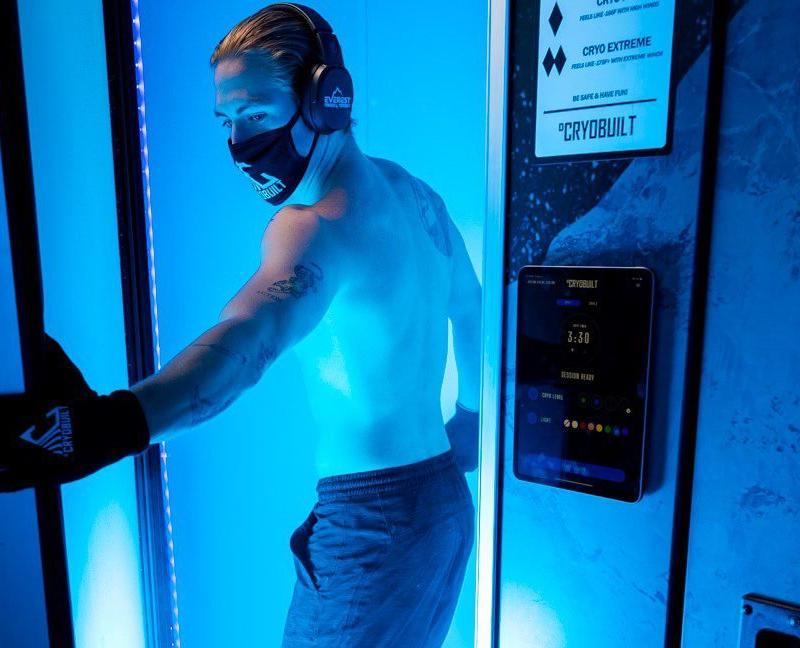
DOC's is a Wall, NJ recovery facility offering innovative holistic therapies for athletic performance and life extension — whole-body cryotherapy, hyperbaric oxygen, Normatec compression, Sunlighten infrared sauna, and Theralight red light.
CryotherapyHyperbaric oxygenCompression therapyInfrared sauna+1
Next Health
West Hollywood, CA
5.0· 2291 Google reviews
Next Health is a health and wellness center at The Sunset on Sunset Boulevard in West Hollywood.
IV & hydrationIV Hydration / Vitamin (Myers-type) TherapyCryotherapyHyperbaric oxygen+3

Next Health West Hollywood
Sunset Strip · West Hollywood, CA
5.0· 2250 Google reviews
West Hollywood wellness center for NAD+, IV drips, hormone therapy, infrared therapy, hyperbaric oxygen, EBOO ozone & plasma exchange on the Sunset Strip.
CryotherapyHyperbaric oxygenInfrared saunaRed light therapy+1
Next Health
New York, NY
5.0· 1217 Google reviews
Next Health offers IV therapy, cryotherapy, and hyperbaric oxygen treatments at their wellness center on Madison Avenue, specializing in advanced regenerative medicine and longevity optimization.
CryotherapyIV & hydrationHyperbaric oxygenInfrared sauna+1

Restore Hyper Wellness
Houston, TX
5.0· 1168 Google reviews
Restore Hyper Wellness is a wellness studio in West University, Houston, at 2715 Bissonnet St., Suite 140.
CryotherapyRed light therapyInfrared saunaCompression therapy+4
Restore Hyper Wellness - Houston, TX - West University
West University · Houston, TX
5.0· 1163 Google reviews
Personalized, science-backed recovery therapies in Houston West University including whole-body cryotherapy, red light therapy, infrared sauna, compression, IV drip therapy, and mild hyperbaric oxygen therapy to decrease inflammation, optimize sleep, and boost energy.
CryotherapyRed light therapyInfrared saunaCompression therapy+2
Frequently asked questions
Does infrared sauna remove heavy metals?
Research on sweat composition has found measurable heavy metals (including cadmium, lead, arsenic, and mercury) in sweat samples. Whether this is a clinically significant excretion route compared to urine and bile varies by metal and individual. Sweat is a real but secondary detox pathway; infrared sauna may support it, particularly for compounds stored in fat tissue.
Is far or near infrared better for detox?
Far-infrared is the most commonly cited for detox because it penetrates deep into tissue and drives significant sweating. Full-spectrum units that combine near, mid, and far infrared are the most versatile. What matters most is achieving sustained, deep sweating, regardless of the specific wavelength split.
How often should I use infrared sauna for detox?
Three to five sessions per week is a typical recommendation from functional medicine practitioners for an active detox phase. Daily sessions are used by some protocols, but hydration and electrolyte management become more critical. Always replenish fluids and minerals after every session.
Should I shower after an infrared sauna detox session?
Yes: shower within about 20–30 minutes of finishing. Sweat carrying mobilized compounds sits on the skin's surface, and some can be reabsorbed if left there. A prompt shower rinses it away and is a simple, sensible step in any sauna detox routine.
Can an infrared sauna detox the liver?
The liver and kidneys do the vast majority of detoxification, and sauna doesn't directly 'cleanse' them. Sweating is a secondary excretion pathway that may support the body's overall toxin clearance, but it complements rather than replaces normal liver and kidney function.
Can you experience detox side effects from infrared sauna?
The most common issues are dehydration, electrolyte loss, lightheadedness, and fatigue from overdoing session length or frequency, not 'toxin release' symptoms. Staying well hydrated, replenishing electrolytes, and building up session length gradually prevents most of these.
Want infrared sauna as part of a full plan?
Infrared sauna for detox is one input. The quiz asks how you train and how you sleep, then puts it in an order — which modality, on which day, and what it should sit next to.