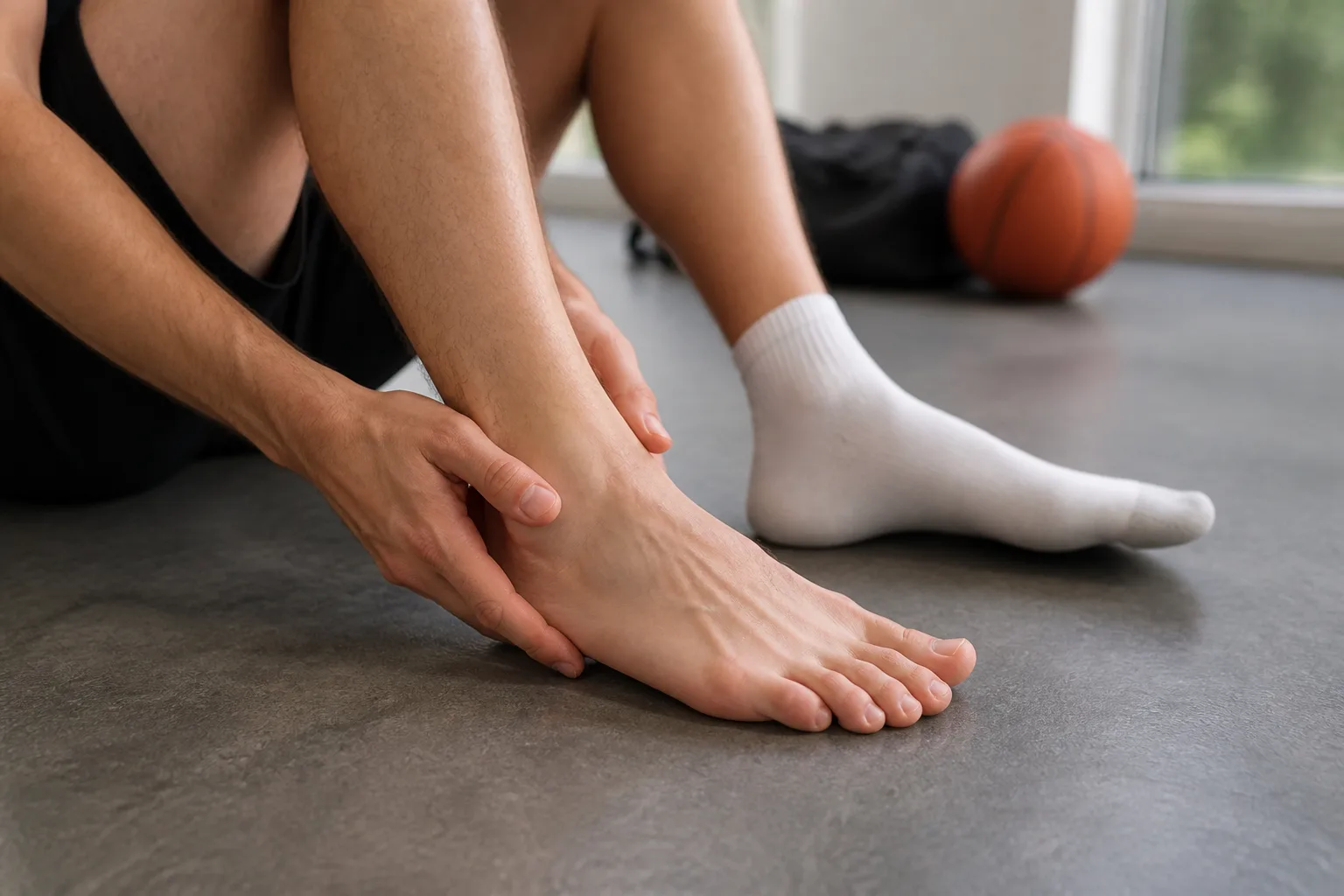
Compression therapy
Limited evidenceWhy it might help
External pressure is intended to limit how much fluid collects around the injured ligaments, which is why compression is part of the conventional immediate-care advice for a sprain.
What the research shows
Compression is standard first-aid advice and Cleveland Clinic lists wrapping or bracing among home measures, but the controlled evidence behind it is genuinely thin. A systematic review of 11 randomized trials concluded that evidence supporting compression for acute ankle sprains is limited, with one trial suggesting intermittent pneumatic compression plus bandaging outperformed bandaging alone and little else to go on. Treat it as reasonable convention rather than a proven intervention.
Sources & what they found (2)
What Is the Evidence for Rest, Ice, Compression, and Elevation Therapy in the Treatment of Ankle Sprains in Adults? — PMC / Journal of Athletic Training, 2012
Systematic review of 11 RCTs (868 patients) concluding insufficient RCT evidence to determine the relative effectiveness of RICE; evidence for compression is limited, no evidence exists either way for elevation, and moderate evidence supports some immediate post-traumatic mobilization. Most included studies predated 1990 and were of low methodological quality.
Sprained Ankle: Symptoms, Treatment & Recovery Time — Cleveland Clinic
Condition overview: ligaments stretched too far, graded 1 to 3 from minor damage to complete rupture; RICE and protective bracing at home, physical therapy where needed, mild sprains healing in one to two weeks and complete tears sometimes taking months.