Loading…
Modality comparison
Infrared sauna vs red light therapy: similar names, different mechanisms
Both say 'infrared' on the label, but an infrared sauna and a red light therapy panel operate at completely different wavelengths and produce different effects. If you're choosing between them, or stacking both, here's what you need to know.
Quick verdict
Choose infrared sauna if…
Infrared sauna appeals broadly to athletes, office workers with chronic stress or tension, and individuals managing mild chronic pain or stiffness.
Infrared sauna guide →Choose red light therapy if…
Red light therapy is popular with people seeking skin improvements (anti-aging, acne, collagen support), athletes managing muscle soreness or joint pain, and individuals exploring recovery and wellness optimization.
Red light therapy guide →| Aspect | Infrared sauna | Red light therapy |
|---|---|---|
| Wavelength | Far infrared (7,000–14,000nm), primarily perceived as heat | Red (660nm) and near infrared (850nm), photobiomodulation, not primarily heat |
| Primary effect | Raises core body temperature, induces sweating, promotes relaxation | Stimulates mitochondria, increases ATP, reduces local inflammation |
| Session length | 20–45 min | 10–20 min |
| Sweating | Yes, significant; hydration needed | No, light contact only |
| Best for | Detox, cardiovascular load, sleep, relaxation, weight management | Skin health, anti-aging, hair, inflammation, muscle recovery |
| Typical cost | $30–$70 / session | $20–$60 / session |
The breakdown
What infrared sauna does
An infrared sauna emits far infrared wavelengths (7,000–14,000nm) that are absorbed by the body as heat. This raises your core temperature, triggering vasodilation, a cardiovascular response, and profuse sweating. The experience is relaxing, and the effects (heat shock proteins, improved circulation, the gradual relaxation response) come from the thermal load, not from light stimulation.
Infrared sauna is an effective tool for cardiovascular health, sleep, and what practitioners call 'detox' (sweating out metabolic waste). It's also used for chronic pain and muscle relaxation. Sessions are longer because your body needs time to heat up.
What red light therapy does
Red light therapy (photobiomodulation) uses light at 660nm and 850nm, wavelengths that penetrate tissue and are absorbed by cytochrome c oxidase, an enzyme in mitochondria. The result is increased ATP production, reduced oxidative stress, and accelerated cellular repair, without raising body temperature.
The practical benefits: faster wound repair, improved collagen production, reduced inflammation in target tissue, and, with consistent use, measurable improvements in skin texture and tone. It's a shorter session, no sweating, no dehydration, and available at many wellness studios alongside thermal modalities.
The key difference despite 'infrared' in both names
The overlap in naming causes real confusion. Infrared sauna uses far infrared: long wavelengths that the body absorbs as heat. Red light therapy uses red and near infrared: much shorter wavelengths that stimulate specific cellular receptors. They're both on the electromagnetic spectrum between visible light and microwaves, but they're doing entirely different things to your body.
A shorthand: infrared sauna is a thermal experience (you heat up). Red light therapy is a photonic experience (your cells absorb photons but you don't heat up). They don't substitute for each other.
Which to choose by goal
For sleep, stress, detox, and cardiovascular health: infrared sauna leads. For skin, anti-aging, hair loss, and surface inflammation: red light therapy leads. For muscle recovery: both have evidence, though cold plunge or contrast therapy may outperform either for acute post-workout recovery, while red light therapy is a reasonable daily habit for cumulative effect.
Many studios now offer both. Using red light therapy before a sauna session (to prime mitochondria before the heat load) is a sequencing some practitioners prefer, but there's no strong consensus on order.
Try both, decide yourself
Run the experiment yourself
Studios running both infrared sauna and red light therapy — verified partners lead. Book a session of each and let your own recovery decide.
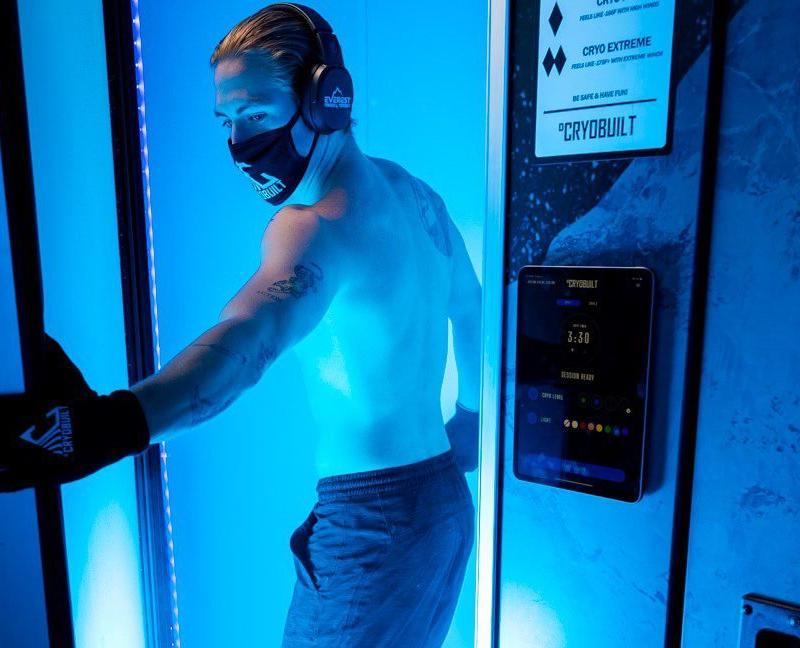
DOC's
Wall, NJ
5.0· 1 Google review
DOC's is a Wall, NJ recovery facility offering innovative holistic therapies for athletic performance and life extension — whole-body cryotherapy, hyperbaric oxygen, Normatec compression, Sunlighten infrared sauna, and Theralight red light.
CryotherapyHyperbaric oxygenCompression therapyInfrared sauna+1
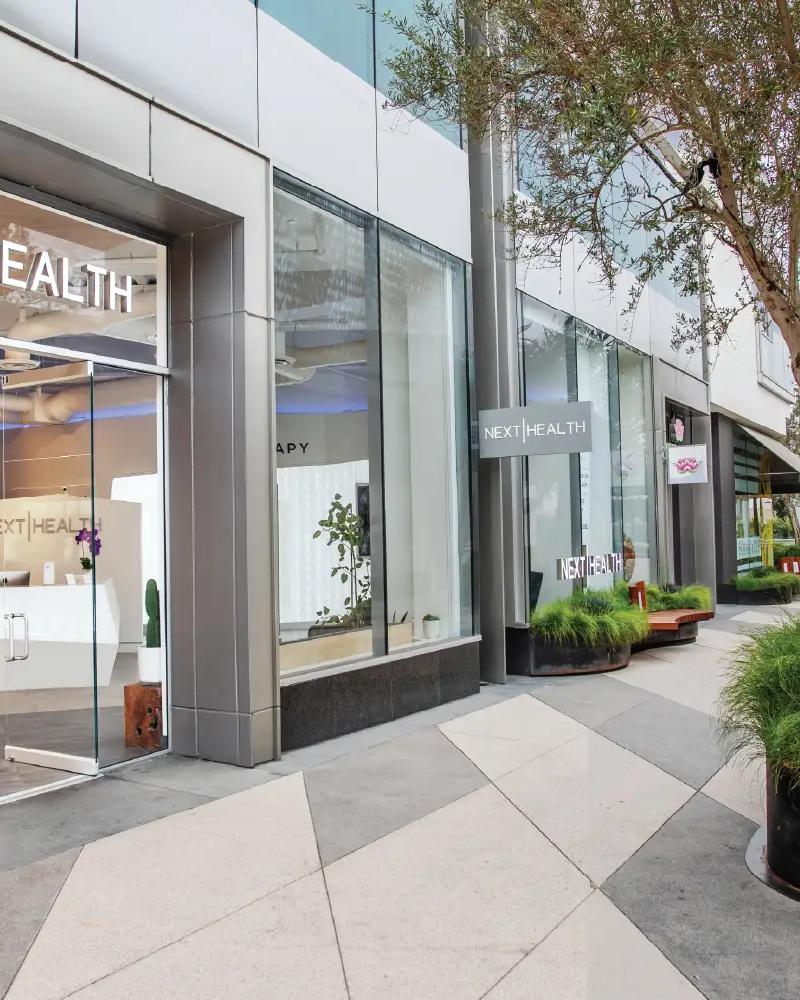
01
Next Health West Hollywood
Sunset Strip · West Hollywood, CA
5.0· 2250 Google reviews
West Hollywood wellness center for NAD+, IV drips, hormone therapy, infrared therapy, hyperbaric oxygen, EBOO ozone & plasma exchange on the Sunset Strip.
CryotherapyHyperbaric oxygenInfrared saunaRed light therapy+1
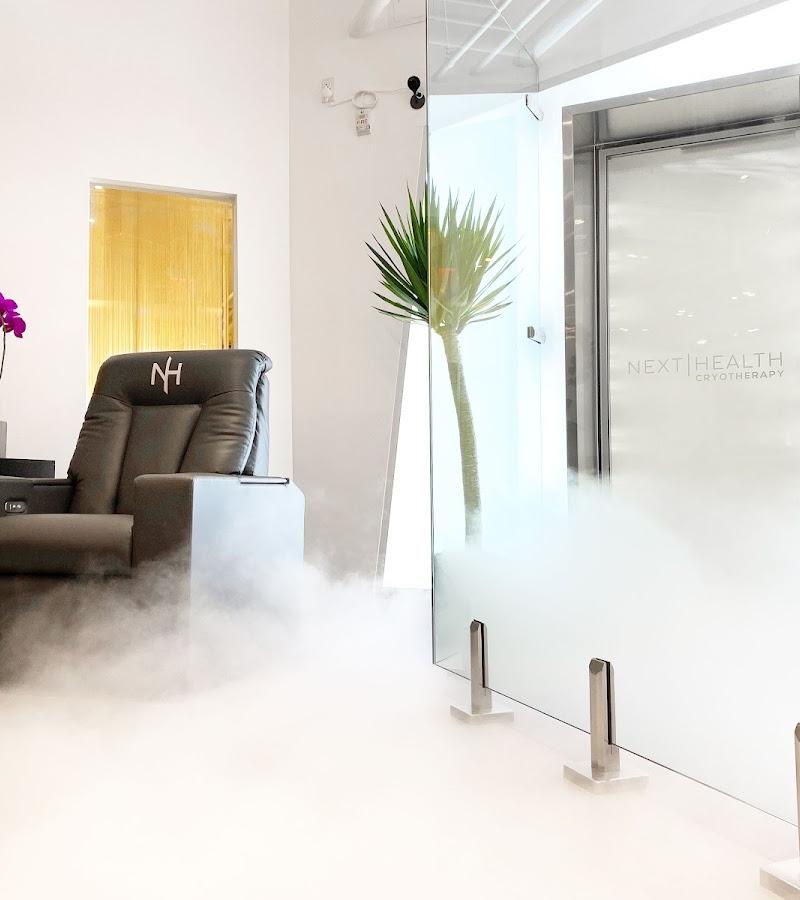
02
Next Health
New York, NY
5.0· 1217 Google reviews
Next Health offers IV therapy, cryotherapy, and hyperbaric oxygen treatments at their wellness center on Madison Avenue, specializing in advanced regenerative medicine and longevity optimization.
CryotherapyIV & hydrationHyperbaric oxygenInfrared sauna+1
03
Restore Hyper Wellness
Houston, TX
5.0· 1168 Google reviews
Restore Hyper Wellness is a wellness studio in West University, Houston, at 2715 Bissonnet St., Suite 140.
CryotherapyRed light therapyInfrared saunaCompression therapy+4
04
Restore Hyper Wellness - Houston, TX - West University
West University · Houston, TX
5.0· 1163 Google reviews
Personalized, science-backed recovery therapies in Houston West University including whole-body cryotherapy, red light therapy, infrared sauna, compression, IV drip therapy, and mild hyperbaric oxygen therapy to decrease inflammation, optimize sleep, and boost energy.
CryotherapyRed light therapyInfrared saunaCompression therapy+2
Questions
Frequently asked questions
Is infrared sauna the same as red light therapy?
No. Both involve infrared energy, but at very different wavelengths. Infrared sauna uses far infrared (7,000–14,000nm) that heats the body. Red light therapy uses red (660nm) and near infrared (850nm) that stimulate mitochondria without raising core temperature. The experiences and effects are distinct.
Can I do infrared sauna and red light therapy on the same day?
Yes: they're complementary, not competing. Some studios recommend doing red light therapy first (when tissue is fresh) and sauna second. Others sequence the opposite way. Either works; what matters most is consistency over time.
Which is better for skin, infrared sauna or red light therapy?
Red light therapy has the stronger evidence for skin: collagen production, wound repair, acne reduction, and anti-aging effects are well-documented at 660nm and 850nm wavelengths. Infrared sauna improves circulation and can support skin health indirectly, but it isn't designed for the targeted photobiomodulation that drives visible skin changes.
References
- Efficacy of Waon therapy for fibromyalgia
- The effects of repeated thermal therapy for patients with chronic pain
- Waon Therapy for Managing Chronic Heart Failure: results from the multicenter prospective randomized WAON-CHF study
- Non-acute effects of passive heating interventions on cardiometabolic risk and vascular health: systematic review and meta-analysis of randomized controlled trials
- Clinical Effects of Regular Dry Sauna Bathing: A Systematic Review
- Far-infrared saunas for treatment of cardiovascular risk factors: summary of published evidence
- Controlled red/NIR skin appearance and collagen-density trial
- High-fluence LED red-light skin safety: two randomized trials
- Low-level laser device for male and female pattern hair loss
- Targeted PBM for symptomatic knee osteoarthritis: positive RCT
- PBM added to strengthening exercise for knee osteoarthritis: null RCT
- Mixed-wavelength PBM after eccentric exercise: positive RCT
- 808 nm PBM before exercise: null crossover RCT
- PBM for high-dose-methotrexate oral mucositis: phase II RCT
Keep exploring
The full guides
More head-to-heads
Cryotherapy vs infrared sauna →Compression therapy vs cold plunge →Float therapy vs red light therapy →Infrared sauna vs halotherapy →IV hydration vs hyperbaric oxygen →Contrast therapy vs cryotherapy →PEMF vs compression therapy →Lymphatic compression vs compression therapy →Red light therapy vs cryotherapy →Infrared sauna vs cold plunge →Cryotherapy vs cold plunge →PEMF vs red light therapy →