Loading…
Modality comparison
Contrast therapy vs cryotherapy: a full cycle or a fast freeze?
Both use cold to drive recovery, but they get there very differently. Contrast therapy alternates heat and cold across a longer protocol; cryotherapy is a 2–4 minute blast of extreme cold. Here's how they compare and when each makes sense.
Quick verdict
Choose contrast therapy if…
Contrast therapy is popular with athletes at all levels seeking faster recovery, wellness enthusiasts exploring Scandinavian thermal bathing traditions, and individuals who find either heat or cold alone too intense and prefer the balanced relief of alternating temperatures.
Contrast therapy guide →Choose cryotherapy if…
Cryotherapy is popular with competitive athletes, active individuals managing post-workout inflammation or chronic joint pain, and people seeking fast-acting wellness interventions.
Cryotherapy guide →| Aspect | Contrast therapy | Cryotherapy |
|---|---|---|
| What it is | Alternating hot (sauna/steam) and cold (plunge) in repeated cycles | Whole-body exposure to -200°F nitrogen vapor for 2–4 min |
| Time required | 30–90 min for a full protocol | Under 10 min start to finish |
| Primary effect | Vascular 'pumping' from repeated vasodilation/vasoconstriction + heat relaxation | Rapid skin-surface cooling, vasoconstriction, norepinephrine spike |
| Thermal load | High and sustained: actual core warming and cooling cycles | Dramatic sensation, but air conducts heat slowly so core barely changes |
| Best for | Circulation, full-body recovery, control over ending calm or energized | Time-efficient anti-inflammatory reset, quick energy boost |
| Typical cost | $50–$120 (combined sauna + plunge access) | $50–$100 / session |
The breakdown
What contrast therapy does
Contrast therapy alternates heat (sauna or steam) and cold (a plunge) across repeated cycles. Heat drives vasodilation; cold drives vasoconstriction; cycling between them creates a vascular pumping effect that moves blood and lymph more actively than either alone. A typical protocol is 10–15 minutes of heat and 2–3 minutes of cold, repeated for three to four rounds.
Regular users often report reduced total-body soreness, improved circulation, and a sense of full-body flushing. You also get to choose how you finish: end on cold to feel energized, or end on heat to wind down. The trade-off is time and access: you need both a sauna and a cold plunge, and a full session can run 30–90 minutes.
What cryotherapy does
Whole-body cryotherapy surrounds you in nitrogen vapor cooled to -200°F or colder for 2–4 minutes. Skin-surface temperature drops fast, triggering vasoconstriction and a sharp norepinephrine release: the energized 'cryo rush.' Because air conducts heat far more slowly than water, the sensation is extreme but your core temperature barely moves.
Cryotherapy's main advantage is speed and convenience: no wet gear, no toweling off, and the whole visit takes under 10 minutes. It's a popular post-training or busy-day tool for a quick anti-inflammatory and energy reset. The flip side is that it doesn't deliver the heat phase, the vascular pumping, or the longer ritual that contrast therapy provides.
Which to choose by goal
Choose contrast therapy when you want a fuller recovery session (circulation, whole-body flushing, and the ability to end either calm or energized) and you have the time and studio access for both hot and cold. It's the more complete protocol.
Choose cryotherapy when time is the constraint and you want a fast, anti-inflammatory, energizing hit you can fit between other commitments. It's the efficient option, not the comprehensive one.
They aren't mutually exclusive. Studios that offer cryotherapy often offer sauna and cold plunge too, so you can use cryo on rushed days and a full contrast session when you have more time.
Try both, decide yourself
Run the experiment yourself
Studios running both contrast therapy and cryotherapy — verified partners lead. Book a session of each and let your own recovery decide.
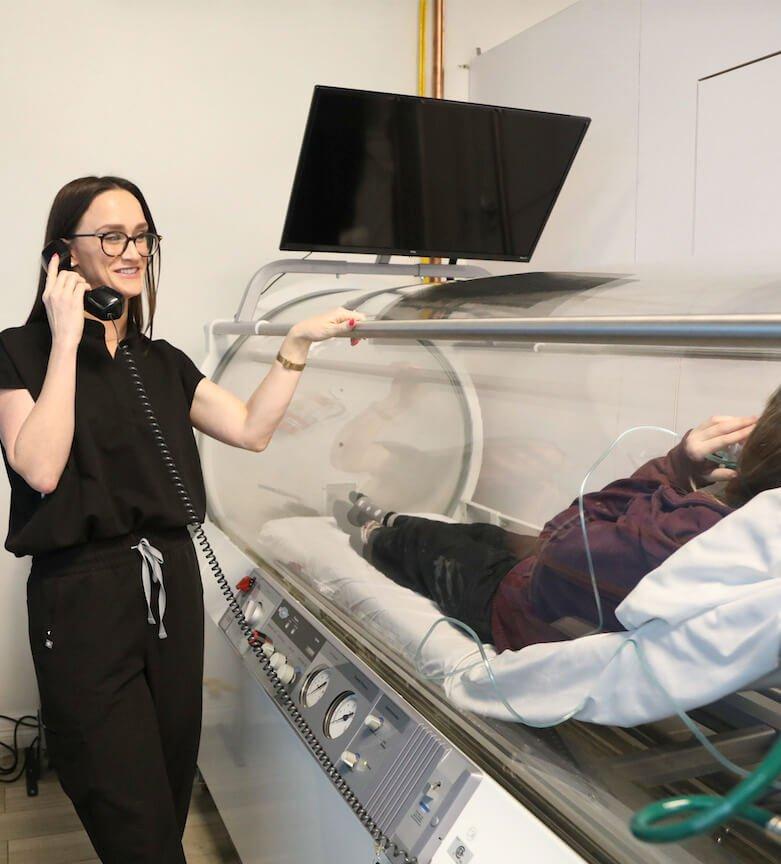
01
Huemn Optimization + Cryo Recovery
Vintage Park · Houston, TX
5.0· 599 Google reviews
Functional medicine in Houston at Huemn.
Cold plungeCryotherapyInfrared saunaRed light therapy+5
03
Pause East Cobb - Marietta
East Cobb · Marietta, GA
5.0· 295 Google reviews
Pause East Cobb is a Marietta recovery studio offering contrast therapy (infrared sauna + cold plunge), float therapy, cryotherapy, compression, and IV drips.
Contrast therapyCold plungeInfrared saunaFloat therapy+4
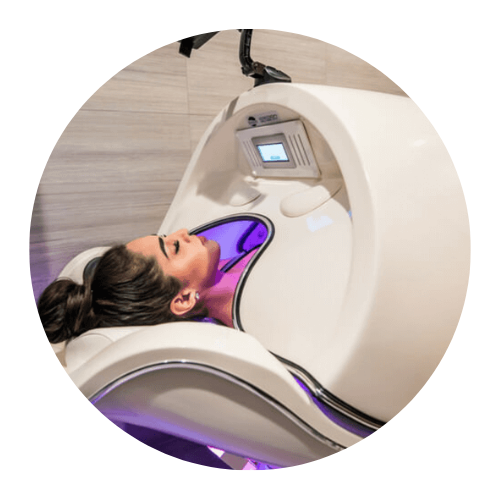
04
Healthspan Recovery
Brickell · Miami, FL
5.0· 207 Google reviews
Healthspan provides the best cryotherapy, hyperbaric oxygen therapy, infrared sauna, red light therapy & PEMF in Brickell, Miami, Florida.
CryotherapyHyperbaric oxygenInfrared saunaRed light therapy+5

05
MOOV. LABS & CRYO
Orlando, FL
5.0· 196 Google reviews
MOOV Labs Orlando delivers advanced biohacking and recovery modalities including cryotherapy, red light therapy, PEMF, IV hydration, and contrast therapy—designed to optimize cellular performance and nervous system regulation for longevity and athletic recovery.
CryotherapyRed light therapyIV & hydrationPEMF+4
Questions
Frequently asked questions
Is contrast therapy or cryotherapy better for recovery?
It depends on time and goals. Contrast therapy offers a more complete session (the vascular pumping effect of alternating heat and cold plus relaxation), but takes 30–90 minutes and needs both a sauna and a plunge. Cryotherapy delivers a fast anti-inflammatory and energizing reset in under 10 minutes but skips the heat phase and circulation cycling. Neither is universally better.
Does cryotherapy give the same benefits as the cold part of contrast therapy?
Not exactly. Both cause vasoconstriction and a norepinephrine spike, but a cold-water plunge transfers heat far more efficiently than cryo's nitrogen vapor, creating a greater actual thermal load on the body. Cryotherapy wins on speed and tolerability; the cold plunge in contrast therapy provides a stronger physiological stimulus per minute.
Can I do cryotherapy as part of contrast therapy?
Some people substitute a cryo session for the cold phase between sauna rounds, but it's less common and logistically harder, since cryo chambers and saunas are separate setups. True contrast therapy is built around a sauna or steam paired with a cold-water plunge. If a studio has both cryo and sauna, ask staff how they recommend sequencing them.
References
- Contrast Water Therapy and Exercise Induced Muscle Damage: A Systematic Review and Meta-Analysis
- Effect of Cold and Heat Therapies on Pain Relief in Patients with Delayed Onset Muscle Soreness: A Network Meta-Analysis
- Contrast therapy: a systematic review
- Impact of different cryotherapy interventions on post-exercise acute delayed-onset muscle soreness, athletic performance, and inflammatory biomarkers: a systematic review and network meta-analysis
- Whole-body cryotherapy can reduce the inflammatory response in humans: a meta-analysis based on 11 randomized controlled trials
- Is whole-body cryostimulation an effective add-on treatment in individuals with fibromyalgia and obesity? A randomized controlled clinical trial
- Efficacy of whole-body cryotherapy as add-on therapy to pharmacological treatment of depression: a randomized controlled trial
Keep exploring
The full guides
More head-to-heads
PEMF vs compression therapy →Lymphatic compression vs compression therapy →Red light therapy vs cryotherapy →Infrared sauna vs cold plunge →Cryotherapy vs cold plunge →PEMF vs red light therapy →Hyperbaric oxygen vs red light therapy →Contrast therapy vs cold plunge →Infrared sauna vs red light therapy →Cryotherapy vs infrared sauna →Compression therapy vs cold plunge →Float therapy vs red light therapy →