Loading…
Modality comparison
Infrared sauna vs halotherapy: heat versus salt air
These two often share a wellness-studio hallway, but they're aimed at completely different goals. One heats your whole body; the other has you breathing dry salt-laced air. Here's how infrared sauna and halotherapy actually compare.
Quick verdict
Choose infrared sauna if…
Infrared sauna appeals broadly to athletes, office workers with chronic stress or tension, and individuals managing mild chronic pain or stiffness.
Infrared sauna guide →Choose halotherapy if…
Halotherapy is most commonly sought by individuals with chronic respiratory conditions, asthma, allergies, sinusitis, COPD, looking for a complementary supportive therapy, as well as people with eczema, psoriasis, or acne seeking skin benefits.
Halotherapy guide →| Aspect | Infrared sauna | Halotherapy |
|---|---|---|
| Mechanism | Far-infrared radiant heat raises core temperature and induces sweating | A halogenerator disperses micronized dry salt aerosol you breathe in a salt room |
| Primary target | Whole body: circulation, relaxation, thermal load | Airways and skin: respiratory passages and surface skin |
| Session length | 20–45 min | 30–45 min |
| Best for | Relaxation, sleep, cardiovascular load, detox, muscle relaxation | Sinus and respiratory comfort, certain skin conditions, calm down-time |
| Sweating | Yes, significant; hydration needed | No, you sit calmly in a cool, dim room |
| Typical cost | $30–$70 / session | $25–$50 / session |
The breakdown
What infrared sauna does
An infrared sauna warms your body directly with far-infrared wavelengths rather than heating the air, running cooler than a traditional sauna while still raising core temperature. That triggers vasodilation, a mild cardiovascular response some research likens to light exercise, profuse sweating, and a strong relaxation effect.
People reach for it for sleep, stress, cardiovascular maintenance, muscle relaxation, and what practitioners loosely call 'detox' (sweating). It's a whole-body thermal experience: the benefits come from the heat load.
What halotherapy does
Halotherapy (dry salt therapy) uses a device called a halogenerator to grind pharmaceutical-grade salt into a fine aerosol and disperse it into a salt room while you sit and breathe. Proponents say the salt particles can help clear airways and soothe the skin. The environment itself is cool, dim, and quiet, so sessions double as relaxed down-time.
It's most commonly used for sinus and respiratory comfort and for certain skin conditions. The scientific evidence is limited and mixed: some small studies suggest symptom relief for respiratory complaints, but halotherapy is not a medical intervention and shouldn't replace one. Frame it as a comfort-and-wellness experience, not a clinical fix.
Which to choose by goal
Choose infrared sauna when the goal is whole-body relaxation, sleep, cardiovascular load, or muscle relaxation: anything where raising body temperature and sweating is the point. Choose halotherapy when the goal is respiratory or sinus comfort, certain skin concerns, or simply a calm, low-effort wind-down without heat.
They don't overlap much, so it's rarely a head-to-head decision. Some studios offer both, and a sauna for thermal benefits plus an occasional salt-room session for respiratory comfort is a reasonable pairing rather than an either/or.
Try both, decide yourself
Run the experiment yourself
Studios running both infrared sauna and halotherapy — verified partners lead. Book a session of each and let your own recovery decide.
01
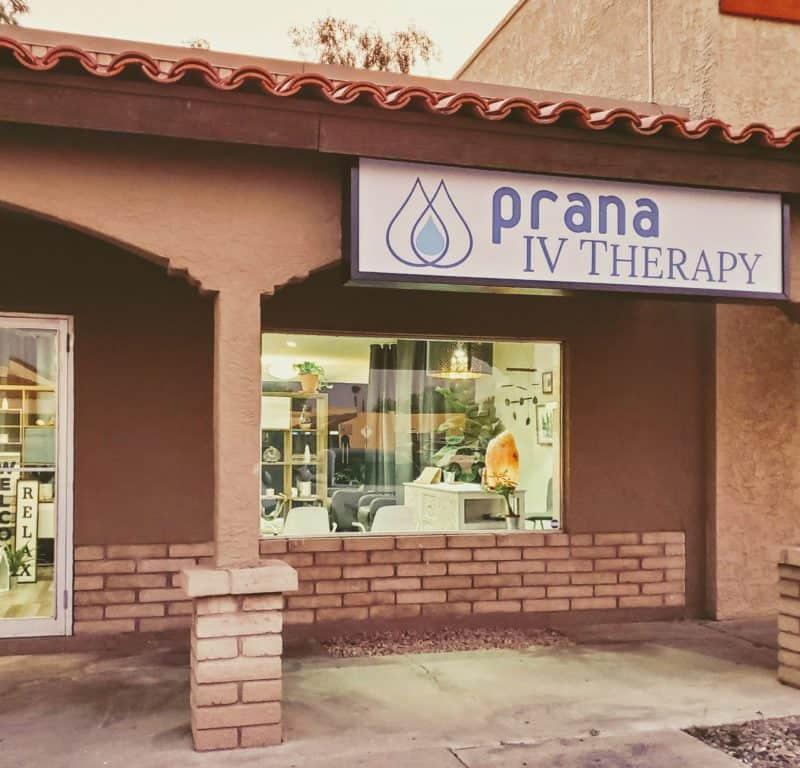
Prana Iv Therapy
Scottsdale, AZ
5.0· 517 Google reviews
Phoenix IV therapy service delivers wellness near you!
Infrared saunaRed light therapyPEMFIV & hydration+1

02
Just Wellness
Grapevine, TX
5.0· 495 Google reviews
Grapevine's dual medspa and wellness center offering NP-led aesthetic injectables (Botox, fillers, facials) alongside clinical recovery services including cryotherapy, hyperbaric oxygen therapy, red light therapy, infrared sauna, and IV hydration.
CryotherapyHyperbaric oxygenRed light therapyInfrared sauna+3

03
Sauna House Greenville
Downtown · Greenville, SC
5.0· 415 Google reviews
Nordic-style communal sauna and cold-plunge contrast bathhouse in downtown Greenville, with self-guided hot/cold cycles, walk-ins, and memberships.
Cold plungeContrast therapyInfrared saunaHalotherapy

04
Perspire Sauna Studio
McDonough, GA
5.0· 339 Google reviews
Perspire's McDonough studio on Jonesboro Road runs private full-spectrum infrared sauna suites with red light therapy, halotherapy and a SNØ cold shower.
Infrared SaunaRed light therapyHalotherapy
05
The Covery | Health - Sarasota
Sarasota, FL
5.0· 310 Google reviews
The Covery is your destination for immersive wellness and anti-aging optimization, offering advanced therapies including cryotherapy, hyperbaric oxygen, red light therapy, halotherapy, infrared sauna, PEMF, lymphatic drainage, and IV infusions to support longevity and optimal health.
Red light therapyHalotherapyCryotherapyInfrared sauna+5
Questions
Frequently asked questions
Is infrared sauna or halotherapy better for skin?
They help differently. Infrared sauna boosts circulation and can support skin indirectly through improved blood flow and sweating. Halotherapy is sometimes used for surface skin conditions, with limited and mixed evidence. Neither is a targeted skin therapy; for collagen and anti-aging, red light therapy has the strongest evidence base.
Does halotherapy actually work for respiratory issues?
The evidence is limited and mixed. Some small studies suggest dry salt therapy may ease symptoms for certain respiratory complaints, but it isn't an established medical intervention and shouldn't replace prescribed care. Many people find the calm, salt-aired environment comfortable; consider it a wellness experience, not a clinical intervention, and check with a doctor for any respiratory condition.
Can I do infrared sauna and halotherapy on the same day?
Yes: they're very different experiences with no contraindication together. A common pattern is halotherapy as calm down-time and infrared sauna for the thermal benefits. Hydrate well after the sauna, since you'll sweat significantly, whereas halotherapy involves no sweating at all.
References
- Efficacy of Waon therapy for fibromyalgia
- The effects of repeated thermal therapy for patients with chronic pain
- Waon Therapy for Managing Chronic Heart Failure: results from the multicenter prospective randomized WAON-CHF study
- Non-acute effects of passive heating interventions on cardiometabolic risk and vascular health: systematic review and meta-analysis of randomized controlled trials
- Clinical Effects of Regular Dry Sauna Bathing: A Systematic Review
- Far-infrared saunas for treatment of cardiovascular risk factors: summary of published evidence
- Halotherapy—An Ancient Natural Ally in the Management of Asthma: A Comprehensive Review
- Halotherapy as asthma treatment in children: A randomized, controlled, prospective pilot study
- A review of halotherapy for chronic obstructive pulmonary disease
Keep exploring
The full guides
More head-to-heads
IV hydration vs hyperbaric oxygen →Contrast therapy vs cryotherapy →PEMF vs compression therapy →Lymphatic compression vs compression therapy →Red light therapy vs cryotherapy →Infrared sauna vs cold plunge →Cryotherapy vs cold plunge →PEMF vs red light therapy →Hyperbaric oxygen vs red light therapy →Contrast therapy vs cold plunge →Infrared sauna vs red light therapy →Cryotherapy vs infrared sauna →