Recovery protocol
Post-surgery recovery: how to sequence lymphatic drainage, red light, and hyperbaric oxygen
Post-surgical recovery is one of the highest-intent areas in the recovery modality world — and one of the most misguided. The right modalities used in the right sequence can support swelling reduction, tissue repair, and faster functional return. The wrong ones, used too early, can cause harm. This guide covers general principles; always follow your surgeon's specific instructions and get clearance before starting any modality.
The protocol, step by step
- 01
Week 1–2: lymphatic drainage only (when surgically cleared)
Lymphatic drainage — manual or via pneumatic compression garment — is often the earliest modality appropriate after surgery. It directly targets the edema and fluid accumulation that follows any surgical procedure. Many plastic surgeons and orthopedic surgeons recommend starting within days once incisions are stable and drains are removed (if applicable). Always get explicit clearance from your surgeon first. This is the one non-negotiable step before any post-surgical studio visit.
- 02
Weeks 2–4: red light therapy on intact skin around the incision
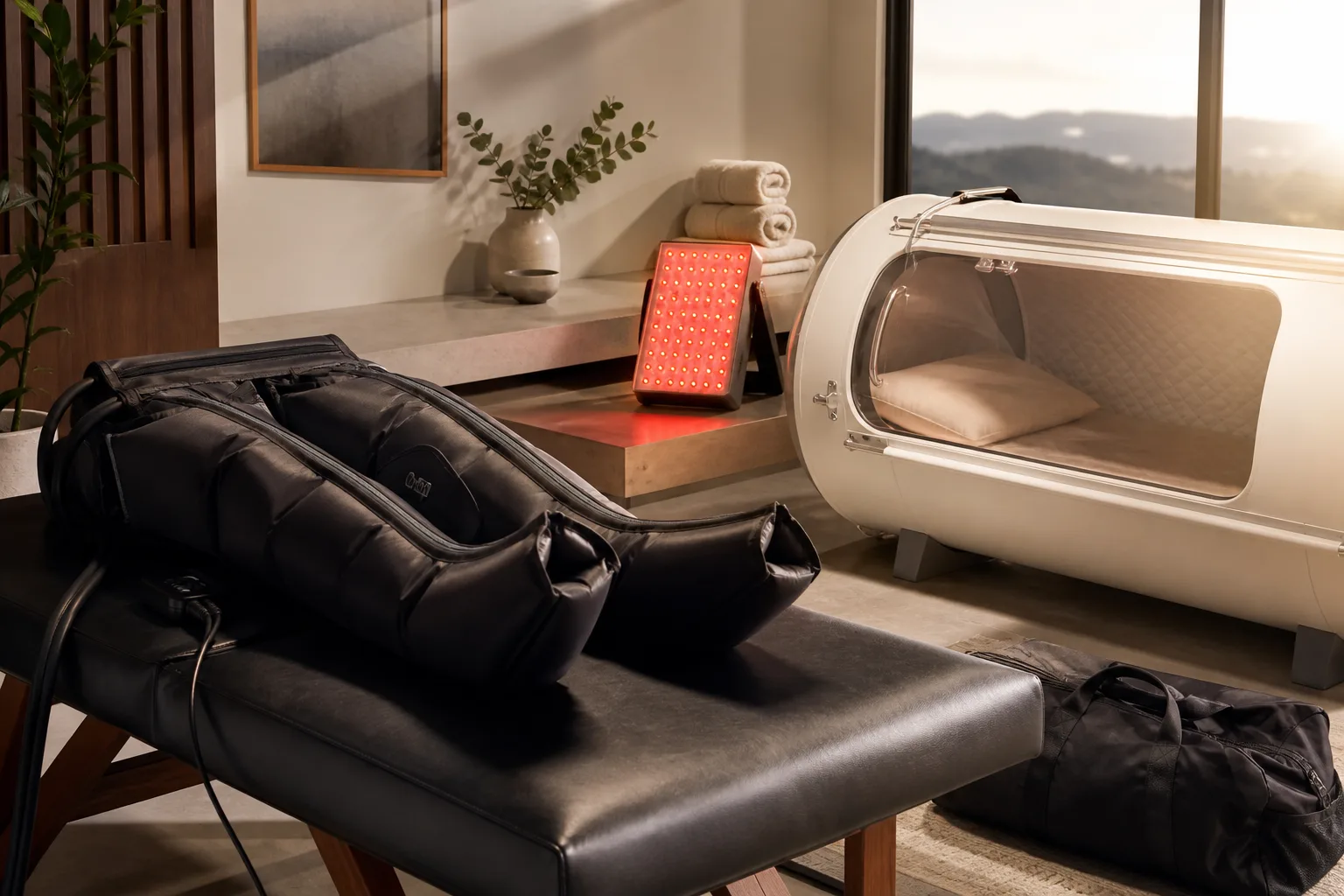
Red and near-infrared light supports tissue repair and may reduce inflammation when applied to the peri-incisional area on intact, healed skin — not directly over open wounds or fresh sutures. Once wounds are closed and the surgeon has cleared light-based treatments, 5–15 minute sessions 3–5x/week over the area can be incorporated. Keep the device at the recommended distance to avoid thermal effects on sensitive healing tissue.
- 03
Weeks 2–6: hyperbaric oxygen (if accessible and cleared)
HBOT increases oxygen delivery to tissues and has documented roles in wound healing and tissue oxygenation. Wellness-grade HBOT (typically 1.5–2.0 ATA, 60–90 minute sessions, over a series of weeks) is used in post-surgical contexts by practitioners experienced with recovery applications. Medical-grade HBOT protocols differ. Require physician clearance before starting.
- 04
4–8 weeks and beyond: gradual return to thermal modalities
Infrared sauna and contrast therapy are typically not appropriate until wounds are fully healed and the body is past the acute surgical stress response. The timeline varies widely by procedure type and individual healing. Confirm with your surgeon before returning to heat-based modalities — some procedures carry specific restrictions on core temperature elevation.
Why lymphatic drainage is the anchor modality post-surgery
Surgical procedures — particularly plastic surgery, liposuction, joint replacements, and oncological surgeries — disrupt lymphatic pathways. The resulting edema is not just uncomfortable; it slows healing and increases fibrosis risk. Manual lymphatic drainage (MLD) and pneumatic compression devices designed for lymphatic flow move stagnant fluid into functional lymphatic channels and toward drainage nodes.
The key window is early: starting lymphatic support within the first week or two post-surgery, when the lymphatic disruption is most active, produces better outcomes than starting later. Studios that offer lymphatic compression are typically experienced with post-surgical clients and will adjust protocols for your specific procedure and healing stage.
What to tell the studio when booking post-surgical sessions
- Bring your surgeon's clearance — reputable studios will ask for it for post-surgical clients. Don't book without it.
- Specify your procedure type, date, and any drainage sites, implants, or wound locations that might affect modality choice or device positioning.
- Describe your swelling pattern — location, timing, bilateral vs. unilateral — so the practitioner can tailor compression zones.
- Ask about frequency: most post-surgical lymphatic protocols run 2–3 sessions per week in the first month, tapering as swelling resolves.
Goal-based recovery sequencing, not medical advice — check contraindications with a professional before starting any modality.
Modalities in this protocol
Frequently asked questions
How soon after surgery should I get lymphatic drainage?
This depends on your procedure and surgeon's instructions. Many surgeons recommend starting within the first few days to a week post-surgery once incisions are stable and drains are removed (if applicable). Earlier intervention tends to produce better swelling outcomes. Always get explicit surgical clearance first — do not start any post-surgical recovery modality without it.
Can I use red light therapy on a surgical incision?
Not directly on open wounds or fresh sutures. Red light on intact skin around a healed incision — once wounds are closed — is a different matter and generally considered low-risk at appropriate distances. Wait until your surgeon clears light-based treatments, then apply red or near-infrared light to the area around the incision rather than directly over the suture line.
When can I return to infrared sauna after surgery?
Typically 4–8 weeks or more, depending on the procedure and your individual healing trajectory. Infrared sauna raises core body temperature and drives significant sweating — both of which impose physiological demands on a body managing a surgical recovery response. Conservative guidance: wait until wounds are fully healed and your surgeon has explicitly cleared heat exposure. Ask directly: 'Is it safe for me to use an infrared sauna at this stage of healing?'
Other protocols
Build this protocol into your routine
Take the Protocol Match and get a personalized version with local studios that offer each modality.