Loading…
Lifestyle & recreation
Rock Climbing — Recovery
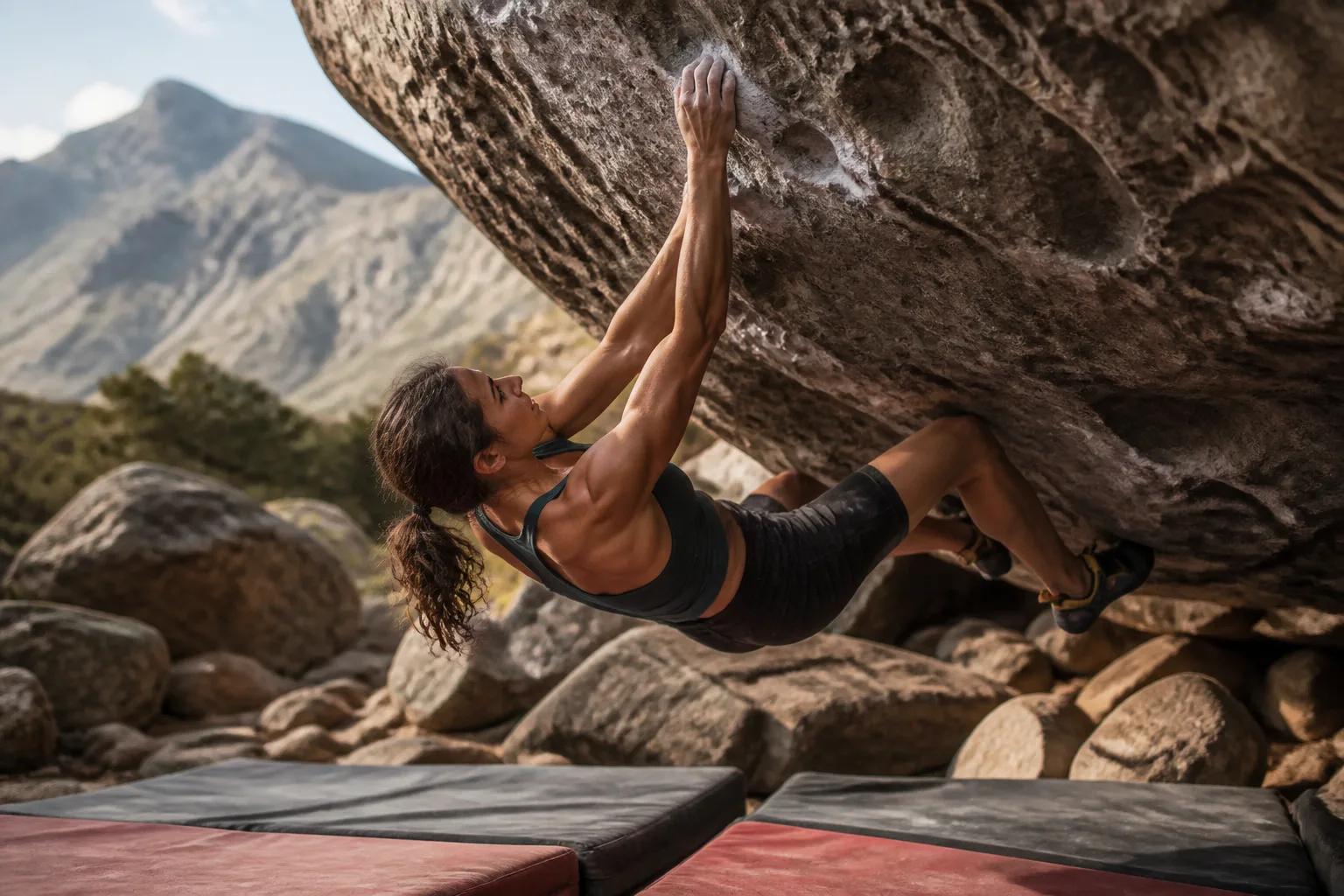
Rock climbing places unusually concentrated load on the fingers and forearms, with shoulders and elbows working overhead and ankles exposed when bouldering falls end on the mat.
The training year
One steady recovery rhythm
Indoor climbing is year-round. Outdoor climbers may build around weather and trips, but those windows vary by region and are better treated as personal event blocks than a universal season.
Wellness and training information, not medical advice. Recovery modalities are a support to good programming, sleep and nutrition — they do not treat, cure, or diagnose injury, and no session guarantees a performance outcome. Pain that persists or worsens deserves evaluation by a clinician or athletic trainer before you train through it.
The demands
What rock climbing asks of the body
Rock climbing combines sustained grip, repeated high-force finger positions, overhead pulling and precise foot placement. Route climbing spreads that work across longer efforts, while bouldering concentrates difficulty into fewer, harder moves and adds repeated landings from falls. Fingers, elbows and shoulders accumulate the greatest chronic upper-body load; ankles take more acute fall-related load in bouldering. The sport is also highly skill-dependent, so fatigue shows up as lost foot precision, reduced grip options and a tendency to pull harder than the movement requires.
Also known as climbing, bouldering, sport climbing, indoor climbing, lead climbing, top-rope climbing
The load profile
- finger flexor and pulley load
- grip and forearm endurance
- overhead pulling
- shoulder stability
- hip mobility and foot precision
- bouldering fall and landing load
From demands to modalities
What studios pair with this load
The demands above are the input. These are the modalities recovery studios commonly pair with that kind of load — read what each actually does before you book.
The load
- finger flexor and pulley load
- grip and forearm endurance
- overhead pulling
- shoulder stability
- hip mobility and foot precision
- bouldering fall and landing load
What studios pair with it
Assisted stretch
Practitioner-assisted stretch
Pairs with: grip and forearm endurance · overhead pulling · shoulder stability
What it does →Percussion therapy
Percussive / vibration
Pairs with: grip and forearm endurance · overhead pulling · shoulder stability
What it does →Compression therapy
Air-pressure compression
Pairs with: hip mobility and foot precision
What it does →A reading map, not a prescription — each page explains what a session involves and what the evidence shows. For condition-level evidence, start at the conditions library.
Gear and surface
What changes how the load lands
Two athletes on the same schedule can accumulate very differently depending on what they train on and in.
Climbing-shoe stiffness and fit change foot loading, while hold size and wall angle change finger and shoulder demand. Bouldering mat layout changes landing exposure, but no genuine matching equipment records were available to link.
What tends to show up
Common complaints, and where to read more
Plain-language descriptions of what athletes in this sport report. Where a cited evidence guide exists, the entry links to it.
Tennis Elbow / Lateral Epicondylitis
Tennis elbow is an overuse tendon problem on the outside of the elbow, usually from repeated gripping, lifting, twisting, or racquet/tool use.
Browse all conditions →Near you
Find recovery near you
The directory behind Praxium — studios by city and modality. Start where coverage runs deepest, or browse everything.
Questions
Frequently asked questions
Why do my fingers stay sore longer than the rest of me?
Climbing puts high, repeated force through small finger structures that other activities rarely load this directly. Persistent focal pain, swelling or a sudden pop is an injury question and should not be treated as ordinary forearm fatigue.
Is bouldering harder on the body than roped climbing?
It is different. Bouldering compresses difficulty into fewer powerful moves and adds landing exposure, while route climbing creates longer bouts of grip and forearm fatigue. Session count and attempt volume matter in both.
Should I climb again while my forearms are still pumped?
A pump that clears is part of the activity. Grip weakness or pain that persists into the next day is a reason to reduce loading and reassess the session plan, especially before hard crimping.
Does taping prevent finger pulley injuries?
Evidence for taping as prevention or treatment is limited and context-dependent. It should not be treated as permission to keep loading a painful finger; a suspected pulley injury needs qualified assessment and progressive return.
My ankle hurts after a bouldering fall. Can I just climb routes?
Not until the injury is understood. Swelling, difficulty bearing weight or worsening pain after a fall should be assessed rather than worked around with a different climbing discipline.
Keep exploring
Recovery goals
Guides
The beginner's guide to recovery modalities: what each one does and where to start →How often should you cold plunge? Dose, duration, and when more backfires →Contrast therapy: how to alternate hot and cold, and why the order matters →Red light therapy: what the evidence supports, and what it doesn't →Compression therapy: how pneumatic boots work and what they actually do →PEMF therapy explained: what pulsed magnetic fields can and can't do →Is whole-body cryotherapy worth it? A cost-benefit look →
Turn a season into a plan
Take the 2-minute Modality Match quiz and get a starting point built around how you train — which modalities to look at first, and which to run past a clinician.
Wellness and training information, not medical advice. Recovery modalities do not treat, cure, or diagnose any injury or condition and never replace care from a qualified clinician, athletic trainer, or physical therapist.