Loading…
Lifestyle & recreation
Hiking — Recovery Through the Training Year
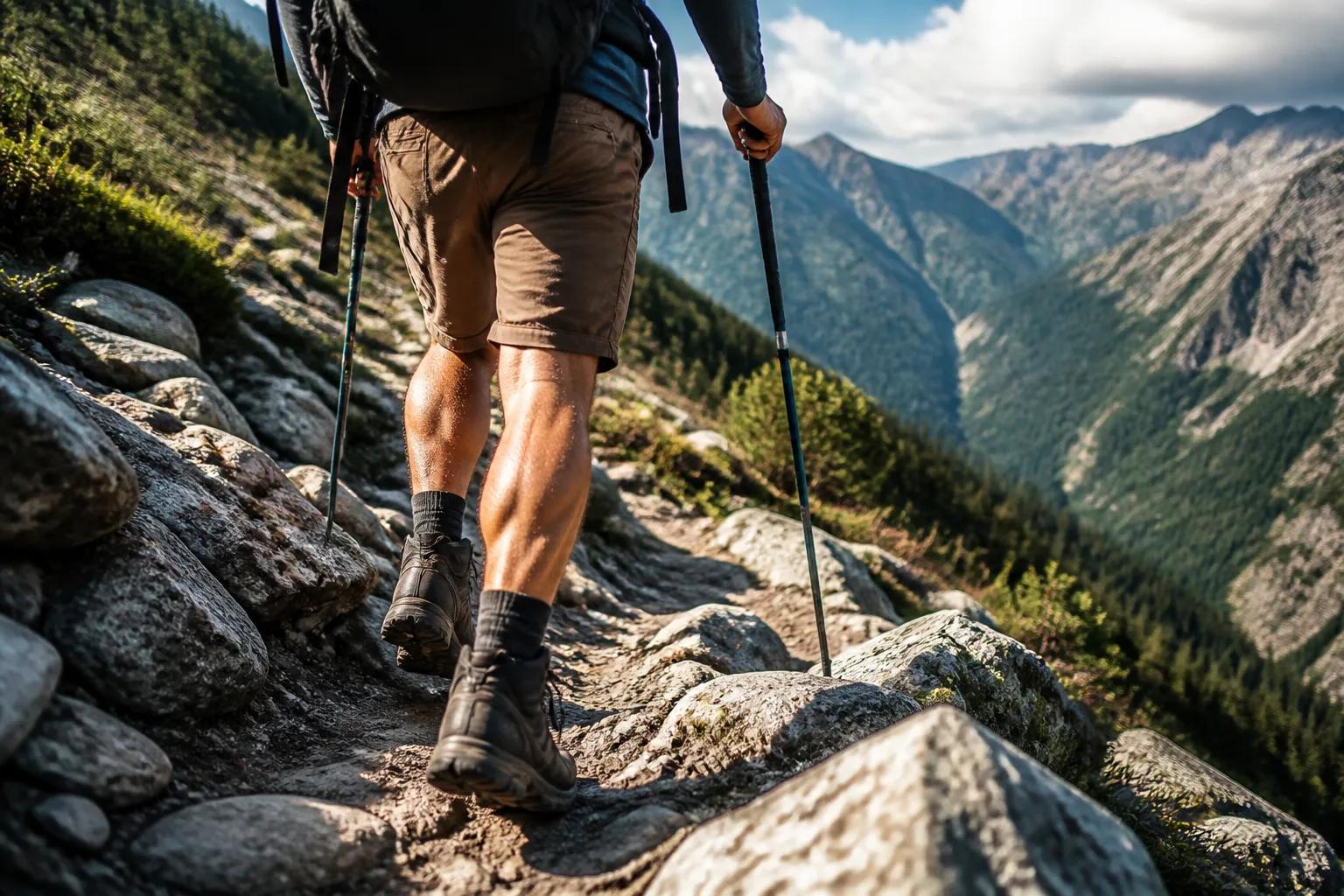
Hiking turns ordinary walking into sustained climbing, downhill braking and repeated foot and ankle decisions on uneven ground.
The training year
Recovery changes with the season
In the main trail season recovery supports long descents and consecutive outings; the winter window is a chance to preserve leg and ankle capacity before spring volume jumps.
Apr–Nov
In-season
Primary trail season in temperate climates, with distance and vertical gain often increasing quickly in spring and peaking in summer and fall.
Protocols for this phase →Dec–Mar
Off-season
Lower trail volume for many recreational hikers; walking may continue, but terrain exposure and long descents usually fall.
Protocols for this phase →Wellness and training information, not medical advice. Recovery modalities are a support to good programming, sleep and nutrition — they do not treat, cure, or diagnose injury, and no session guarantees a performance outcome. Pain that persists or worsens deserves evaluation by a clinician or athletic trainer before you train through it.
The demands
What hiking asks of the body
Hiking is accessible because the movement is familiar, but terrain changes the load. Uphill grades raise aerobic and calf demand; descents ask the quadriceps to brake every step; loose or uneven ground adds continuous ankle and balance work. Distance, vertical gain, surface and pace matter more than a simple hour count, and a long descent can produce more next-day soreness than a longer flat walk. For many recreational hikers the season builds quickly in spring, peaks through summer and fall, then drops enough in winter that the first long trail day back becomes a meaningful load spike.
Also known as day hiking, trail hiking, hillwalking, walking trails, trekking
The load profile
- sustained uphill aerobic work
- eccentric downhill braking
- uneven-terrain balance
- repetitive foot and ankle loading
- long-duration lower-body endurance
From demands to modalities
What studios pair with this load
The demands above are the input. These are the modalities recovery studios commonly pair with that kind of load — read what each actually does before you book.
The load
- sustained uphill aerobic work
- eccentric downhill braking
- uneven-terrain balance
- repetitive foot and ankle loading
- long-duration lower-body endurance
What studios pair with it
Compression therapy
Air-pressure compression
Pairs with: sustained uphill aerobic work · repetitive foot and ankle loading
What it does →Infrared sauna
Radiant heat therapy
Pairs with: sustained uphill aerobic work
What it does →Float therapy
Quiet float tank
Pairs with: sustained uphill aerobic work
What it does →Assisted stretch
Practitioner-assisted stretch
Pairs with: repetitive foot and ankle loading
What it does →A reading map, not a prescription — each page explains what a session involves and what the evidence shows. For condition-level evidence, start at the conditions library.
Gear and surface
What changes how the load lands
Two athletes on the same schedule can accumulate very differently depending on what they train on and in.
Footwear traction, fit and stiffness change foot and ankle load; trekking poles can redistribute some balance and descent demand to the upper body. A pack adds load even on a day hike, and unfamiliar footwear can turn an unchanged route into a different session.
What tends to show up
Common complaints, and where to read more
Plain-language descriptions of what athletes in this sport report. Where a cited evidence guide exists, the entry links to it.
Muscle Strain / Pulled Muscle
A muscle strain is a stretch or tear of muscle fibers, commonly from sudden force, twisting, overuse, under-recovery, or insufficient warm-up.
Browse all conditions →Delayed Onset Muscle Soreness
Delayed onset muscle soreness is the one recovery target where the research is genuinely deep, and several modalities do reduce how sore you feel.
See the evidence →Achilles Tendinitis / Tendinopathy
Achilles tendinitis is irritation or inflammation of the tendon that connects the calf muscles to the heel, often from running, jumping, or repeated loading.
Browse all conditions →Knee Pain
Knee pain is discomfort in or around the knee joint from overuse, arthritis, injury, movement load, or irritation of muscles, tendons, ligaments, or cartilage.
Browse all conditions →Iliotibial Band Syndrome
Iliotibial band syndrome causes pain on the outside of the knee when the IT band is irritated where it passes the lateral femur.
See the evidence →Foot blisters
A common hiking complaint driven by friction, moisture and footwear. No matching condition record was found in the library, so it remains unlinked.
Browse all conditions →Near you
Find recovery near you
The directory behind Praxium — studios by city and modality. Start where coverage runs deepest, or browse everything.
Questions
Frequently asked questions
Why are descents harder on my legs than climbs?
Descending asks the quadriceps to brake the body repeatedly, which can create substantial next-day soreness even when breathing feels easier than it did uphill. Count vertical loss as real load, not as the easy half of the route.
Is an ankle roll something to walk off?
Not if pain, swelling or instability persists. Uneven ground and downhill walking are documented ankle-sprain contexts; a suspected sprain is an injury question, especially when the route makes self-rescue difficult.
What matters more: miles or elevation?
Neither alone. Ten flat miles and ten steep technical miles are different sessions. Time on feet, vertical gain and loss, surface, pace, pack weight and consecutive trail days give a more honest picture.
Why do the first spring hikes create so much soreness?
Winter walking often preserves general fitness without preserving long-descending tolerance or uneven-terrain exposure. A rapid jump in distance and vertical gain can therefore behave like a new training block.
Can recovery make a blistered foot ready for another long hike?
A blister is a friction and skin-protection problem first. Address footwear, socks, moisture and wound care; do not use temporary comfort to ignore broken skin or altered walking mechanics.
Keep exploring
Conditions referenced
Recovery goals
Guides
The beginner's guide to recovery modalities: what each one does and where to start →How often should you cold plunge? Dose, duration, and when more backfires →Contrast therapy: how to alternate hot and cold, and why the order matters →Red light therapy: what the evidence supports, and what it doesn't →Compression therapy: how pneumatic boots work and what they actually do →PEMF therapy explained: what pulsed magnetic fields can and can't do →Is whole-body cryotherapy worth it? A cost-benefit look →
Turn a season into a plan
Take the 2-minute Modality Match quiz and get a starting point built around how you train — which modalities to look at first, and which to run past a clinician.
Wellness and training information, not medical advice. Recovery modalities do not treat, cure, or diagnose any injury or condition and never replace care from a qualified clinician, athletic trainer, or physical therapist.