Loading…
Strength & fitness
Strength Training — Recovery
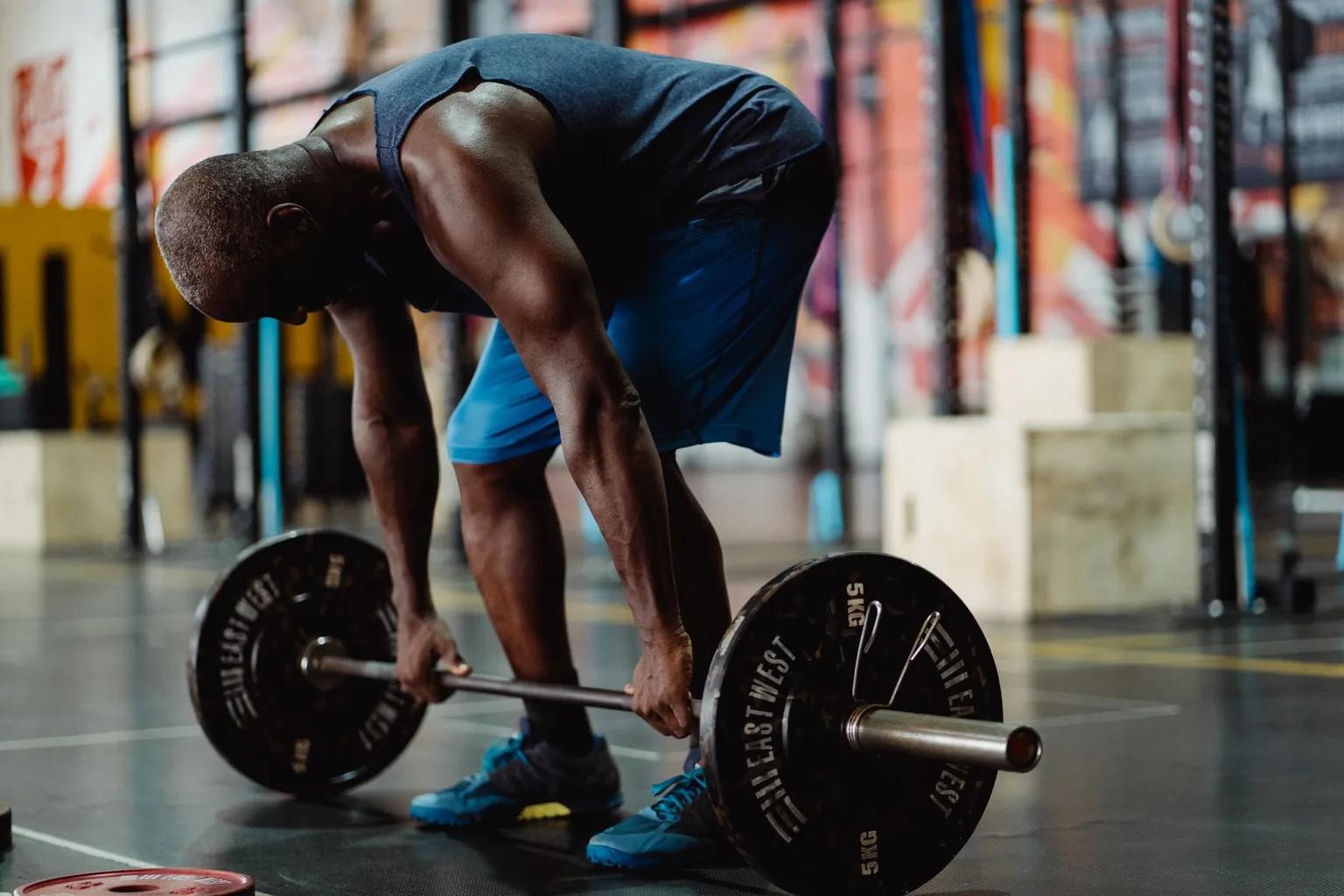
Strength training often underlies other sports; heavy or novel sessions drive soreness, while exercise choice shapes joint load.
The training year
One steady recovery rhythm
Through an accumulation or peak block, recovery is higher-frequency soreness clearance and sleep support with a mid-block body-composition re-scan; through a deload it drops to joint unloading and a re-scan anchoring the next block.
Jan–Dec
Year-round
Block-periodized rather than calendar-driven: four-to-twelve week accumulation and intensification blocks with a deload between them, and eight-to-twelve week meet preps for competitive lifters. The block, not the month, is the phase, and the coach or the programme sets it.
Protocols for this phase →Wellness information, not medical advice. Recovery modalities support training recovery and readiness — they do not treat, cure, or diagnose any injury or condition, and they never replace a qualified clinician, athletic trainer, or physical therapist. Anything that feels like an injury deserves a professional evaluation before a recovery session.
The demands
What strength training asks of the body
Two things make strength training distinctive here. First, it is almost never the only thing an athlete does — resistance training and movement sit as a base layer under nearly every sport here, which means this page usually applies alongside another rather than on its own. Second, its phase structure is a block rather than a season: four to twelve weeks of accumulation or intensification followed by a deload, repeating indefinitely, with meet preps layered on for competitive lifters. Soreness peaks after heavy or novel sessions and after the first week of a new block; low-back, shoulder and knee load track the exercise selection rather than the calendar. Body-composition measurement is the clearest way to see whether a block did what it was meant to, and it fits naturally at the start and midpoint of one. Where the composite circuit fits is on a rest or deload day rather than immediately after a lift, so the cold exposure sits well away from the session it would otherwise blunt.
Also known as resistance training, lifting, weight training, powerlifting, the gym
The load profile
- heavy axial load
- high mechanical tension
- progressive overload
- end-range joint loading
- novel-stimulus soreness
From demands to modalities
What studios pair with this load
The demands above are the input. These are the modalities recovery studios commonly pair with that kind of load — read what each actually does before you book.
The load
- heavy axial load
- high mechanical tension
- progressive overload
- end-range joint loading
- novel-stimulus soreness
What studios pair with it
Percussion therapy
Percussive / vibration
Pairs with: heavy axial load · high mechanical tension · progressive overload
What it does →Cold plunge
Cold-water immersion
Pairs with: heavy axial load · high mechanical tension · progressive overload
What it does →Contrast therapy
Alternating hot & cold
Pairs with: heavy axial load · high mechanical tension · progressive overload
What it does →Assisted stretch
Practitioner-assisted stretch
Pairs with: end-range joint loading
What it does →A reading map, not a prescription — each page explains what a session involves and what the evidence shows. For condition-level evidence, start at the conditions library.
Gear and surface
What changes how the load lands
Two athletes on the same schedule can accumulate very differently depending on what they train on and in.
Belt, sleeve and shoe choice change how load distributes but not how much of it there is. The most useful thing to know about a lifter is where they are in a block, not what equipment they use.
What tends to show up
Common complaints, and where to read more
Plain-language descriptions of what athletes in this sport report. Where a cited evidence guide exists, the entry links to it.
Delayed Onset Muscle Soreness
Delayed onset muscle soreness is the one recovery target where the research is genuinely deep, and several modalities do reduce how sore you feel.
See the evidence →Above-Goal Body Fat / Body-Composition Target
Wellness body-composition goals (fat reduction, lean retention); assessment-driven, non-diagnostic.
Browse all conditions →Non-Functional Overreaching
Non-functional overreaching is a stalled, under-recovered state that follows weeks of training load exceeding recovery.
See the evidence →Reduced Range of Motion / Muscle Tightness
Temporary loss of joint range/muscle pliability with training, DOMS, or inactivity.
Browse all conditions →Knee Pain
Knee pain is discomfort in or around the knee joint from overuse, arthritis, injury, movement load, or irritation of muscles, tendons, ligaments, or cartilage.
Browse all conditions →Delayed-onset soreness after heavy or novel sessions
Muscle soreness that arrives 24 to 72 hours after a hard or unfamiliar session and peaks around day two. One of the most commonly reported training complaints there is, and a normal response to hard work rather than an injury.
See the evidence →Shoulder soreness from pressing volume
Aching across the front of the shoulder that accumulates with pressing frequency. Usually noticed first as discomfort at the bottom of a bench or overhead press.
Browse all conditions →Bursitis-type joint soreness
A localized, sometimes warm soreness right at a joint — commonly shoulder, hip or elbow — that feels different from muscle soreness and lingers longer.
Browse all conditions →Sleep and appetite shifts in high-volume blocks
Lighter sleep and a swinging appetite during accumulation and peak weeks. Often the first sign that training volume has moved ahead of recovery.
Browse all conditions →For parents and coaches
Almost every young athlete is now in a lifting programme alongside their sport, and the two loads stack. A heavy lower-body day placed the wrong side of a game is a common and entirely avoidable source of a bad week.
Near you
Find recovery near you
The directory behind Praxium — studios by city and modality. Start where coverage runs deepest, or browse everything.
Questions
Frequently asked questions
Should I ice or cold-plunge right after lifting?
Probably not, if the goal is muscle growth. Meta-analysis and review evidence indicates that cold-water immersion immediately after resistance training attenuates hypertrophy, and some strength adaptations, without the same effect on endurance training. If you want cold exposure, put it well away from the lifting session or on a rest day.
Then when _is_ cold useful for a lifter?
When comfort or a nearby competition matters more than the adaptation from that particular session — a deload, a meet day, or a rest day. It is a timing question, not a good/bad question.
How sore should I expect to be after a new programme?
Quite sore, and it should settle. Soreness after unfamiliar or eccentric-heavy work typically peaks 24–72 hours in and resolves over five to seven days, with much less soreness the second time you repeat the same session.
Does recovery work let me train more often?
It may make training feel more manageable, but nothing here reliably increases how much load you can productively absorb. Sleep and programming do more for that than any modality does.
What actually changes between an accumulation block and a deload?
In a hard block the emphasis is soreness clearance and sleep support at a higher frequency; in a deload it drops to joint unloading and setting up the next block. The block, not the month, is the unit to plan around.
References
- Throwing cold water on muscle growth: a systematic review with meta-analysis of postexercise cold-water immersion and resistance-training hypertrophy
- Post-exercise Cold Water Immersion Effects on Physiological Adaptations to Resistance Training (narrative review)
- Advances in Non-Pharmacological Strategies for DOMS: A Scoping and Critical Review of Recent Evidence
- Sleep and Athletic Performance: Impacts on Physical Performance, Mental Performance, Injury Risk and Recovery, and Mental Health
Keep exploring
Conditions referenced
Recovery goals
Guides
The beginner's guide to recovery modalities: what each one does and where to start →How often should you cold plunge? Dose, duration, and when more backfires →Contrast therapy: how to alternate hot and cold, and why the order matters →Red light therapy: what the evidence supports, and what it doesn't →Compression therapy: how pneumatic boots work and what they actually do →PEMF therapy explained: what pulsed magnetic fields can and can't do →Is whole-body cryotherapy worth it? A cost-benefit look →
Turn a season into a plan
Take the 2-minute Modality Match quiz and get a starting point built around how you train — which modalities to look at first, and which to run past a clinician.
Wellness and training information, not medical advice. Recovery modalities do not treat, cure, or diagnose any injury or condition and never replace care from a qualified clinician, athletic trainer, or physical therapist.