Recovery protocol
The athlete recovery protocol: what to use, when, and how goals change the answer
Recovery is not one-size-fits-all across sports and training goals. What helps a marathoner bounce back is different from what helps a powerlifter, and what's right the day after competition differs from what's right mid-training-block. Here's a goal-specific breakdown by sport context.
The protocol, step by step
- 01
Immediately post-session: compression first — know the cold trade-off
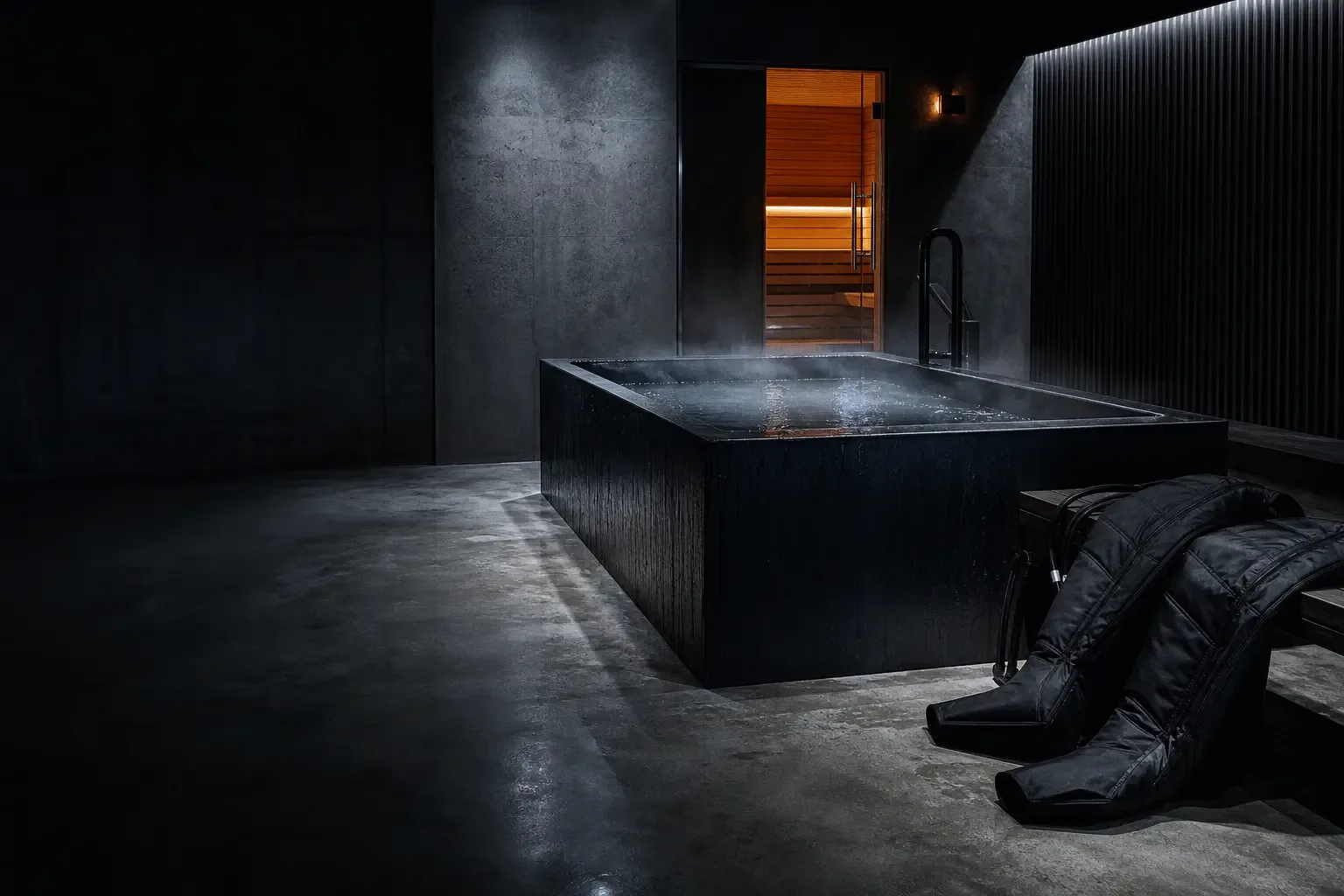
Pneumatic compression (NormaTec-style boots) is the low-risk choice immediately after any training session — it supports circulation without interfering with training adaptation. Cold plunge right after strength training can blunt the anabolic signaling your muscles use to grow. Save cold for competition recovery or sessions where hypertrophy is not the priority. After endurance training, cold is less problematic — the adaptation signal differs, and rapid soreness reduction often matters more.
- 02
Same day (2+ hours post-training): heat or red light
Infrared sauna and red light therapy are best several hours after training, when the acute adaptation signal has had time to propagate. Both support circulation and tissue repair without the interference concern. Red light at 10–20 minutes targets a joint or muscle group specifically; full-body infrared sauna at 130–150°F for 15–25 minutes delivers the broader heat stimulus.
- 03
Competition recovery (rapid): cold plunge or cryotherapy
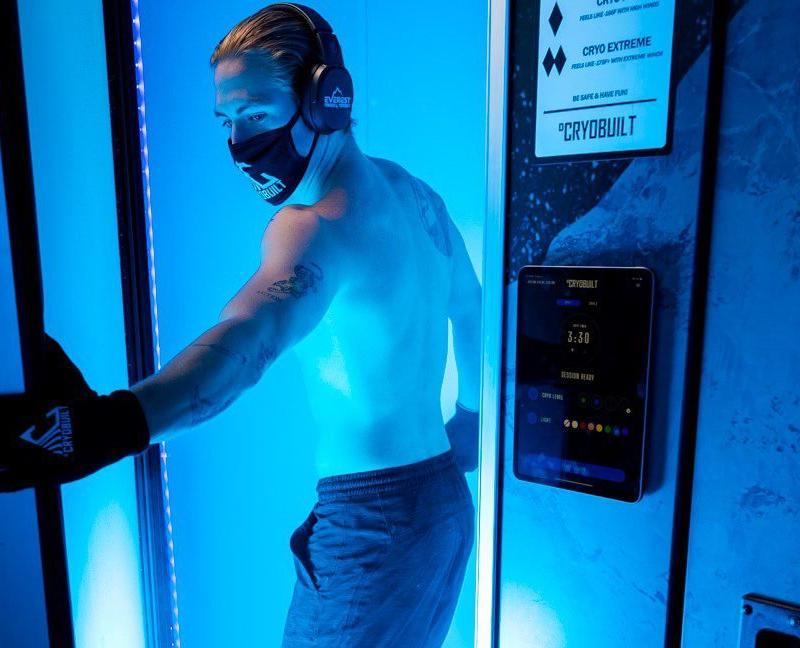
When you have another event, match, or hard session within 24–48 hours, fast soreness reduction beats adaptation optimization. Cold plunge (50–59°F for 5–10 min) or cryotherapy (2–3 minutes at extreme cold) can significantly reduce DOMS and muscle soreness for the near-term. This is the appropriate context for cold immediately post-effort — recovery speed matters more than long-term adaptation.
- 04
Rest days: sauna + red light + compression or stretch
Rest days are when modalities that might otherwise compete with adaptation can run fully. Infrared sauna (20–30 min), red light on problem areas, compression for heavy legs, and percussion therapy for tight tissue form a comprehensive rest-day stack that promotes recovery without loading the system.
The cold-blunts-hypertrophy nuance — what the evidence shows
Cold water immersion immediately after resistance training has been shown in multiple controlled studies to attenuate the acute inflammatory and anabolic signaling response that underpins muscle protein synthesis and long-term hypertrophy. The effect is real and documented. For athletes whose primary goal is strength and muscle mass during a hypertrophy-focused training block, avoiding cold immediately post-lifting is a practical, evidence-supported recommendation.
The exception: if you're in-season, competing frequently, or in a phase where performance tomorrow matters more than adaptation next month — cold immediately after training is a reasonable trade. The cost is some attenuation of adaptation; the benefit is faster subjective recovery. Context determines the right answer, not a fixed rule.
Sport-specific guidance
- Strength and powerlifting: avoid cold post-session during hypertrophy blocks; use compression and sauna; add cold on non-lifting days or during competition prep.
- Endurance running and cycling: cold plunge after long efforts is generally lower-risk for endurance adaptation; compression boots on long-run days; sauna 2–3x/week for cardiovascular conditioning.
- Team sports and combat sports: competition recovery trumps adaptation in-season; cold and compression immediately post-competition; reserve sauna for rest days.
- CrossFit and HIIT: mixed training means mixed recovery needs; assess the dominant stressor each day and treat accordingly — heavy barbell day, skip post-session cold; pure cardio day, cold is fine.
Goal-based recovery sequencing, not medical advice — check contraindications with a professional before starting any modality.
Modalities in this protocol
Frequently asked questions
Should I cold plunge after every lifting session?
Not if your goal is muscle growth. Cold water immersion immediately after strength training can reduce the inflammatory signal your muscles use to adapt and grow. During hypertrophy-focused training blocks, limit cold post-lifting or move it to several hours later. In competitive contexts where fast recovery between sessions matters more than adaptation — cold post-training is a reasonable choice.
In what order should I use sauna, cold plunge, and red light after training?
A practical daily sequence: compression or light movement immediately post-training; red light therapy on problem areas a few hours later; sauna in the evening or the next day for the broader heat stimulus. Cold plunge fits after sauna if doing contrast, or on non-strength days. The sequence matters less than whether cold is competing with an adaptation signal you want to preserve.
What supplements work alongside a recovery protocol?
Protein intake supports muscle repair independently of modality use. Creatine has well-documented recovery support in strength sports. Electrolytes become important when you're sweating through sauna sessions. These aren't alternatives to modalities — they're complements. For personalized supplementation, a sports dietitian is the right resource. Praxium's focus is helping you find the studios; the nutrition layer belongs with a qualified practitioner.
Other protocols
Build this protocol into your routine
Take the Protocol Match and get a personalized version with local studios that offer each modality.