Recovery protocol
The desk worker recovery protocol: countering a day of sitting
Sitting for eight hours is its own physiological stressor — sluggish circulation, stiff hips, tight shoulders, and neck tension. The recovery needs are different from an athlete's: less about blunting muscle damage, more about restoring circulation and releasing postural tension. Here's a protocol built for the sedentary day.
The protocol, step by step
- 01
Throughout the workday: break up sitting first
No modality replaces simply moving. Standing, walking a few minutes each hour, and changing posture do more for circulation than any after-work session. Treat the modalities below as a complement to movement breaks, not a substitute for them — the body responds to frequent small movement better than to one long recovery session bolted onto a fully sedentary day.
- 02
End of day: compression boots (20–30 min) for sluggish legs
A full day of sitting lets fluid pool in the lower legs and slows venous return. Pneumatic compression (NormaTec-style boots) mechanically assists circulation and feels especially good after a long sedentary stretch. It's low-risk and well-suited to the end of a desk day or a long-haul travel day.
- 03
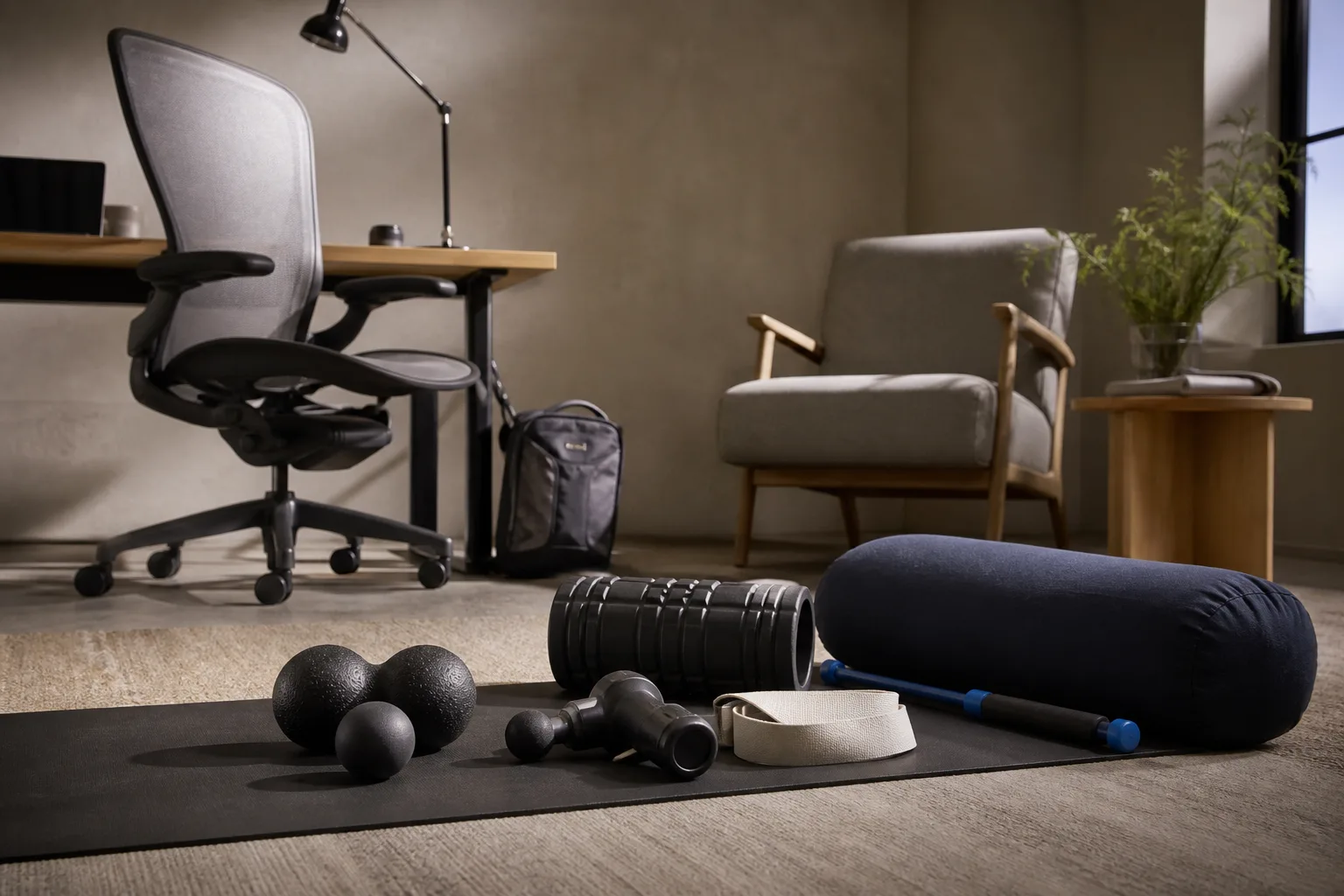
Percussion therapy (5–10 min) on tight postural muscles
Tech-neck, tight upper traps, and stiff hip flexors are the signature desk-work complaints. A percussion device (Theragun/Hypervolt-style) applied for a minute or two per area helps release tension in the muscles that shorten and tighten from prolonged sitting and screen posture. Keep it to muscle bellies, not directly on the spine or bony areas.
- 04
Infrared sauna (20–30 min) for whole-body circulation and unwinding
Heat promotes vasodilation and full-body circulation — a useful counter to a day of physical stillness — and the relaxation effect helps shed accumulated mental tension. An evening infrared sauna session at 130–150°F (55–65°C) doubles as a wind-down if it lands 90–120 minutes before bed.
- 05
Red light therapy (10–20 min) for nagging joint or neck tension
For chronic, low-grade neck, shoulder, or lower-back discomfort that builds over sedentary weeks, red and near-infrared light over the affected area supports tissue at the cellular level. It's a consistency play — 3–5x/week over several weeks — rather than an instant fix for an acute knot.
Why sedentary recovery is a different problem than athletic recovery
Athletes recover from acute, intense loading — micro-damage, inflammation, and a strong adaptation signal you sometimes want to preserve. Desk workers face the opposite stressor: chronic understimulation. Circulation slows, postural muscles shorten and tighten, and stabilizers weaken from disuse. The recovery goal isn't to blunt an inflammatory response — there usually isn't one — but to restore circulation, mobilize stiff tissue, and counter the postural pattern that a screen-and-chair day imposes.
That's why the modality emphasis flips. The cold-blunts-hypertrophy concern that dominates athletic protocols is irrelevant here. Compression, heat, percussion, and red light — circulation and tension tools — do more for a sedentary body than the acute-recovery toolkit, and there's no reason to avoid cold or heat on adaptation grounds.
A realistic weekly desk-recovery template
- Daily: movement breaks every hour — the non-negotiable foundation no modality replaces.
- Most evenings: compression boots (20–30 min) while you wind down, plus percussion on tight neck and hips.
- 2–3x/week: infrared sauna (20–30 min) for circulation and stress relief, ideally 90–120 min before bed.
- Ongoing: red light 3–5x/week on any chronic neck, shoulder, or lower-back tension area.
Goal-based recovery sequencing, not medical advice — check contraindications with a professional before starting any modality.
Modalities in this protocol
Frequently asked questions
What's the best recovery modality for sitting at a desk all day?
There isn't one single best — the most effective intervention is frequent movement breaks. Among studio modalities, compression boots address the sluggish lower-leg circulation that sitting causes, percussion therapy releases tight postural muscles like neck and hips, and infrared sauna supports whole-body circulation and stress relief. Match the modality to your dominant complaint.
Can recovery modalities fix posture problems from working at a computer?
They relieve the tension and stiffness, but they don't fix posture on their own. Percussion and heat loosen the tight muscles, red light supports nagging joint discomfort, and compression helps circulation — but lasting change requires movement, strengthening weak stabilizers, and ergonomic adjustments. Use the modalities to feel better and stay consistent with the underlying habit changes.
Do I need cold plunge if I sit all day instead of training hard?
Not necessarily. Cold's main recovery value is blunting acute training inflammation and providing an alertness or mood lift — the inflammation role is less relevant for a sedentary day. A morning cold plunge can still be a great energy and mood tool, but for countering the effects of sitting specifically, circulation and tension modalities like compression, heat, and percussion are a closer fit.
Other protocols
Build this protocol into your routine
Take the Protocol Match and get a personalized version with local studios that offer each modality.