Loading…
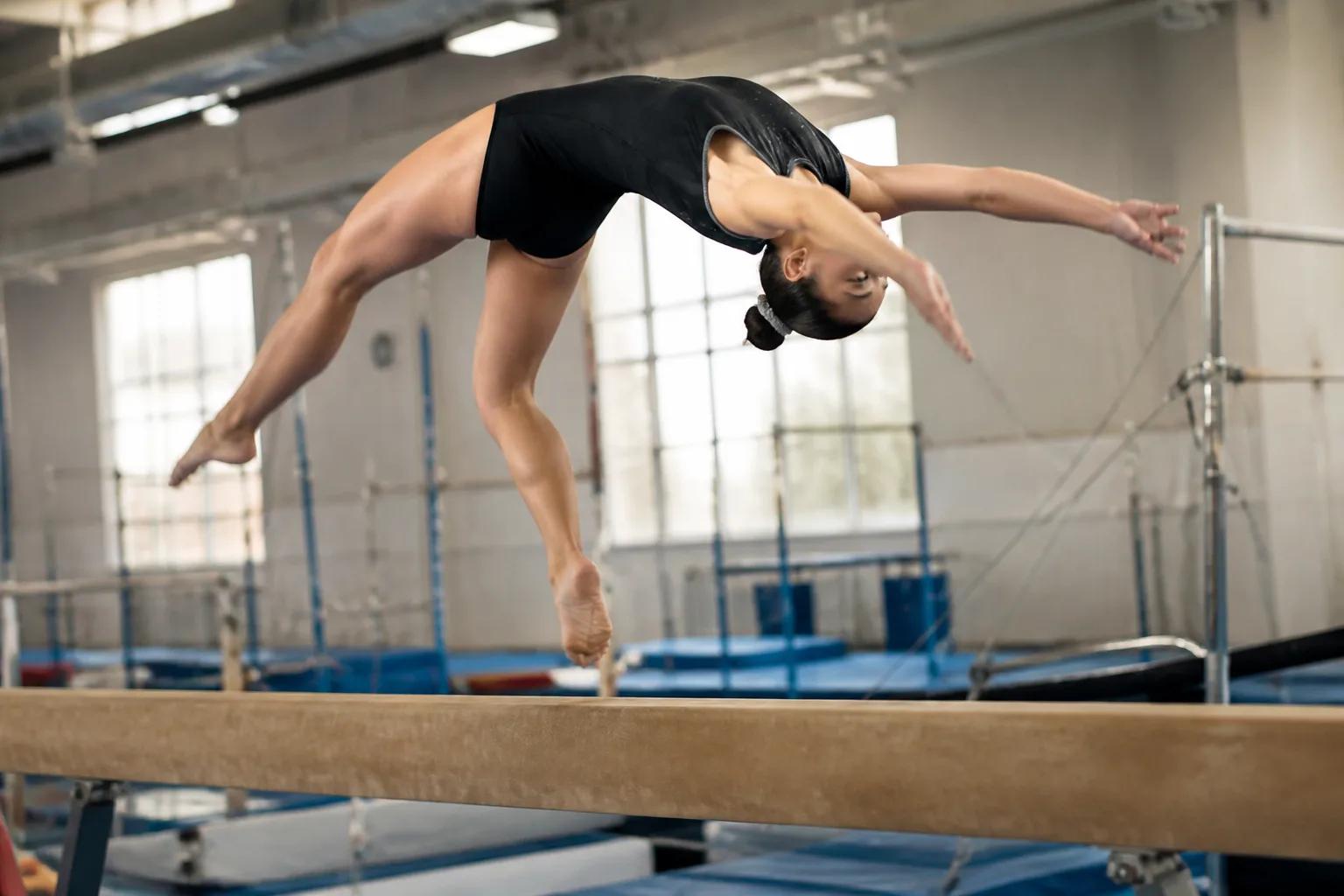
Strength & fitness
Gymnastics — Recovery Through the Training Year
Gymnastics combines high repetition, landing impact, overhead support, flexibility and technical precision, with the dominant load changing by apparatus.
The training year
Recovery changes with the season
During competition season, recovery protects routine quality inside a fixed meet rhythm; the summer block allows more capacity building and lower-pressure skill development.
Aug–Oct
Pre-season
Routine construction and skill-volume build before the main school and collegiate competition calendar.
Protocols for this phase →Nov–Apr
In-season
Primary competition block for many school, club and collegiate programmes, with routines layered onto continued practice volume.
Protocols for this phase →May
Event recovery
Post-championship reduction in routine pressure and opportunity to settle accumulated load.
Protocols for this phase →Jun–Jul
Off-season
Skill development and physical preparation continue, but the fixed competition rhythm is lighter.
Protocols for this phase →Wellness and training information, not medical advice. Recovery modalities are a support to good programming, sleep and nutrition — they do not treat, cure, or diagnose injury, and no session guarantees a performance outcome. Pain that persists or worsens deserves evaluation by a clinician or athletic trainer before you train through it.
The demands
What gymnastics asks of the body
Gymnastics asks athletes to repeat complex skills until timing and body position are reliable. Floor and vault concentrate landing impact through the ankles, knees and low back; bars and rings shift load toward the shoulders, elbows, wrists and grip; beam adds precision under fatigue. Competitive training can include many hours and hundreds of skill elements across a week, often from a young age. Recovery therefore follows apparatus exposure and repetition count more closely than a simple hard-day/easy-day label.
Also known as artistic gymnastics, competitive gymnastics, tumbling, women's artistic gymnastics, men's artistic gymnastics
The load profile
- repeated landing impact
- overhead support and hanging
- wrist and elbow loading
- spinal extension and trunk control
- high flexibility demands
- skill precision under fatigue
From demands to modalities
What studios pair with this load
The demands above are the input. These are the modalities recovery studios commonly pair with that kind of load — read what each actually does before you book.
The load
- repeated landing impact
- overhead support and hanging
- wrist and elbow loading
- spinal extension and trunk control
- high flexibility demands
- skill precision under fatigue
A reading map, not a prescription — each page explains what a session involves and what the evidence shows. For condition-level evidence, start at the conditions library.
Gear and surface
What changes how the load lands
Two athletes on the same schedule can accumulate very differently depending on what they train on and in.
Spring-floor response, landing-mat setup, bar and ring work, and beam repetition materially change which joints take the load, but no genuine matching equipment records were available to link.
What tends to show up
Common complaints, and where to read more
Plain-language descriptions of what athletes in this sport report. Where a cited evidence guide exists, the entry links to it.
Knee Pain
Knee pain is discomfort in or around the knee joint from overuse, arthritis, injury, movement load, or irritation of muscles, tendons, ligaments, or cartilage.
Browse all conditions →Low Back Pain
Low back pain is discomfort in the lumbar area of the spine. It is often related to muscle or tendon strain, stiffness, arthritis, disc irritation, posture, or load tolerance.
Browse all conditions →For parents and coaches
For youth gymnasts, pain that changes technique, persists between practices or affects daily activity deserves assessment. High skill volume should be progressed by coaches, not normalized simply because the athlete is young.
Near you
Find recovery near you
The directory behind Praxium — studios by city and modality. Start where coverage runs deepest, or browse everything.
Questions
Frequently asked questions
Why does soreness move around when the weekly schedule looks similar?
Apparatus exposure changes the load. A floor-heavy block emphasizes landings and legs, while bars or rings shift more work to the shoulders, elbows, wrists and grip.
Are long practices mostly standing around between skills?
Rest and coaching are part of technical practice, but the total element count still accumulates. Repeating landings, supports and routines across several hours creates meaningful load even when the work is not continuous.
Should a gymnast keep training through wrist or back pain?
Persistent or worsening pain is not a normal technical hurdle. The athlete may need the provoking skill volume modified and the problem assessed; recovery modalities should not be used to conceal it.
What matters most near a meet?
Preserving routine quality while reducing avoidable fatigue. Adding unfamiliar recovery work or extra conditioning close to competition is less useful than protecting sleep and following the coach's taper.
Does the off-season mean no gymnastics?
Usually not. Many programmes continue skill development and strength work, but without the same competition rhythm. That makes it the best window to rebuild capacity and address persistent problems.
Keep exploring
Recovery goals
Guides
The beginner's guide to recovery modalities: what each one does and where to start →How often should you cold plunge? Dose, duration, and when more backfires →Contrast therapy: how to alternate hot and cold, and why the order matters →Red light therapy: what the evidence supports, and what it doesn't →Compression therapy: how pneumatic boots work and what they actually do →PEMF therapy explained: what pulsed magnetic fields can and can't do →Is whole-body cryotherapy worth it? A cost-benefit look →
Turn a season into a plan
Take the 2-minute Modality Match quiz and get a starting point built around how you train — which modalities to look at first, and which to run past a clinician.
Wellness and training information, not medical advice. Recovery modalities do not treat, cure, or diagnose any injury or condition and never replace care from a qualified clinician, athletic trainer, or physical therapist.