Loading…
Combat sports
Wrestling — Recovery Through the Training Year
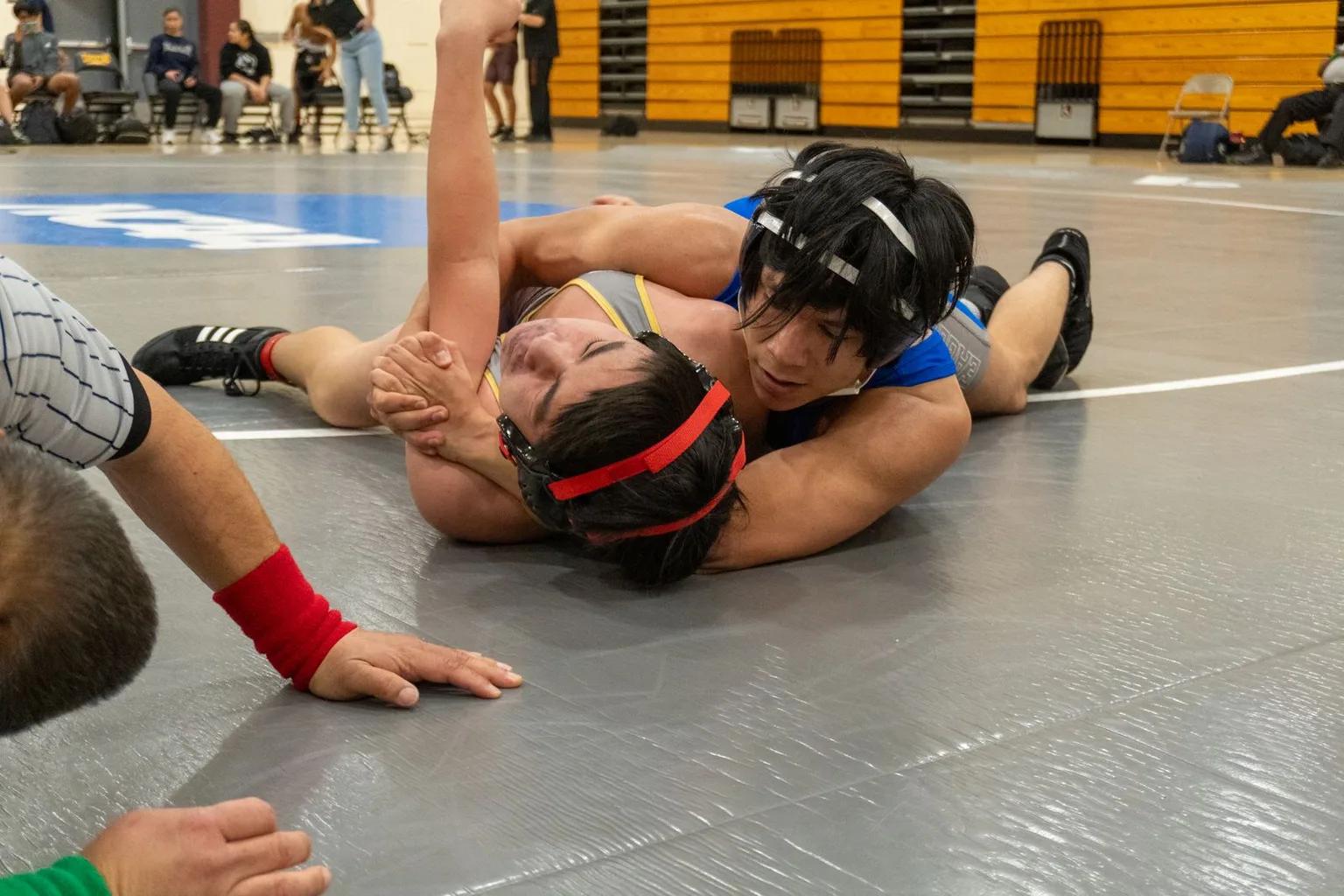
Wrestling loads the grip, neck, shoulders and low back isometrically, nearly every day from November to March, with no rest days.
The training year
Recovery changes with the season
In-season, recovery is daily soreness clearance inside a schedule with no rest days; off-season, it is joint unloading and an honest body-composition baseline for the next class.
Oct
Pre-season
October — conditioning restarts, weight-class conversations begin.
Protocols for this phase →Nov–Mar
In-season
Folkstyle season, districts and states in early March. Three to four matches a week at peak.
Protocols for this phase →Apr–Sep
Off-season
Spring/summer freestyle and Greco club plus the year's only real strength block. Competition continues but load is self-selected.
Protocols for this phase →Wellness and training information, not medical advice. Recovery modalities are a support to good programming, sleep and nutrition — they do not treat, cure, or diagnose injury, and no session guarantees a performance outcome. Pain that persists or worsens deserves evaluation by a clinician or athletic trainer before you train through it.
The demands
What wrestling asks of the body
From November to March a wrestler practices nearly every day and competes two to four times a week, and the load is unlike almost any other sport — grip, neck, shoulders and low back are all under sustained isometric tension rather than the impact-and-rest pattern of a field sport. The season also carries a nutrition and hydration dimension that recovery programming must handle carefully rather than lean into. Once folkstyle ends, the spring and summer block is the only window in the year when accumulated joint soreness can genuinely unload and when body-composition planning for the next weight class can happen with time to act on it.
Also known as folkstyle wrestling, scholastic wrestling, freestyle, Greco-Roman, HS wrestling
The load profile
- grappling isometric load
- repeat sprint in scrambles
- full-body grip endurance
- neck and shoulder load
- weight management
From demands to modalities
What studios pair with this load
The demands above are the input. These are the modalities recovery studios commonly pair with that kind of load — read what each actually does before you book.
The load
- grappling isometric load
- repeat sprint in scrambles
- full-body grip endurance
- neck and shoulder load
- weight management
What studios pair with it
Percussion therapy
Percussive / vibration
Pairs with: grappling isometric load · full-body grip endurance · neck and shoulder load
What it does →Cold plunge
Cold-water immersion
Pairs with: grappling isometric load · repeat sprint in scrambles
What it does →Contrast therapy
Alternating hot & cold
Pairs with: grappling isometric load · repeat sprint in scrambles
What it does →Assisted stretch
Practitioner-assisted stretch
Pairs with: full-body grip endurance · neck and shoulder load
What it does →A reading map, not a prescription — each page explains what a session involves and what the evidence shows. For condition-level evidence, start at the conditions library.
Gear and surface
What changes how the load lands
Two athletes on the same schedule can accumulate very differently depending on what they train on and in.
Headgear and knee pads reduce abrasion but not load. Mat surfaces drive skin exposure — the practical equipment variable here is laundry and mat hygiene, not gear.
What tends to show up
Common complaints, and where to read more
Plain-language descriptions of what athletes in this sport report. Where a cited evidence guide exists, the entry links to it.
Delayed Onset Muscle Soreness
Delayed onset muscle soreness is the one recovery target where the research is genuinely deep, and several modalities do reduce how sore you feel.
See the evidence →skin conditions
A general category for inflammatory, autoimmune, or irritant-driven conditions of the skin, including eczema, psoriasis, acne, rosacea, and related disorders.
Browse all conditions →Non-Functional Overreaching
Non-functional overreaching is a stalled, under-recovered state that follows weeks of training load exceeding recovery.
See the evidence →General Perceived Recovery Deficit
Subjective sense of incomplete recovery/low readiness between sessions.
Browse all conditions →Knee Pain
Knee pain is discomfort in or around the knee joint from overuse, arthritis, injury, movement load, or irritation of muscles, tendons, ligaments, or cartilage.
Browse all conditions →Neck Pain / Cervicalgia
Neck pain is pain or stiffness in the cervical spine area, commonly related to muscle strain, posture, stress, arthritis, disc irritation, or nerve irritation.
Browse all conditions →Repeated cut-and-refeed fatigue
The flat, drained feeling that follows repeated weight cuts and refeeds across a season or camp cycle. Distinct from ordinary training fatigue, and it compounds rather than clearing between cycles.
Browse all conditions →Mat burns and skin abrasion
Friction burns and abrasions from mat contact. An open or active skin lesion is a reason to stay off shared mats and out of shared equipment until it has been checked and cleared.
Browse all conditions →For parents and coaches
Wrestling season is five months of daily full-body contact with almost no recovery built into the schedule. The spring and summer block is where the accumulated joint soreness actually unloads and where body composition can be planned honestly, with a measured baseline instead of a bathroom scale in March.
Near you
Find recovery near you
The directory behind Praxium — studios by city and modality. Start where coverage runs deepest, or browse everything.
Questions
Frequently asked questions
Can a sauna session help make weight?
No — and no reputable provider should support it. Using heat and sweating to cut weight before a weigh-in is the practice behind the deaths of three collegiate wrestlers documented by the CDC in 1997, and rapid weight loss in wrestlers has since been linked to increased risk of acute kidney injury. No recovery protocol should be offered for making weight.
So what is recovery actually for during wrestling season?
Clearing daily soreness in a schedule that has almost no rest days in it. Wrestlers practise nearly every day for five months and compete two to four times a week, and the load is sustained and full-body rather than impact-and-rest. The realistic goal is being able to train tomorrow, not being pain-free.
Why does everything hurt more in February than in December?
Soreness accumulates when the schedule never lets it fully clear. Sleep is the biggest lever most wrestlers have and the one most often short: adolescent athletes sleeping under eight hours a night are reported to sustain sport-related injuries at meaningfully higher rates than those sleeping more.
Is there a body-composition conversation that isn't about cutting?
Yes, and it belongs in the spring and summer, not in March. Planning a weight class months ahead with time to act is a different conversation from dropping pounds in a week. If the question is "how do I get down by Saturday", that is a coach and clinician conversation, not a recovery one.
He has a mat burn / skin patch. Can he still book a session?
Not until it has been looked at. Active skin lesions are a screening question before any shared surface or session, both for him and for everyone else. That is a check, not a treatment.
References
- Rapid weight loss can increase the risk of acute kidney injury in wrestlers
- Hyperthermia and dehydration-related deaths associated with intentional rapid weight loss in three collegiate wrestlers
- Advances in Non-Pharmacological Strategies for DOMS: A Scoping and Critical Review of Recent Evidence
- Sleep, Nutrition, and Injury Risk in Adolescent Athletes: A Narrative Review
Keep exploring
Conditions referenced
Recovery goals
Guides
The beginner's guide to recovery modalities: what each one does and where to start →How often should you cold plunge? Dose, duration, and when more backfires →Contrast therapy: how to alternate hot and cold, and why the order matters →Red light therapy: what the evidence supports, and what it doesn't →Compression therapy: how pneumatic boots work and what they actually do →PEMF therapy explained: what pulsed magnetic fields can and can't do →Is whole-body cryotherapy worth it? A cost-benefit look →
Turn a season into a plan
Take the 2-minute Modality Match quiz and get a starting point built around how you train — which modalities to look at first, and which to run past a clinician.
Wellness and training information, not medical advice. Recovery modalities do not treat, cure, or diagnose any injury or condition and never replace care from a qualified clinician, athletic trainer, or physical therapist.