Loading…
Strength & fitness
Olympic Weightlifting — Recovery
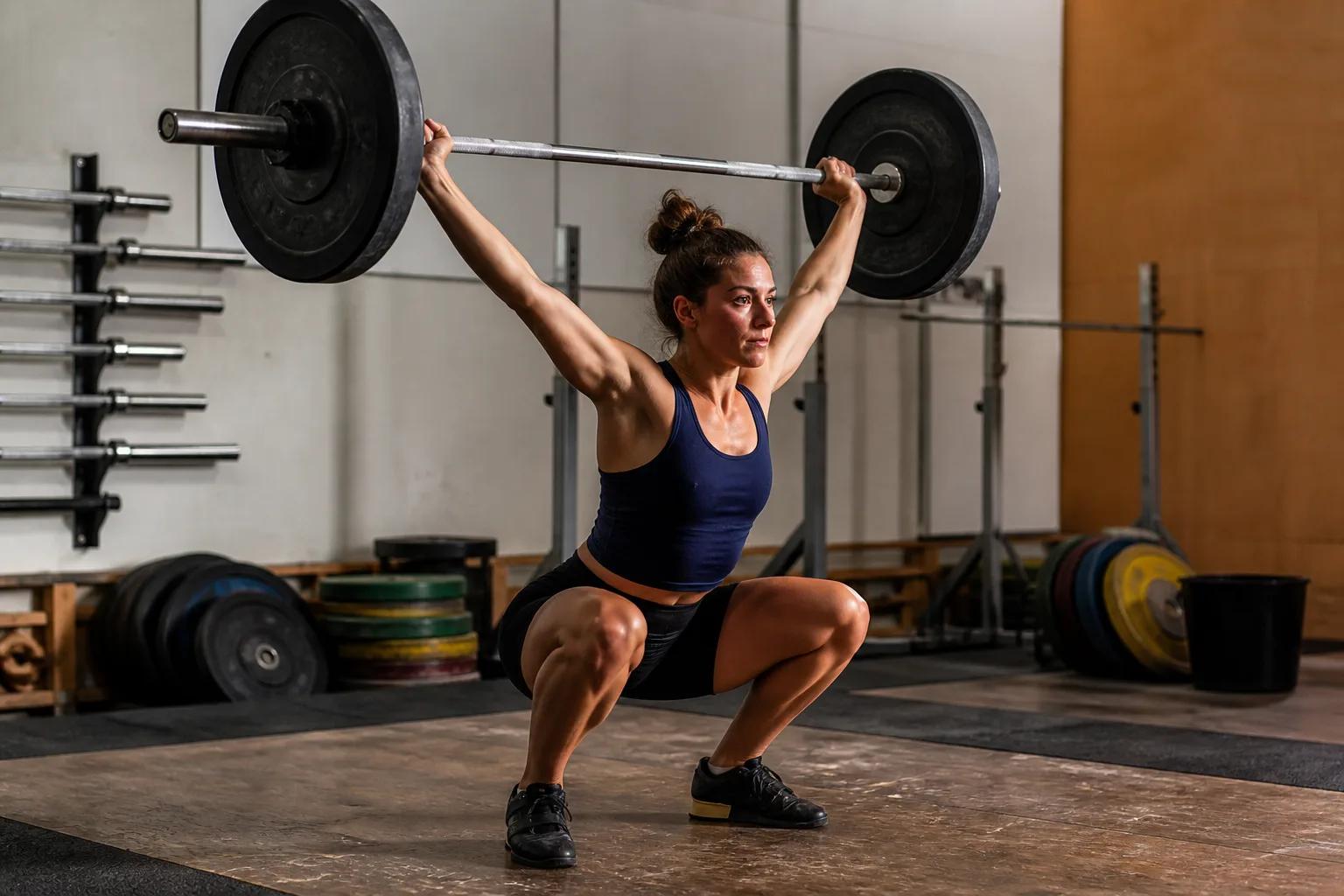
Olympic weightlifting concentrates explosive force into the snatch and clean and jerk, with repeated overhead catches loading the shoulders, wrists, knees and low back.
The training year
One steady recovery rhythm
Most lifters train year-round and organize short blocks around meets. Recovery shifts from supporting volume in a build to preserving speed and readiness near competition.
Wellness and training information, not medical advice. Recovery modalities are a support to good programming, sleep and nutrition — they do not treat, cure, or diagnose injury, and no session guarantees a performance outcome. Pain that persists or worsens deserves evaluation by a clinician or athletic trainer before you train through it.
The demands
What olympic weightlifting asks of the body
Olympic weightlifting is built around the snatch and the clean and jerk, plus pulls, squats and technical variations used to practice them. The lifts ask for rapid force production, precise timing and enough mobility to receive a bar overhead or in a deep squat. Heavy days concentrate load through the knees, low back, shoulders, wrists and hands; higher-volume technique days add fatigue through repeated catches even when the bar is lighter. Because performance depends on speed and coordination as well as strength, a fatigued session can lose quality before it feels like a traditional conditioning workout.
Also known as weightlifting, Olympic lifting, oly lifting, snatch and clean and jerk
The load profile
- explosive force production
- overhead stability
- deep squat receiving positions
- rapid barbell turnover
- knee and low-back load
- wrist and hand load
From demands to modalities
What studios pair with this load
The demands above are the input. These are the modalities recovery studios commonly pair with that kind of load — read what each actually does before you book.
The load
- explosive force production
- overhead stability
- deep squat receiving positions
- rapid barbell turnover
- knee and low-back load
- wrist and hand load
What studios pair with it
A reading map, not a prescription — each page explains what a session involves and what the evidence shows. For condition-level evidence, start at the conditions library.
Gear and surface
What changes how the load lands
Two athletes on the same schedule can accumulate very differently depending on what they train on and in.
Bar diameter, platform response, shoe heel height and plate bounce can alter receiving position and repeated-impact feel, but no matching equipment records were available to link.
What tends to show up
Common complaints, and where to read more
Plain-language descriptions of what athletes in this sport report. Where a cited evidence guide exists, the entry links to it.
Delayed Onset Muscle Soreness
Delayed onset muscle soreness is the one recovery target where the research is genuinely deep, and several modalities do reduce how sore you feel.
See the evidence →Knee Pain
Knee pain is discomfort in or around the knee joint from overuse, arthritis, injury, movement load, or irritation of muscles, tendons, ligaments, or cartilage.
Browse all conditions →Low Back Pain
Low back pain is discomfort in the lumbar area of the spine. It is often related to muscle or tendon strain, stiffness, arthritis, disc irritation, posture, or load tolerance.
Browse all conditions →For parents and coaches
Youth weightlifting should be technically coached and progressed by demonstrated movement quality. Persistent joint pain or a sudden change in function warrants assessment.
Near you
Find recovery near you
The directory behind Praxium — studios by city and modality. Start where coverage runs deepest, or browse everything.
Questions
Frequently asked questions
Why do lighter technique sessions still make me tired?
A lighter bar does not remove the demand for repeated acceleration, fast turnover and stable receiving positions. Dozens of technically precise catches can create substantial shoulder, knee and trunk fatigue without a maximal lift.
Should I keep lifting when my timing feels slow?
A coach may reduce the load or switch to a simpler variation when speed and position deteriorate. Chasing heavy attempts through obvious fatigue usually rehearses a worse movement pattern rather than improving the lift.
My wrists are sore in the front rack. Is that just mobility?
Sometimes position and mobility contribute, but persistent pain, swelling, numbness or pain outside the lift deserves assessment. Recovery work should not be used to force a painful receiving position.
How should recovery fit around a max-out or meet?
The useful window begins before the event. Reducing fatigue while keeping speed familiar is more valuable than trying to undo a maximal day afterward; the post-event period then restores normal training tolerance gradually.
Is Olympic weightlifting the same as general strength training?
No. Both use resistance, but weightlifting performance is the total of two competition lifts and depends heavily on speed, mobility and technical precision. General strength training can use many slower lifts without the same receiving demands.
Keep exploring
Conditions referenced
Recovery goals
Guides
The beginner's guide to recovery modalities: what each one does and where to start →How often should you cold plunge? Dose, duration, and when more backfires →Contrast therapy: how to alternate hot and cold, and why the order matters →Red light therapy: what the evidence supports, and what it doesn't →Compression therapy: how pneumatic boots work and what they actually do →PEMF therapy explained: what pulsed magnetic fields can and can't do →Is whole-body cryotherapy worth it? A cost-benefit look →
Turn a season into a plan
Take the 2-minute Modality Match quiz and get a starting point built around how you train — which modalities to look at first, and which to run past a clinician.
Wellness and training information, not medical advice. Recovery modalities do not treat, cure, or diagnose any injury or condition and never replace care from a qualified clinician, athletic trainer, or physical therapist.