Loading…
Combat sports
Jiu-Jitsu — Recovery
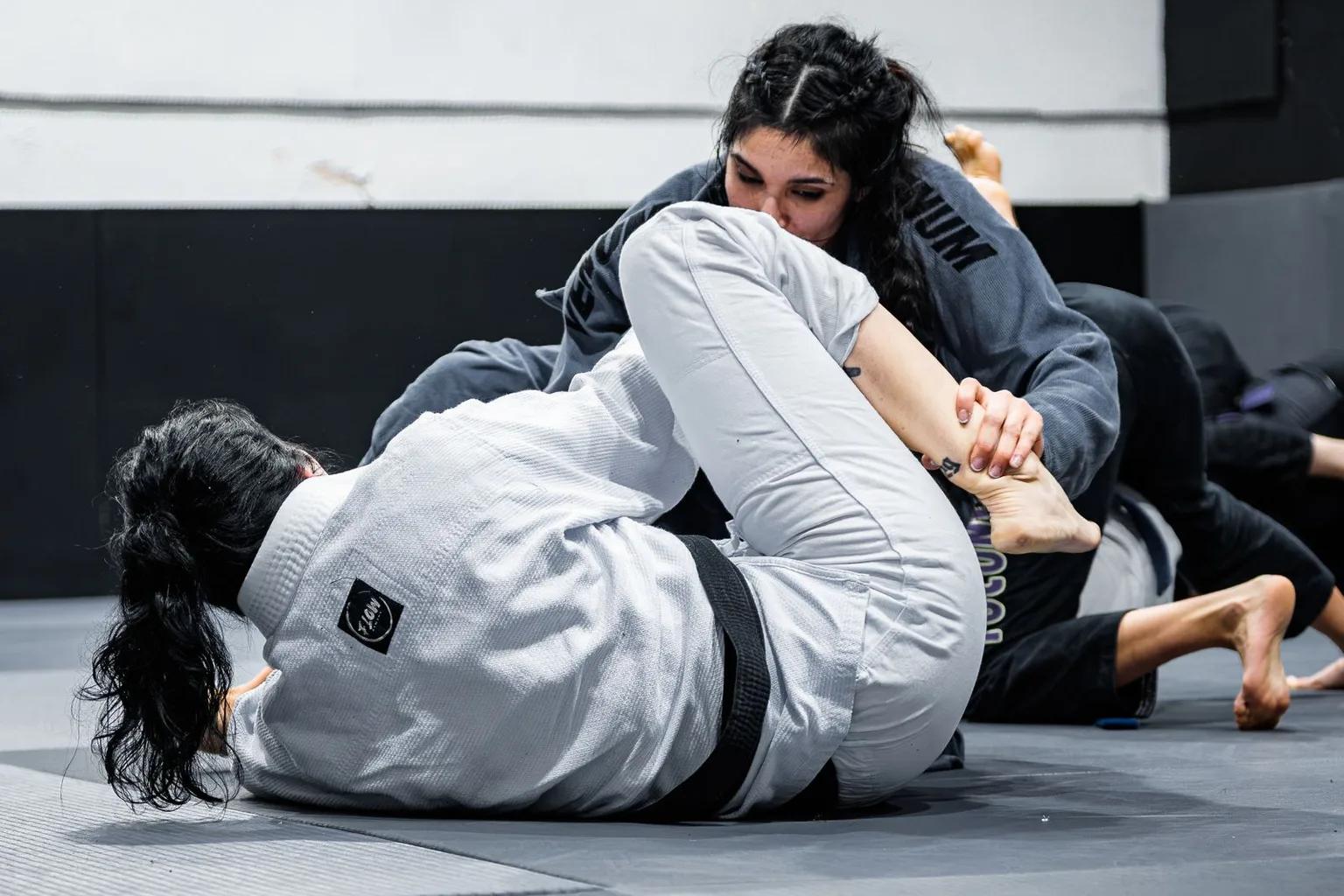
Jiu-jitsu's grip and forearm fatigue, neck soreness, and finger and shoulder load accumulate slowly across a steady training rhythm.
The training year
One steady recovery rhythm
In a competition camp, recovery adds tournament-week readiness and higher-frequency joint care; outside camp it is a steady maintenance cadence on chronic hand, neck and shoulder load that never gets an off-season.
Jan–Dec
Year-round
No calendar season. The IBJJF and local tournament calendars run continuously; competitors build their own 6–8 week camps around events they pick, and there is no month that is reliably off.
Protocols for this phase →Wellness and training information, not medical advice. Recovery modalities are a support to good programming, sleep and nutrition — they do not treat, cure, or diagnose injury, and no session guarantees a performance outcome. Pain that persists or worsens deserves evaluation by a clinician or athletic trainer before you train through it.
The demands
What jiu-jitsu asks of the body
The distinguishing feature of jiu-jitsu is not intensity but continuity: a hobbyist can train four nights a week for a decade with no season to interrupt it. Grip and forearm fatigue, neck soreness, and chronic finger and shoulder load accumulate slowly and never fully clear, which is a different problem from the acute turnaround most sports present. Competitors layer six-to-eight week camps and tournament weeks on top of that baseline. For the 40-plus population — a large and growing share of most academies — the value of a steady maintenance rhythm is measured in how many years they keep training, not in how they feel on Monday.
Also known as BJJ, Brazilian jiu-jitsu, gi grappling, no-gi, submission grappling
The load profile
- grappling isometric load
- grip and forearm endurance
- neck and shoulder load
- submission-related end-range joint stress
- very high cumulative mat hours
From demands to modalities
What studios pair with this load
The demands above are the input. These are the modalities recovery studios commonly pair with that kind of load — read what each actually does before you book.
The load
- grappling isometric load
- grip and forearm endurance
- neck and shoulder load
- submission-related end-range joint stress
- very high cumulative mat hours
What studios pair with it
Percussion therapy
Percussive / vibration
Pairs with: grappling isometric load · grip and forearm endurance · neck and shoulder load
What it does →Assisted stretch
Practitioner-assisted stretch
Pairs with: grip and forearm endurance · neck and shoulder load · submission-related end-range joint stress
What it does →Compression therapy
Air-pressure compression
Pairs with: submission-related end-range joint stress · very high cumulative mat hours
What it does →Cold plunge
Cold-water immersion
Pairs with: grappling isometric load
What it does →A reading map, not a prescription — each page explains what a session involves and what the evidence shows. For condition-level evidence, start at the conditions library.
Gear and surface
What changes how the load lands
Two athletes on the same schedule can accumulate very differently depending on what they train on and in.
Gi versus no-gi materially changes the load: gi training multiplies grip and forearm demand, while no-gi shifts load toward the neck and shoulders. Worth asking which the member trains before setting a cadence.
What tends to show up
Common complaints, and where to read more
Plain-language descriptions of what athletes in this sport report. Where a cited evidence guide exists, the entry links to it.
Delayed Onset Muscle Soreness
Delayed onset muscle soreness is the one recovery target where the research is genuinely deep, and several modalities do reduce how sore you feel.
See the evidence →skin conditions
A general category for inflammatory, autoimmune, or irritant-driven conditions of the skin, including eczema, psoriasis, acne, rosacea, and related disorders.
Browse all conditions →Reduced Range of Motion / Muscle Tightness
Temporary loss of joint range/muscle pliability with training, DOMS, or inactivity.
Browse all conditions →Carpal Tunnel Syndrome
Carpal tunnel syndrome is irritation or pressure on the median nerve at the wrist, causing hand or wrist pain, numbness, tingling, or weakness.
Browse all conditions →Knee Pain
Knee pain is discomfort in or around the knee joint from overuse, arthritis, injury, movement load, or irritation of muscles, tendons, ligaments, or cartilage.
Browse all conditions →Neck Pain / Cervicalgia
Neck pain is pain or stiffness in the cervical spine area, commonly related to muscle strain, posture, stress, arthritis, disc irritation, or nerve irritation.
Browse all conditions →Rib soreness from pressure passing
Tenderness along the ribs from sustained crossface and pressure passing. Deep breaths and rolling over in bed are the usual reminders.
Browse all conditions →Mat-acquired skin exposure
Skin contact on shared mats — abrasions, rashes and covered lesions. An active or open skin lesion is a reason to stay off the mat and out of shared equipment until it has been checked and cleared.
See the evidence →For parents and coaches
Jiu-jitsu has no season, which means it also has no natural break where a young athlete's hands, neck and shoulders get to reset. Building a steady maintenance rhythm matters more here than in any sport with a calendar.
Near you
Find recovery near you
The directory behind Praxium — studios by city and modality. Start where coverage runs deepest, or browse everything.
Questions
Frequently asked questions
There is no off-season. When does anything actually unload?
Only when you make it. The tournament calendar runs continuously and hobbyists rarely stop, so there is no month that is reliably quiet. Planning a lighter block yourself is the only version of an off-season this sport has.
Fingers, hands and grips are always sore. Is that normal?
Chronic grip and finger load is close to universal in gi grappling and it does not fully resolve while training continues. Persistent numbness, tingling, or weakness is different — that is a nerve question and warrants assessment.
Does red light do anything for chronic joint soreness?
Reviews of photobiomodulation for common musculoskeletal conditions report pain reduction across several conditions, with variable dosing and study quality. It is reasonable as an adjunct for comfort; it does not resolve a structural problem.
How should recovery change in the weeks before a competition?
Frequency usually goes up and the emphasis shifts to being ready on the day rather than to long-term joint care. Outside a camp, the opposite: lower frequency, aimed at hands, neck and shoulders that never get a season off.
I have a skin patch from the mats. Can I train, or book a session?
Get it looked at first. Skin lesions on shared mats are a screening question for you and for everyone else on them, and they need clearance rather than covering up.
References
- Advances in Non-Pharmacological Strategies for DOMS: A Scoping and Critical Review of Recent Evidence
- Load progression criteria in exercise programmes in lower limb tendinopathy: a systematic review
- Low-intensity LASER and LED (photobiomodulation therapy) for pain control of the most common musculoskeletal conditions
- Sleep and Athletic Performance: Impacts on Physical Performance, Mental Performance, Injury Risk and Recovery, and Mental Health
Keep exploring
Conditions referenced
Recovery goals
Guides
The beginner's guide to recovery modalities: what each one does and where to start →How often should you cold plunge? Dose, duration, and when more backfires →Contrast therapy: how to alternate hot and cold, and why the order matters →Red light therapy: what the evidence supports, and what it doesn't →Compression therapy: how pneumatic boots work and what they actually do →PEMF therapy explained: what pulsed magnetic fields can and can't do →Is whole-body cryotherapy worth it? A cost-benefit look →
Turn a season into a plan
Take the 2-minute Modality Match quiz and get a starting point built around how you train — which modalities to look at first, and which to run past a clinician.
Wellness and training information, not medical advice. Recovery modalities do not treat, cure, or diagnose any injury or condition and never replace care from a qualified clinician, athletic trainer, or physical therapist.