Loading…
Combat sports
MMA — Recovery
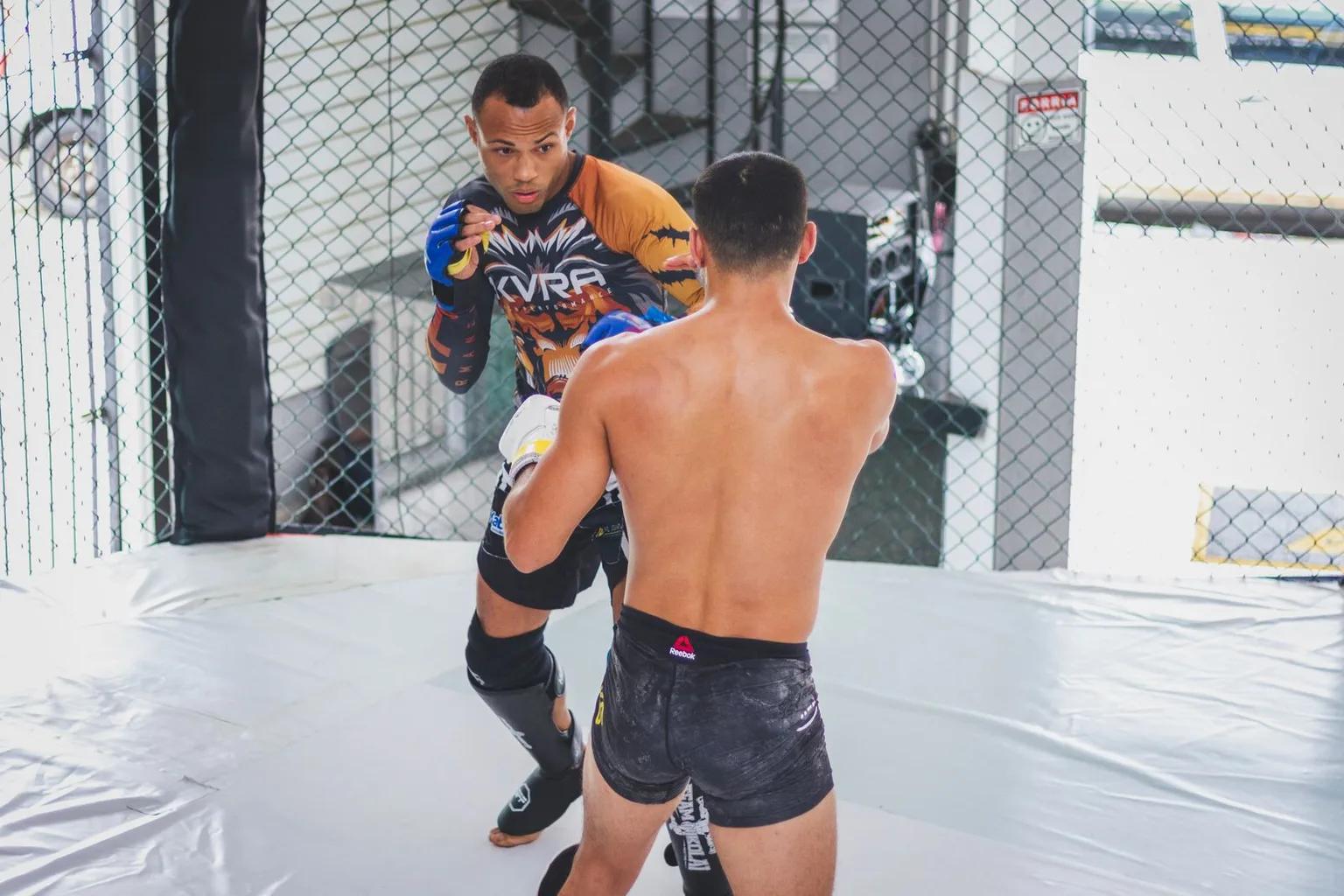
MMA camps stack eight to eleven weekly sessions across striking, grappling and conditioning, with a weight cut layered over the peak.
The training year
One steady recovery rhythm
In camp, recovery runs at its highest weekly frequency of the year and has to serve soreness, sleep and body composition at once; between camps it becomes low-frequency joint unloading — and it is the phase where that habit is easiest to lose entirely.
Jan–Dec
Year-round
No calendar season. MMA phases are bout-relative: a 6–10 week camp before a booked bout, then a decompression block after it. Event prep applies once a bout date is booked, and event recovery after it.
Protocols for this phase →Wellness and training information, not medical advice. Recovery modalities are a support to good programming, sleep and nutrition — they do not treat, cure, or diagnose injury, and no session guarantees a performance outcome. Pain that persists or worsens deserves evaluation by a clinician or athletic trainer before you train through it.
The demands
What mma asks of the body
An MMA camp is one of the densest training blocks in any sport: eight to eleven sessions a week across disciplines that load completely different tissue, escalating through the final four weeks, with a weight cut layered on top of the peak. Recovery during that window is a daily requirement rather than a weekly one, and it has to serve soreness clearance, sleep, and body composition at the same time. Between camps the load drops sharply and the recovery habit usually goes with it — which is exactly why a lighter between-camps rhythm is the part worth protecting.
Also known as mixed martial arts, cage fighting, MMA training
The load profile
- grappling isometric load
- striking impact
- repeat sprint and interval work
- full-body grip endurance
- weight cut
From demands to modalities
What studios pair with this load
The demands above are the input. These are the modalities recovery studios commonly pair with that kind of load — read what each actually does before you book.
The load
- grappling isometric load
- striking impact
- repeat sprint and interval work
- full-body grip endurance
- weight cut
What studios pair with it
Cold plunge
Cold-water immersion
Pairs with: grappling isometric load · striking impact · repeat sprint and interval work
What it does →Contrast therapy
Alternating hot & cold
Pairs with: grappling isometric load · striking impact · repeat sprint and interval work
What it does →Percussion therapy
Percussive / vibration
Pairs with: grappling isometric load · full-body grip endurance
What it does →Compression therapy
Air-pressure compression
Pairs with: striking impact · repeat sprint and interval work
What it does →A reading map, not a prescription — each page explains what a session involves and what the evidence shows. For condition-level evidence, start at the conditions library.
Gear and surface
What changes how the load lands
Two athletes on the same schedule can accumulate very differently depending on what they train on and in.
Gloves, shin guards and headgear change the impact distribution in sparring but not the total load. Mat and cage surfaces drive skin exposure, which is a screening question rather than a recovery one.
What tends to show up
Common complaints, and where to read more
Plain-language descriptions of what athletes in this sport report. Where a cited evidence guide exists, the entry links to it.
Delayed Onset Muscle Soreness
Delayed onset muscle soreness is the one recovery target where the research is genuinely deep, and several modalities do reduce how sore you feel.
See the evidence →skin conditions
A general category for inflammatory, autoimmune, or irritant-driven conditions of the skin, including eczema, psoriasis, acne, rosacea, and related disorders.
Browse all conditions →Non-Functional Overreaching
Non-functional overreaching is a stalled, under-recovered state that follows weeks of training load exceeding recovery.
See the evidence →Carpal Tunnel Syndrome
Carpal tunnel syndrome is irritation or pressure on the median nerve at the wrist, causing hand or wrist pain, numbness, tingling, or weakness.
Browse all conditions →Chronic Systemic Inflammation
Chronic systemic inflammation (CSI) is a persistent, low-to-moderate activation of the immune system that extends far beyond the site of any initial injury or infection. Unlike…
Browse all conditions →Neck Pain / Cervicalgia
Neck pain is pain or stiffness in the cervical spine area, commonly related to muscle strain, posture, stress, arthritis, disc irritation, or nerve irritation.
Browse all conditions →Edema / Swelling
Localized fluid accumulation / swelling (post-exercise, post-eccentric, occupational, post-injection). Compression therapy and localized cryotherapy reduce acute swelling (Grade…
Browse all conditions →Deep bruising and contusions from sparring
Deep, tender bruising in the thighs, forearms and ribs from blocked kicks and body work. It colours late and stays sore after it stops looking dramatic.
See the evidence →Repeated cut-and-refeed fatigue
The flat, drained feeling that follows repeated weight cuts and refeeds across a season or camp cycle. Distinct from ordinary training fatigue, and it compounds rather than clearing between cycles.
Browse all conditions →Rib soreness from compression and impact
Tenderness along the ribs from body shots and sustained top pressure. Breathing deeply and sleeping on that side are the usual reminders.
Browse all conditions →For parents and coaches
For a young athlete training MMA, the between-camp weeks are not time off — they are the only weeks where accumulated joint soreness actually unloads and where sleep gets back to normal. The drop-off after a fight is the moment most athletes lose the habits that made the camp possible.
Near you
Find recovery near you
The directory behind Praxium — studios by city and modality. Start where coverage runs deepest, or browse everything.
Questions
Frequently asked questions
How often does recovery need to happen during a camp?
More often than in almost any other sport. A camp runs eight to eleven sessions a week across disciplines that load completely different tissue, escalating through the final four weeks. Recovery becomes a daily question rather than a weekly one.
Can any of this help with a weight cut?
No. Rapid weight loss through fluid restriction and sweating is associated with increased risk of acute kidney injury in combat-sport athletes, and it caused three documented collegiate wrestler deaths in 1997. Nothing on this page is offered for cutting weight.
Why is the drop-off after a fight such a problem?
Because it is where habits disappear. Load falls sharply after a bout and the recovery routine usually goes with it, which is how an athlete who trained at full intensity for ten weeks ends up doing nothing at all for the next ten. The between-camps block is the one worth building a low-frequency habit around.
I got rocked in sparring. Can I still book a recovery session?
Not for that. A suspected head impact is a clinician's assessment, full stop — it is not something any recovery session addresses, and it should never be used to get back to sparring faster.
Sleep is wrecked in the last four weeks of camp. Is that just how it is?
It is common, and it is also the thing most worth defending. Reviews of sleep in athletes link short sleep to worse physical and cognitive performance, higher injury risk, and slower recovery. If one thing in a camp is going to be protected, sleep is a defensible choice.
References
- Rapid weight loss can increase the risk of acute kidney injury in wrestlers
- Hyperthermia and dehydration-related deaths associated with intentional rapid weight loss in three collegiate wrestlers
- Advances in Non-Pharmacological Strategies for DOMS: A Scoping and Critical Review of Recent Evidence
- Sleep and Athletic Performance: Impacts on Physical Performance, Mental Performance, Injury Risk and Recovery, and Mental Health
Keep exploring
Conditions referenced
Recovery goals
Guides
The beginner's guide to recovery modalities: what each one does and where to start →How often should you cold plunge? Dose, duration, and when more backfires →Contrast therapy: how to alternate hot and cold, and why the order matters →Red light therapy: what the evidence supports, and what it doesn't →Compression therapy: how pneumatic boots work and what they actually do →PEMF therapy explained: what pulsed magnetic fields can and can't do →Is whole-body cryotherapy worth it? A cost-benefit look →
Turn a season into a plan
Take the 2-minute Modality Match quiz and get a starting point built around how you train — which modalities to look at first, and which to run past a clinician.
Wellness and training information, not medical advice. Recovery modalities do not treat, cure, or diagnose any injury or condition and never replace care from a qualified clinician, athletic trainer, or physical therapist.