Loading…
Team sports
Lacrosse — Recovery Through the Training Year
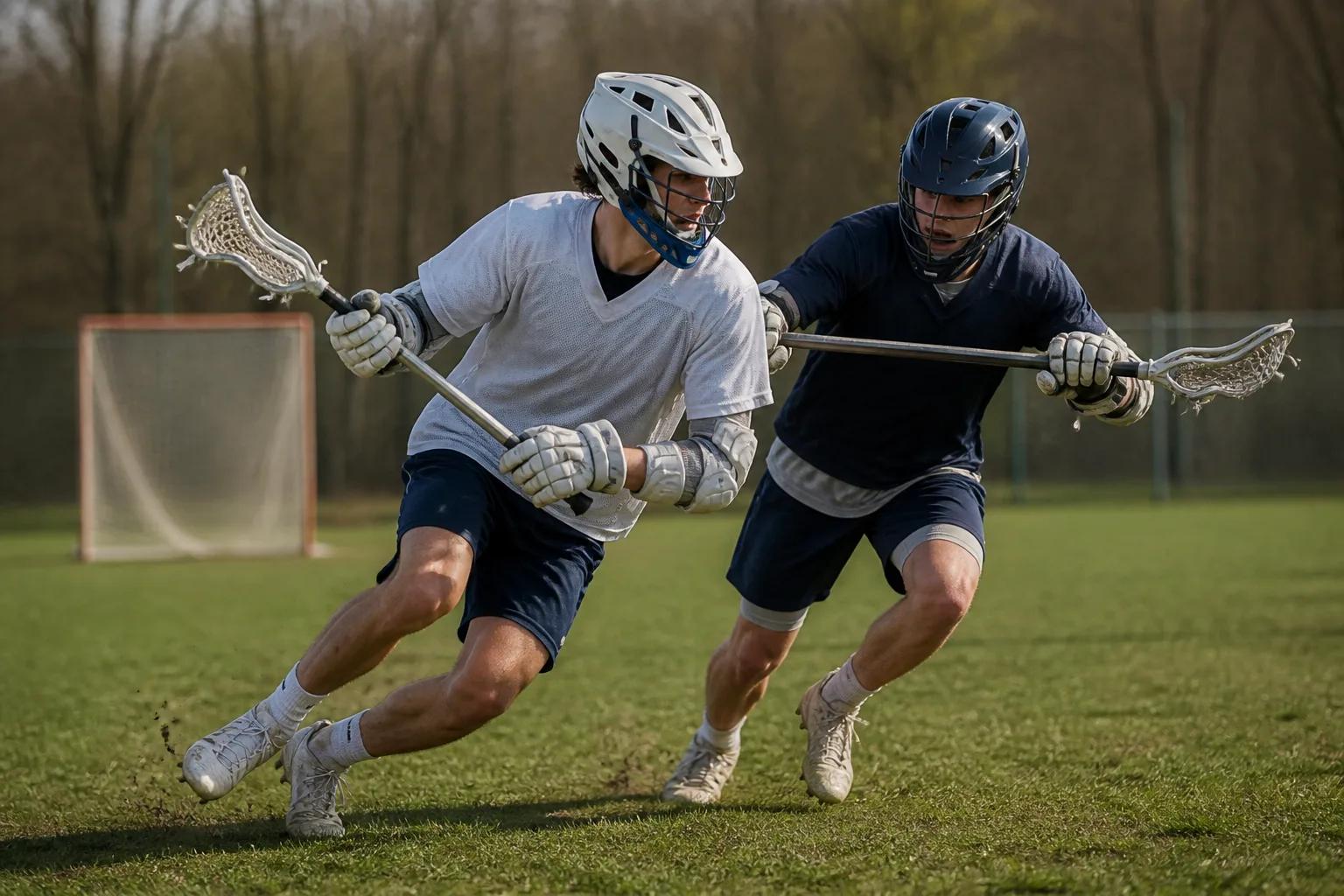
Lacrosse combines repeat sprinting and abrupt direction changes with stick skills, shoulder work and contact that varies substantially by rules, sex and position.
The training year
Recovery changes with the season
The spring and summer competition blocks demand match-to-match turnaround; late summer and autumn offer the clearest window to rebuild running and shoulder capacity without tournament congestion.
Dec–Feb
Pre-season
Conditioning, stick work and progressive contact ahead of the scholastic and collegiate spring schedule.
Protocols for this phase →Mar–May
In-season
Primary school and collegiate season, often with one or two matches a week plus practice and travel.
Protocols for this phase →Jun–Jul
In-season
Club and showcase tournaments can compress several matches into a weekend even after the school season ends.
Protocols for this phase →Aug–Nov
Off-season
The clearest low-volume window for running, strength and shoulder capacity before preseason resumes.
Protocols for this phase →Wellness and training information, not medical advice. Recovery modalities are a support to good programming, sleep and nutrition — they do not treat, cure, or diagnose injury, and no session guarantees a performance outcome. Pain that persists or worsens deserves evaluation by a clinician or athletic trainer before you train through it.
The demands
What lacrosse asks of the body
Field lacrosse asks athletes to sprint, decelerate and change direction while carrying and controlling a stick. Midfielders usually cover the broadest running load, attackers repeat shorter accelerations and changes of direction, and defenders add longer-stick leverage and more contact work. Men's and women's rules create materially different contact and equipment profiles, but both versions carry lower-extremity sprint load and ball or stick exposure. Spring competition and compact summer tournament weekends make schedule density a recurring part of recovery.
Also known as lax, field lacrosse, box lacrosse, men's lacrosse, women's lacrosse
The load profile
- repeat sprint
- abrupt change of direction
- stick and shoulder endurance
- lower-extremity running load
- contact and equipment exposure
From demands to modalities
What studios pair with this load
The demands above are the input. These are the modalities recovery studios commonly pair with that kind of load — read what each actually does before you book.
The load
- repeat sprint
- abrupt change of direction
- stick and shoulder endurance
- lower-extremity running load
- contact and equipment exposure
What studios pair with it
Compression therapy
Air-pressure compression
Pairs with: repeat sprint · abrupt change of direction
What it does →Assisted stretch
Practitioner-assisted stretch
Pairs with: abrupt change of direction · stick and shoulder endurance
What it does →Cold plunge
Cold-water immersion
Pairs with: repeat sprint
What it does →Contrast therapy
Alternating hot & cold
Pairs with: repeat sprint
What it does →A reading map, not a prescription — each page explains what a session involves and what the evidence shows. For condition-level evidence, start at the conditions library.
By position
The same sport, different jobs
Load isn't evenly distributed across a roster — what wears down depends on where you play.
Attack
Short accelerations, repeated changes of direction and stick work in confined space, with contact shaped by the ruleset.
short accelerationchange of directionstick and shoulder endurance
Midfield
The broadest transition and high-speed running load, linking both ends of the field across repeated possessions.
repeat sprinthigh-speed runningacceleration and deceleration
Defense
Longer-stick leverage, backward and lateral movement, contact and repeated reaction to attacking changes of direction.
lateral movementcontact loadstick leverage
Goalkeeper
A low-distance but high-reaction role with repeated ready-position work and direct ball exposure; field-player running metrics do not describe it.
rapid reactionrepeated ready positionball-impact exposure
Gear and surface
What changes how the load lands
Two athletes on the same schedule can accumulate very differently depending on what they train on and in.
Stick length and protective equipment differ by position and ruleset. Cleat and surface changes alter lower-limb load, while poor equipment fit can add hand, shoulder or movement restrictions.
What tends to show up
Common complaints, and where to read more
Plain-language descriptions of what athletes in this sport report. Where a cited evidence guide exists, the entry links to it.
Delayed Onset Muscle Soreness
Delayed onset muscle soreness is the one recovery target where the research is genuinely deep, and several modalities do reduce how sore you feel.
See the evidence →Knee Pain
Knee pain is discomfort in or around the knee joint from overuse, arthritis, injury, movement load, or irritation of muscles, tendons, ligaments, or cartilage.
Browse all conditions →Hamstring Injury / Pulled Hamstring
A hamstring injury is a strain or tear in the muscles at the back of the thigh, common with sprinting, jumping, lunging, or sudden forceful movement.
Browse all conditions →For parents and coaches
A school season followed immediately by club tournaments can look like two programmes but functions as one long season. Count total matches and travel weekends before adding more.
Near you
Find recovery near you
The directory behind Praxium — studios by city and modality. Start where coverage runs deepest, or browse everything.
Questions
Frequently asked questions
Is lacrosse mainly a running sport or a contact sport?
It is both, but the balance depends on rules and position. Every field player carries repeat-sprint and change-of-direction load; deliberate body contact and protective equipment differ between men's and women's play.
Why do tournament weekends feel worse than a normal week?
Several matches compress sprinting, deceleration, stick work and travel into a short window. Recovery work can support comfort, but it cannot replace a real reduction in load when normal movement or speed has not returned.
Do midfielders need a different plan?
Usually. Match-load research shows meaningful positional differences, and midfielders often carry the broadest high-speed running and transition load. Attackers and defenders may accumulate different acceleration, contact and stick demands.
What should happen after a head or stick impact?
Symptoms after head impact, or any concerning facial or eye injury, require medical assessment. A recovery session is not a clearance tool.
An ankle keeps rolling during cuts. Is that just fatigue?
Repeated cutting can expose an unstable or incompletely rehabilitated ankle. Recurring giving-way, swelling or loss of confidence deserves assessment and progressive rehabilitation, not repeated passive care alone.
Keep exploring
Conditions referenced
Recovery goals
Guides
The beginner's guide to recovery modalities: what each one does and where to start →How often should you cold plunge? Dose, duration, and when more backfires →Contrast therapy: how to alternate hot and cold, and why the order matters →Red light therapy: what the evidence supports, and what it doesn't →Compression therapy: how pneumatic boots work and what they actually do →PEMF therapy explained: what pulsed magnetic fields can and can't do →Is whole-body cryotherapy worth it? A cost-benefit look →
Turn a season into a plan
Take the 2-minute Modality Match quiz and get a starting point built around how you train — which modalities to look at first, and which to run past a clinician.
Wellness and training information, not medical advice. Recovery modalities do not treat, cure, or diagnose any injury or condition and never replace care from a qualified clinician, athletic trainer, or physical therapist.