Loading…
Team sports
Volleyball — Recovery Through the Training Year
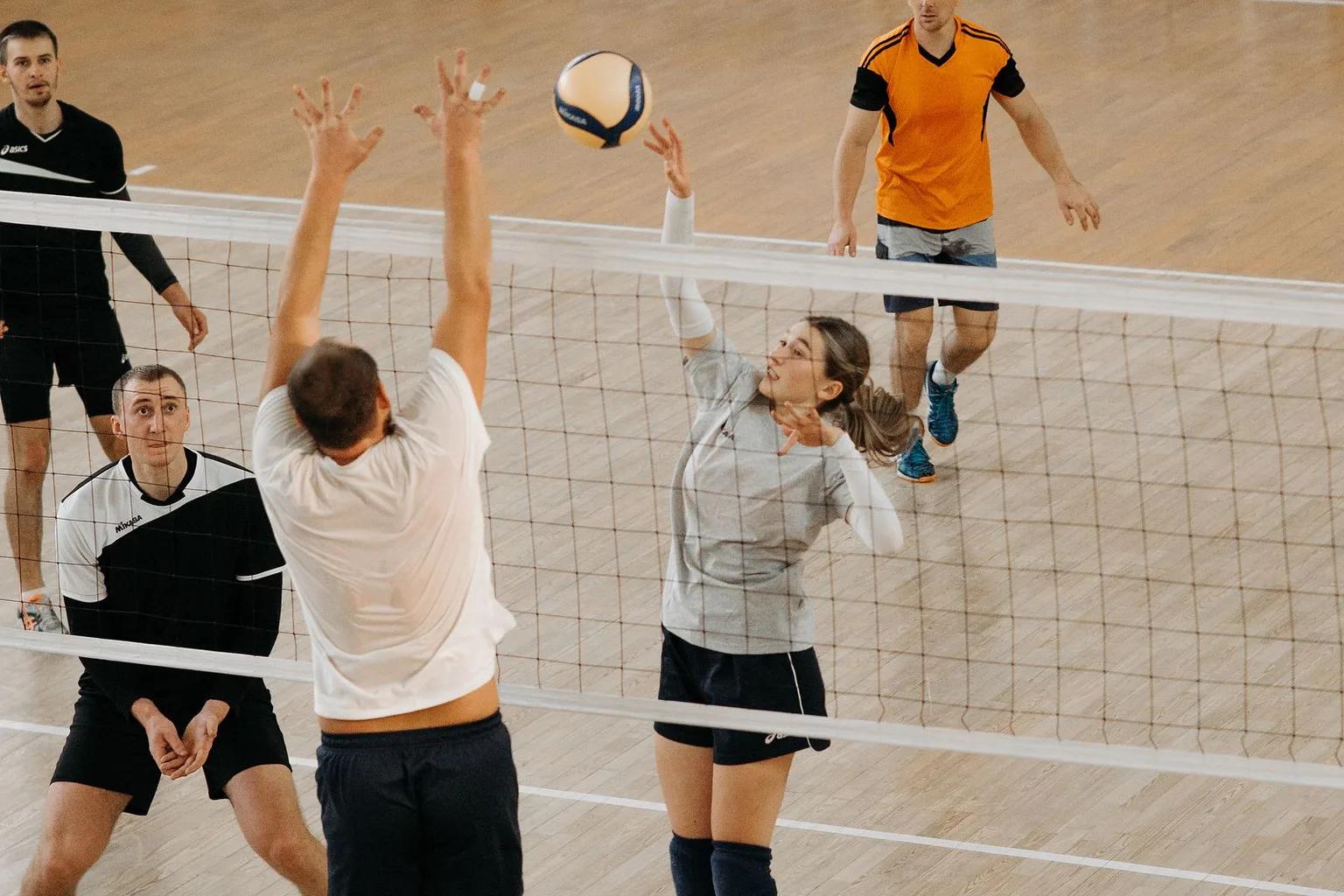
Volleyball brings frequent jumps and heavy overhead swings, with shoulders, knees and ankles carrying most of the load week to week.
The training year
Recovery changes with the season
In-season, recovery is turnaround from a multi-match tournament day into the following practice week; in July, it is jump-load and shoulder-volume capacity built on a forgiving surface.
Aug–Nov
In-season
High-school girls' fall season in NJ. Boys' high-school season runs in the spring.
Protocols for this phase →Dec–Jun
In-season
Club season — the long one. Weekend tournaments, often multi-match days.
Protocols for this phase →Jul
Off-season
Beach and summer training. The only genuinely quiet month; play continues but jump volume drops.
Protocols for this phase →Wellness and training information, not medical advice. Recovery modalities are a support to good programming, sleep and nutrition — they do not treat, cure, or diagnose injury, and no session guarantees a performance outcome. Pain that persists or worsens deserves evaluation by a clinician or athletic trainer before you train through it.
The demands
What volleyball asks of the body
The load pattern in volleyball is unusually two-sided: hitters carry a shoulder problem and a knee problem at the same time, and neither one gets a break during a seven-month club season. The tournament day is the defining event — four to six matches inside eight or nine hours, with a full practice week following it — and it produces a whole-body fatigue that a single practice never does. The one quiet month is July, when beach play shifts the surface and drops the repeat-landing volume enough for jumping joints to actually reset before the next high-school season begins.
Also known as indoor volleyball, club volleyball, beach volleyball, juniors
The load profile
- repeat jump and landing
- overhead hitting rotation
- high shoulder swing volume
- lateral movement and floor contact
- long tournament days
From demands to modalities
What studios pair with this load
The demands above are the input. These are the modalities recovery studios commonly pair with that kind of load — read what each actually does before you book.
The load
- repeat jump and landing
- overhead hitting rotation
- high shoulder swing volume
- lateral movement and floor contact
- long tournament days
What studios pair with it
Compression therapy
Air-pressure compression
Pairs with: repeat jump and landing · lateral movement and floor contact · long tournament days
What it does →Cold plunge
Cold-water immersion
Pairs with: repeat jump and landing · lateral movement and floor contact · long tournament days
What it does →Percussion therapy
Percussive / vibration
Pairs with: repeat jump and landing · overhead hitting rotation · high shoulder swing volume
What it does →Assisted stretch
Practitioner-assisted stretch
Pairs with: overhead hitting rotation · high shoulder swing volume · lateral movement and floor contact
What it does →A reading map, not a prescription — each page explains what a session involves and what the evidence shows. For condition-level evidence, start at the conditions library.
By position
The same sport, different jobs
Load isn't evenly distributed across a roster — what wears down depends on where you play.
Outside and opposite hitters
Highest swing volume in the gym. Shoulder load dominates, stacked on top of full jump volume — the most two-sided recovery profile on the roster.
overhead hitting rotationrepeat jump and landingapproach and deceleration
Middle blockers
Highest jump frequency of anyone on the court, if not the highest jump height. Knee and ankle load dominate; short lateral movement rather than long approaches.
repeat jump and landinglateral blocking movementrapid re-jump
Setters
Repeated overhead contact with hand and wrist load, plus constant short movement and moderate jump volume. Wrist and shoulder load without the swing volume.
overhead contacthand and wrist loadshort repeated movement
Liberos and defensive specialists
Essentially no jump load and the highest floor-contact volume on the roster. Hip, low-back and bruising load — a completely different profile from every hitter.
floor contact and divinglateral movementsustained low posture
Gear and surface
What changes how the load lands
Two athletes on the same schedule can accumulate very differently depending on what they train on and in.
Knee pads reduce abrasion but not impact. Court surface and shoe stack drive landing load; sand play in the summer changes the load pattern entirely and is genuinely restorative for jumping joints.
What tends to show up
Common complaints, and where to read more
Plain-language descriptions of what athletes in this sport report. Where a cited evidence guide exists, the entry links to it.
Delayed Onset Muscle Soreness
Delayed onset muscle soreness is the one recovery target where the research is genuinely deep, and several modalities do reduce how sore you feel.
See the evidence →Knee Pain
Knee pain is discomfort in or around the knee joint from overuse, arthritis, injury, movement load, or irritation of muscles, tendons, ligaments, or cartilage.
Browse all conditions →Edema / Swelling
Localized fluid accumulation / swelling (post-exercise, post-eccentric, occupational, post-injection). Compression therapy and localized cryotherapy reduce acute swelling (Grade…
Browse all conditions →Bursitis
Bursitis is painful swelling of a small fluid-filled cushion near a joint, often triggered by repeated pressure, overuse, or irritation around the shoulder, hip, elbow, knee, or…
Browse all conditions →Anterior knee soreness from jumping
Soreness at the front of the knee, just below the kneecap, from repeated jumping and landing. Typically worse on stairs and after long blocking or tournament sessions.
See the evidence →Ankle rolls and post-roll soreness
The highest-incidence acute event in court sport — a rolled ankle on a landing or a cut, and the swelling and guarded movement that follow. A fresh roll deserves an assessment before it is trained through.
See the evidence →Hip and forearm bruising from floor contact
Bruising over the hips, forearms and knees from digging and diving on a hard floor. Most common in liberos and defensive specialists.
See the evidence →For parents and coaches
Club volleyball puts four to six matches into one Saturday, most weekends, for seven months. The recovery conversation here is less about the season ending and more about what happens between Saturday and the following Tuesday practice.
Near you
Find recovery near you
The directory behind Praxium — studios by city and modality. Start where coverage runs deepest, or browse everything.
Questions
Frequently asked questions
Four to six matches on one Saturday — how long does that take to clear?
Longer than a practice does. A tournament day produces whole-body fatigue rather than one sore area, and soreness typically peaks 24–72 hours later, which lands on Monday or Tuesday. Expect the following practice week to start heavy.
Hitters have a sore shoulder and a sore knee at once. Which comes first?
Neither, really — that two-sided load is the sport, and treating one while ignoring the other tends to just move the complaint. It is worth handling the swing volume and the jump volume as separate questions in the same plan.
Anterior knee pain from jumping keeps coming back. What actually changes it?
Structured, progressive loading is the most consistently supported approach for jumping-related tendon pain; isometric work has a smaller but real role for some people as part of that programme. Passive recovery work supports it and does not replace it.
Liberos take the most floor contact. Do they need the same plan?
No. A libero has almost no jump load and the highest floor-contact volume on the roster, so hip, low-back and bruising load dominate instead of knees and shoulders. Same team, different recovery profile.
Is July actually a break?
It is the only genuinely quiet month, and sand play drops the repeat-landing volume enough for jumping joints to reset. Play continues; the surface is what changes.
References
- Load progression criteria in exercise programmes in lower limb tendinopathy: a systematic review
- Effectiveness of isometric exercise in the management of tendinopathy: a systematic review and meta-analysis of randomised trials
- Advances in Non-Pharmacological Strategies for DOMS: A Scoping and Critical Review of Recent Evidence
- Effects of lower-limb intermittent pneumatic compression on sports recovery: a systematic review and meta-analysis
Keep exploring
Conditions referenced
Recovery goals
Guides
The beginner's guide to recovery modalities: what each one does and where to start →How often should you cold plunge? Dose, duration, and when more backfires →Contrast therapy: how to alternate hot and cold, and why the order matters →Red light therapy: what the evidence supports, and what it doesn't →Compression therapy: how pneumatic boots work and what they actually do →PEMF therapy explained: what pulsed magnetic fields can and can't do →Is whole-body cryotherapy worth it? A cost-benefit look →
Turn a season into a plan
Take the 2-minute Modality Match quiz and get a starting point built around how you train — which modalities to look at first, and which to run past a clinician.
Wellness and training information, not medical advice. Recovery modalities do not treat, cure, or diagnose any injury or condition and never replace care from a qualified clinician, athletic trainer, or physical therapist.