Loading…
Team sports
Softball — Recovery Through the Training Year
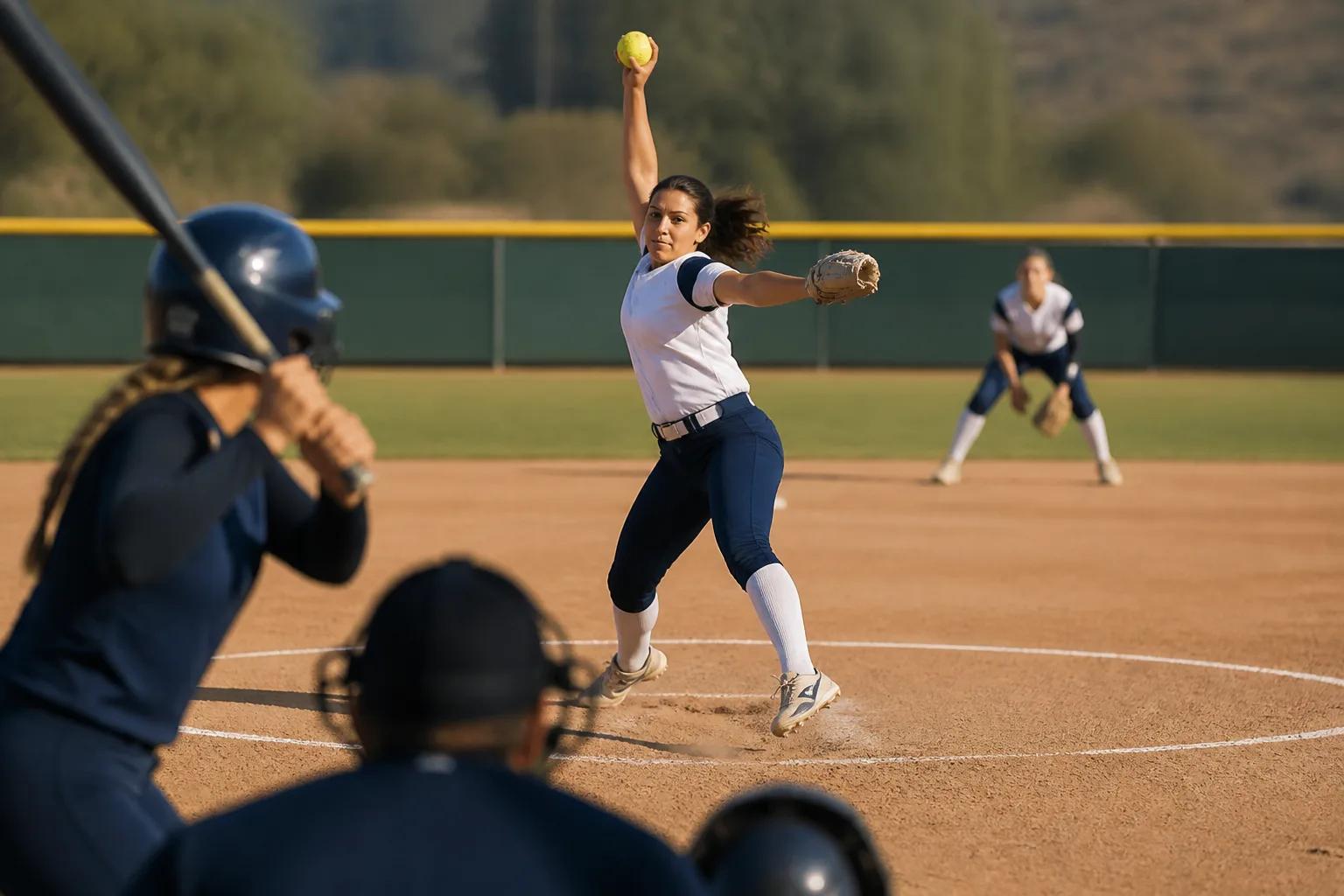
Softball mixes explosive base running and rotational hitting with position-specific throwing, while windmill pitchers carry a distinct high-volume shoulder workload.
The training year
Recovery changes with the season
In season, recovery follows pitching outings, tournament density and leg freshness; the short winter gap is where throwing volume can truly fall and general capacity can be rebuilt.
Feb
Pre-season
Progressive throwing, pitching and field work ahead of school and collegiate schedules.
Protocols for this phase →Mar–Aug
In-season
School and collegiate spring seasons frequently roll into travel and summer tournaments with no full reset.
Protocols for this phase →Sep–Oct
In-season
Fall ball adds another competitive block, often at lower stakes but with real pitching and throwing volume.
Protocols for this phase →Nov–Jan
Off-season
The clearest throwing-down and general strength window before team practice volume rises.
Protocols for this phase →Wellness and training information, not medical advice. Recovery modalities are a support to good programming, sleep and nutrition — they do not treat, cure, or diagnose injury, and no session guarantees a performance outcome. Pain that persists or worsens deserves evaluation by a clinician or athletic trainer before you train through it.
The demands
What softball asks of the body
Softball looks intermittent from the dugout, but its load is concentrated: explosive starts and stops on the bases, repeated rotational swings, overhead throws across the field and high-velocity windmill pitching. Pitchers carry a distinct upper-extremity workload that cannot be inferred from baseball mechanics, while catchers stack squat, throwing and impact exposure. Spring school seasons often roll directly into summer travel play, leaving little true break for the shoulder or lower body.
Also known as fastpitch softball, fast-pitch softball, slowpitch softball, travel softball, women's softball
The load profile
- rotational hitting power
- explosive acceleration and deceleration
- overhead field throwing
- windmill pitching load
- sliding and ball-impact exposure
From demands to modalities
What studios pair with this load
The demands above are the input. These are the modalities recovery studios commonly pair with that kind of load — read what each actually does before you book.
The load
- rotational hitting power
- explosive acceleration and deceleration
- overhead field throwing
- windmill pitching load
- sliding and ball-impact exposure
What studios pair with it
Assisted stretch
Practitioner-assisted stretch
Pairs with: rotational hitting power · explosive acceleration and deceleration · overhead field throwing
What it does →Percussion therapy
Percussive / vibration
Pairs with: rotational hitting power · overhead field throwing
What it does →Compression therapy
Air-pressure compression
Pairs with: explosive acceleration and deceleration
What it does →A reading map, not a prescription — each page explains what a session involves and what the evidence shows. For condition-level evidence, start at the conditions library.
By position
The same sport, different jobs
Load isn't evenly distributed across a roster — what wears down depends on where you play.
Pitchers
High-volume windmill pitching makes shoulder load, pitch count, fatigue and recovery between outings the defining variables.
windmill pitching loadshoulder endurancerepeat readiness
Catchers
Repeated deep squat, receiving, throwing and ball-impact exposure stack knee, hip and shoulder load.
sustained squatoverhead throwingball-impact exposure
Position players
Rotational hitting, short maximal sprints, decelerations and intermittent overhead throws dominate outside the circle.
rotational powerexplosive sprintoverhead field throwing
Gear and surface
What changes how the load lands
Two athletes on the same schedule can accumulate very differently depending on what they train on and in.
Bat mass and length, glove use, catcher gear, footwear and playing surface modify load. For pitchers, schedule and pitch volume are more important than treating any single piece of equipment as protective.
What tends to show up
Common complaints, and where to read more
Plain-language descriptions of what athletes in this sport report. Where a cited evidence guide exists, the entry links to it.
Delayed Onset Muscle Soreness
Delayed onset muscle soreness is the one recovery target where the research is genuinely deep, and several modalities do reduce how sore you feel.
See the evidence →Knee Pain
Knee pain is discomfort in or around the knee joint from overuse, arthritis, injury, movement load, or irritation of muscles, tendons, ligaments, or cartilage.
Browse all conditions →For parents and coaches
The hidden youth workload is often pitching for more than one team or taking lessons between tournaments. Count every pitch exposure and rest day across programmes.
Near you
Find recovery near you
The directory behind Praxium — studios by city and modality. Start where coverage runs deepest, or browse everything.
Questions
Frequently asked questions
Is the windmill pitch really low stress on the shoulder?
No. Biomechanical reviews describe substantial shoulder forces, and pitch count, short rest and fatigue can compound tissue stress. A pitcher needs softball-specific workload management rather than assumptions borrowed from baseball.
Why does preseason create so much soreness?
Throwing, pitching, sprinting and field volume often rise together after a quieter period. The safer response is progressive exposure; passive recovery cannot make an abrupt workload jump harmless.
Do pitchers and position players need the same plan?
No. Pitchers carry repeated windmill-pitch volume, while position players combine shorter throwing bouts with rotational hitting and sprint work. Catchers add deep squat and repeated throw demands.
A shoulder hurts only after pitching. Can it wait until the season ends?
Pain that recurs after each outing, changes mechanics, reduces speed or persists between sessions deserves assessment now. Recovery work should not be used to keep throwing through a worsening pattern.
What changes for slowpitch?
Pitching demand drops sharply, but rotational swing volume, acceleration, deceleration, throwing and occasional sliding remain. The participant profile changes; the activity is not load-free.
Keep exploring
Conditions referenced
Recovery goals
Guides
The beginner's guide to recovery modalities: what each one does and where to start →How often should you cold plunge? Dose, duration, and when more backfires →Contrast therapy: how to alternate hot and cold, and why the order matters →Red light therapy: what the evidence supports, and what it doesn't →Compression therapy: how pneumatic boots work and what they actually do →PEMF therapy explained: what pulsed magnetic fields can and can't do →Is whole-body cryotherapy worth it? A cost-benefit look →
Turn a season into a plan
Take the 2-minute Modality Match quiz and get a starting point built around how you train — which modalities to look at first, and which to run past a clinician.
Wellness and training information, not medical advice. Recovery modalities do not treat, cure, or diagnose any injury or condition and never replace care from a qualified clinician, athletic trainer, or physical therapist.