Loading…
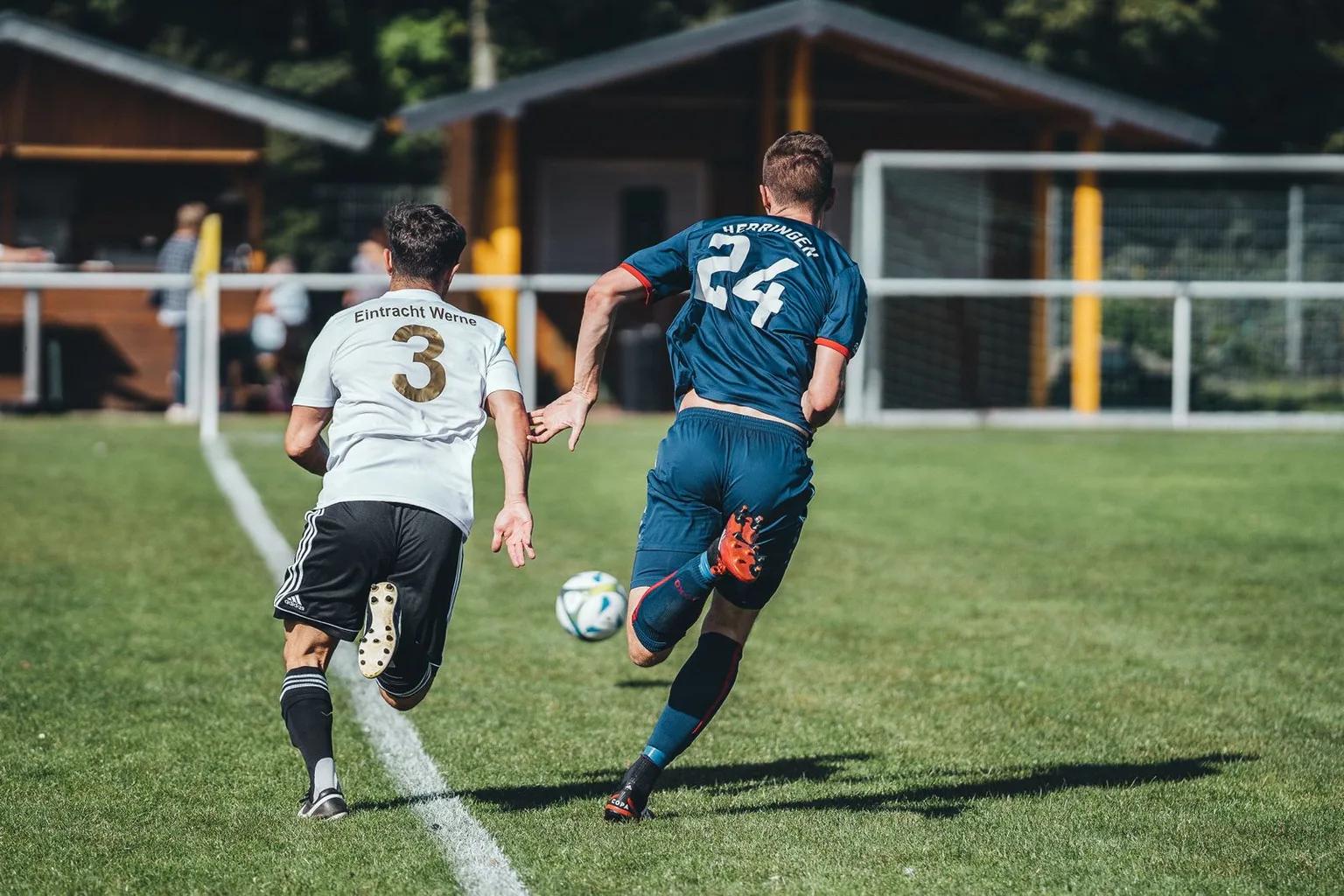
Team sports
Soccer — Recovery Through the Training Year
Soccer's high weekly distance comes in stop-start running that loads the posterior chain and hips more than steady running.
The training year
Recovery changes with the season
In-season, recovery is legs-fresh clearance between fixtures; in the winter block it is aerobic base, strength, and tissue tolerance without a match to protect.
Aug–Nov
In-season
High-school fall season — two to three matches a week at peak.
Protocols for this phase →Mar–Jun
In-season
Club and ECNL spring season, running into summer showcase events.
Protocols for this phase →Dec–Feb
Off-season
Winter indoor and futsal block plus the year's main strength window. Play continues but at lower running volume.
Protocols for this phase →Wellness and training information, not medical advice. Recovery modalities are a support to good programming, sleep and nutrition — they do not treat, cure, or diagnose injury, and no session guarantees a performance outcome. Pain that persists or worsens deserves evaluation by a clinician or athletic trainer before you train through it.
The demands
What soccer asks of the body
A competitive soccer player covers more distance in a week than any other athlete here, and does it in a stop-start pattern that loads the posterior chain and the hips far more than steady running would. During a fixture-congested stretch — two or three matches in eight days — the entire recovery question collapses into one thing: are the legs available for the next kickoff. The winter indoor block is the only meaningful pause in the year, and it is where aerobic base and strength can be built and where chronic calf and groin tightness can be addressed without a Saturday match in the way.
Also known as football (association), club soccer, ECNL, futsal, HS soccer
The load profile
- sustained aerobic output
- repeat sprint
- change of direction
- very high weekly running volume
- kicking and hip load
From demands to modalities
What studios pair with this load
The demands above are the input. These are the modalities recovery studios commonly pair with that kind of load — read what each actually does before you book.
The load
- sustained aerobic output
- repeat sprint
- change of direction
- very high weekly running volume
- kicking and hip load
What studios pair with it
Compression therapy
Air-pressure compression
Pairs with: sustained aerobic output · repeat sprint · change of direction
What it does →Cold plunge
Cold-water immersion
Pairs with: repeat sprint · very high weekly running volume
What it does →Assisted stretch
Practitioner-assisted stretch
Pairs with: change of direction · kicking and hip load
What it does →Infrared sauna
Radiant heat therapy
Pairs with: sustained aerobic output
What it does →A reading map, not a prescription — each page explains what a session involves and what the evidence shows. For condition-level evidence, start at the conditions library.
By position
The same sport, different jobs
Load isn't evenly distributed across a roster — what wears down depends on where you play.
Centre backs
Aerial duels and contact load with lower total sprint distance. Neck, upper back and landing load; the least running, the most collision.
aerial contactlanding loadshort acceleration
Fullbacks and wingers
Highest sprint distance on the pitch. Calf and posterior-chain load dominate and this is where repeat-sprint fatigue shows first.
repeat sprinthigh-speed runningdeceleration
Central midfield
Highest total distance covered. Aerobic fatigue rather than any single tissue is the limiter; the most affected by a congested fixture week.
sustained aerobic outputrepeat sprintchange of direction
Forwards
Repeat maximal sprint in short bursts, plus contested aerial and shoulder contact. Hamstring and hip-flexor load dominate.
max-effort sprintkicking and hip loaddeceleration
Goalkeepers
Almost no running volume and the highest diving-impact volume. Shoulder, hip and lateral-landing load — a completely different recovery profile from the ten outfield players.
diving impactexplosive lateral pushoverhead reach
Gear and surface
What changes how the load lands
Two athletes on the same schedule can accumulate very differently depending on what they train on and in.
Firm-ground versus turf boot choice materially changes forefoot and calf load; artificial turf raises reported next-day calf and ankle soreness on identical running volume.
What tends to show up
Common complaints, and where to read more
Plain-language descriptions of what athletes in this sport report. Where a cited evidence guide exists, the entry links to it.
Muscle Strain / Pulled Muscle
A muscle strain is a stretch or tear of muscle fibers, commonly from sudden force, twisting, overuse, under-recovery, or insufficient warm-up.
Browse all conditions →Delayed Onset Muscle Soreness
Delayed onset muscle soreness is the one recovery target where the research is genuinely deep, and several modalities do reduce how sore you feel.
See the evidence →Reduced Range of Motion / Muscle Tightness
Temporary loss of joint range/muscle pliability with training, DOMS, or inactivity.
Browse all conditions →Hip Pain
Hip pain is discomfort in or around the hip joint, outer hip, groin, or nearby muscles, often related to arthritis, bursitis, overuse, strain, or injury.
Browse all conditions →Edema / Swelling
Localized fluid accumulation / swelling (post-exercise, post-eccentric, occupational, post-injection). Compression therapy and localized cryotherapy reduce acute swelling (Grade…
Browse all conditions →Exercise / training recovery
Exercise and training recovery describes the need to rebound between workouts, practices, races, or physically demanding shifts with less soreness and better readiness.
Browse all conditions →Hamstring Injury / Pulled Hamstring
A hamstring injury is a strain or tear in the muscles at the back of the thigh, common with sprinting, jumping, lunging, or sudden forceful movement.
Browse all conditions →Calf tightness and cramping late in matches
Calves that tighten and cramp in the last twenty minutes, typically where match volume, heat and hydration have stacked up.
See the evidence →For parents and coaches
Soccer players cover more ground per week than almost any other youth athlete, and the club calendar leaves only about eight quiet weeks in the winter. Those weeks are when legs actually reset and when strength work can happen without competing against a Saturday match.
Near you
Find recovery near you
The directory behind Praxium — studios by city and modality. Start where coverage runs deepest, or browse everything.
Questions
Frequently asked questions
Three matches in eight days. What is realistic?
Realistic is reducing how heavy the legs feel by the next kickoff. Meta-analysis of lower-limb pneumatic compression found small benefits for perceived soreness and only trivial-to-small effects on measured muscle function — useful for comfort and readiness, not a reset button.
Does compression actually do anything or does it just feel nice?
Mostly it changes how sore you feel. The pooled evidence is fairly consistent that perceived soreness improves and much less consistent that markers of muscle damage or jump performance do. Feeling better is a real outcome; just do not read it as tissue repaired.
The hamstrings are always tight. Is that a recovery problem?
Tightness after high-speed running is common and often just fatigue. But a hamstring that gave way during a sprint, or that hurts sharply rather than aching, is a strain and needs assessment before any session — that is an injury question, not a tightness question.
Winter indoor is quieter. Should we stop booking recovery sessions?
That block is the only real gap in a club soccer year, and it is when strength and aerobic base can be built without a Saturday match in the way. Whether to keep visiting through it is a budget decision; the training argument is that it is the most useful eight weeks of the year.
She plays club and high school in the same year. Is that too much?
It is a lot, and the youth-sports literature consistently associates intense year-round single-sport participation with more overuse injuries. That does not mean stop — it means the volume deserves an honest look with her coaches.
References
- Effects of lower-limb intermittent pneumatic compression on sports recovery: a systematic review and meta-analysis
- Advances in Non-Pharmacological Strategies for DOMS: A Scoping and Critical Review of Recent Evidence
- Sleep, Nutrition, and Injury Risk in Adolescent Athletes: A Narrative Review
- Youth Sport Specialization: Current Concepts and Clinical Guides
Keep exploring
Conditions referenced
Recovery goals
Guides
The beginner's guide to recovery modalities: what each one does and where to start →How often should you cold plunge? Dose, duration, and when more backfires →Contrast therapy: how to alternate hot and cold, and why the order matters →Red light therapy: what the evidence supports, and what it doesn't →Compression therapy: how pneumatic boots work and what they actually do →PEMF therapy explained: what pulsed magnetic fields can and can't do →Is whole-body cryotherapy worth it? A cost-benefit look →
Turn a season into a plan
Take the 2-minute Modality Match quiz and get a starting point built around how you train — which modalities to look at first, and which to run past a clinician.
Wellness and training information, not medical advice. Recovery modalities do not treat, cure, or diagnose any injury or condition and never replace care from a qualified clinician, athletic trainer, or physical therapist.