Loading…
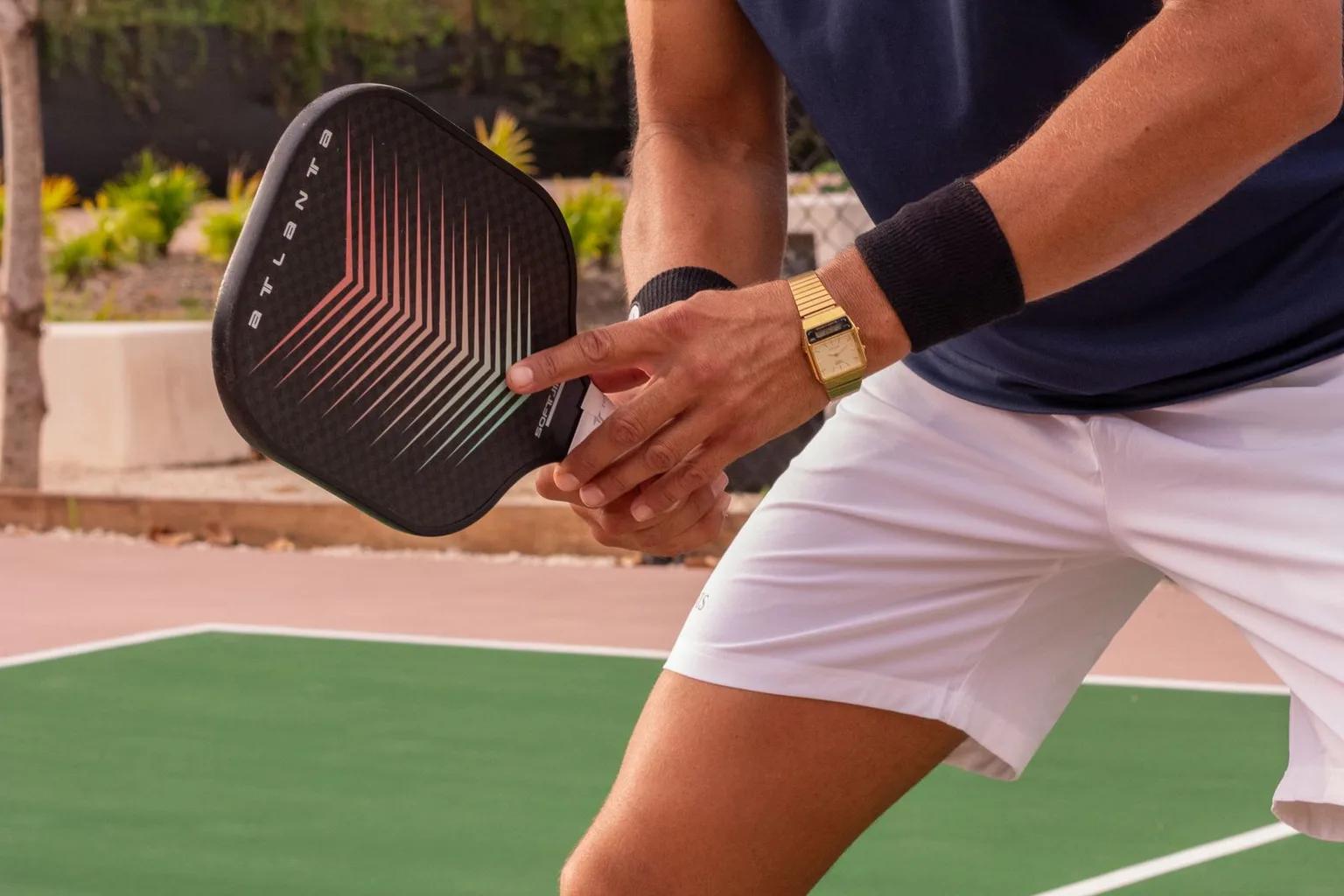
Racquet & paddle
Pickleball — Recovery
Pickleball's lateral movement, overhead serves and grip load the elbows, shoulders, calves and knees, most weeks of the year.
The training year
One steady recovery rhythm
There is no in-season or off-season contrast to draw: play frequency is essentially unchanged when the game moves indoors for the winter, which is precisely why a steady year-round cadence fits this activity better than any other here.
Jan–Dec
Year-round
Outdoor volume peaks roughly April to October and indoor leagues carry the winter, but play frequency barely changes — many players are on court four to six days a week with no break at any point in the year.
Protocols for this phase →Wellness information, not medical advice. Recovery modalities support training recovery and readiness — they do not treat, cure, or diagnose any injury or condition, and they never replace a qualified clinician, athletic trainer, or physical therapist. Anything that feels like an injury deserves a professional evaluation before a recovery session.
The demands
What pickleball asks of the body
Pickleball is one of the few sports where the honest answer to 'when is the off-season' is that there isn't one. Players move indoors in the winter and keep the same four-to-six-day rhythm, which means the load never releases and neither does the soreness. The complaint set is unusually well documented: lateral elbow soreness, and the arthritis and osteoarthritis presentations common in this age group, are all well understood. That combination — constant load, an older body, and familiar complaints — is what makes a steady recovery habit easier to build here than in most sports.
Also known as pickle, paddle, rec pickleball, open play
The load profile
- repeat lateral movement
- overhead rotation on serves and overheads
- grip and forearm endurance
- short reactive bursts
- very high session frequency
From demands to modalities
What studios pair with this load
The demands above are the input. These are the modalities recovery studios commonly pair with that kind of load — read what each actually does before you book.
The load
- repeat lateral movement
- overhead rotation on serves and overheads
- grip and forearm endurance
- short reactive bursts
- very high session frequency
What studios pair with it
Assisted stretch
Practitioner-assisted stretch
Pairs with: repeat lateral movement · overhead rotation on serves and overheads · grip and forearm endurance
What it does →Compression therapy
Air-pressure compression
Pairs with: repeat lateral movement · short reactive bursts · very high session frequency
What it does →Percussion therapy
Percussive / vibration
Pairs with: overhead rotation on serves and overheads · grip and forearm endurance
What it does →Cold plunge
Cold-water immersion
Pairs with: short reactive bursts
What it does →A reading map, not a prescription — each page explains what a session involves and what the evidence shows. For condition-level evidence, start at the conditions library.
Gear and surface
What changes how the load lands
Two athletes on the same schedule can accumulate very differently depending on what they train on and in.
Paddle weight and grip size drive elbow and forearm load directly — a heavier paddle or an undersized grip is one of the most common precipitants of lateral elbow soreness in this population. Court surface and shoe choice drive the calf and knee half of the load.
What tends to show up
Common complaints, and where to read more
Plain-language descriptions of what athletes in this sport report. Where a cited evidence guide exists, the entry links to it.
Delayed Onset Muscle Soreness
Delayed onset muscle soreness is the one recovery target where the research is genuinely deep, and several modalities do reduce how sore you feel.
See the evidence →Achilles Tendinitis / Tendinopathy
Achilles tendinitis is irritation or inflammation of the tendon that connects the calf muscles to the heel, often from running, jumping, or repeated loading.
Browse all conditions →Knee Pain
Knee pain is discomfort in or around the knee joint from overuse, arthritis, injury, movement load, or irritation of muscles, tendons, ligaments, or cartilage.
Browse all conditions →Knee Osteoarthritis
Degenerative joint disease of the knee causing pain, stiffness, and reduced function (VAS/WOMAC). Localized cryotherapy and PBM both carry Grade B evidence for pain/function…
Browse all conditions →Tennis Elbow / Lateral Epicondylitis
Tennis elbow is an overuse tendon problem on the outside of the elbow, usually from repeated gripping, lifting, twisting, or racquet/tool use.
Browse all conditions →Calf and achilles tightness from lateral push-off
Tightness through the calves and achilles from repeated lateral push-off and stopping. Usually stiffest first thing the morning after playing.
Browse all conditions →Shoulder soreness from serve and overhead volume
Aching in the hitting shoulder from serve and overhead volume, most noticeable after back-to-back playing days.
Browse all conditions →Shoulder stiffness with progressive range loss
Shoulder stiffness that worsens gradually over weeks, with range quietly disappearing — reaching overhead or behind the back becomes the noticeable limit. Worth a professional assessment rather than waiting it out.
Browse all conditions →Bursitis-type joint soreness
A localized, sometimes warm soreness right at a joint — commonly shoulder, hip or elbow — that feels different from muscle soreness and lingers longer.
Browse all conditions →For the people around you
The goal here is continuity rather than recovery from a season — still playing four days a week in five years. For most players in their fifties and sixties, next-day soreness is what quietly decides how often they get on court.
Near you
Find recovery near you
The directory behind Praxium — studios by city and modality. Start where coverage runs deepest, or browse everything.
Questions
Frequently asked questions
I play five days a week year-round. Is there any off-season here?
Practically, no. Outdoor volume peaks April to October and indoor leagues carry the winter, but play frequency barely changes. That makes a steady, low-key cadence fit this sport better than a seasonal one.
Outside-elbow pain from paddle work — what is it?
That location and pattern is what gets called tennis elbow, and it is a tendon problem driven by grip and repeated load. It usually needs load adjustment and progressive strengthening; recovery modalities help comfort while that happens.
I have knee arthritis. Should I stop playing?
Not necessarily. Guidance for knee osteoarthritis puts movement and strengthening first rather than rest, and heat and cold are treated as adjuncts for symptoms. What and how much to play is a conversation with your own clinician.
Sore for two days after a long session. Normal at 55?
Common at any age, and the 24–72 hour arc is the same. What changes with age is usually how quickly you return to full output, not whether soreness happens.
Is there a point to recovery work if I'm not competitive?
The reason most recreational players give is being able to play again sooner and more comfortably. That is a comfort-and-consistency argument, not a performance one, and it is worth stating plainly.
References
- Tennis Elbow (Lateral Epicondylitis): Treatment & Symptoms
- Osteoarthritis: Symptoms, Causes & Treatment Options
- Load progression criteria in exercise programmes in lower limb tendinopathy: a systematic review
- Advances in Non-Pharmacological Strategies for DOMS: A Scoping and Critical Review of Recent Evidence
Keep exploring
Conditions referenced
Recovery goals
Guides
The beginner's guide to recovery modalities: what each one does and where to start →How often should you cold plunge? Dose, duration, and when more backfires →Contrast therapy: how to alternate hot and cold, and why the order matters →Red light therapy: what the evidence supports, and what it doesn't →Compression therapy: how pneumatic boots work and what they actually do →PEMF therapy explained: what pulsed magnetic fields can and can't do →Is whole-body cryotherapy worth it? A cost-benefit look →
Turn a season into a plan
Take the 2-minute Modality Match quiz and get a starting point built around how you train — which modalities to look at first, and which to run past a clinician.
Wellness and training information, not medical advice. Recovery modalities do not treat, cure, or diagnose any injury or condition and never replace care from a qualified clinician, athletic trainer, or physical therapist.