Loading…
Racquet & paddle
Padel — Recovery
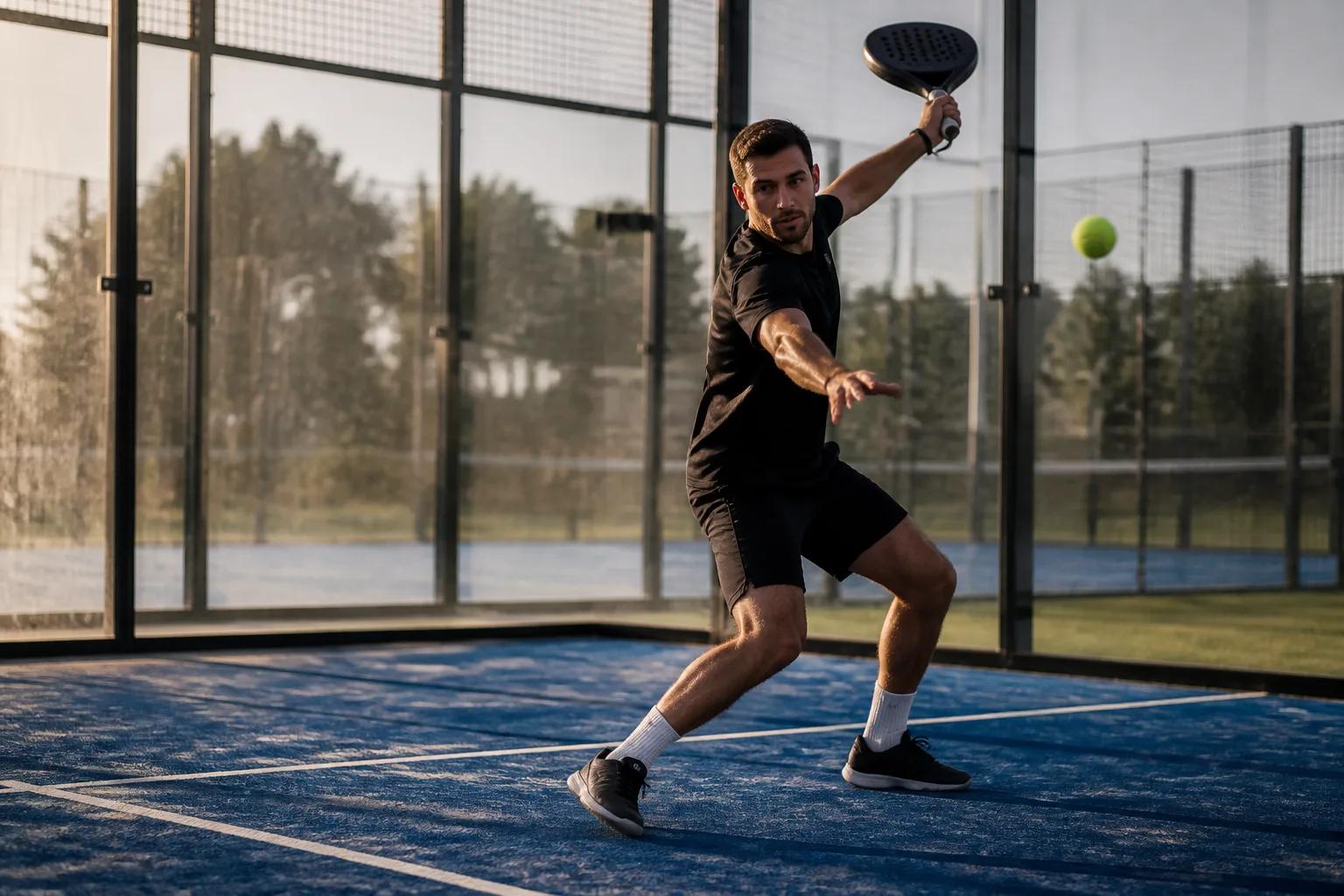
Padel combines repeated lateral changes of direction with overhead and forehand strokes, concentrating load at the elbow and shoulder while the knees and ankles handle short court sprints.
The training year
One steady recovery rhythm
Indoor and warm-weather play make padel effectively year-round. Recovery changes most when weekly social play becomes tournament volume or several matches are stacked into one day.
Wellness and training information, not medical advice. Recovery modalities are a support to good programming, sleep and nutrition — they do not treat, cure, or diagnose injury, and no session guarantees a performance outcome. Pain that persists or worsens deserves evaluation by a clinician or athletic trainer before you train through it.
The demands
What padel asks of the body
Padel is a doubles racket sport played on an enclosed court where walls keep rallies alive and create frequent changes of direction. Players accelerate over short distances, brake, turn and move forward to the net while repeating forehand, backhand and overhead strokes. The elbow and shoulder absorb racket volume; knees, ankles and low back manage repeated lateral movement and low positions. Match intensity is intermittent rather than continuously maximal, but long rallies and multiple matches can accumulate substantial local fatigue.
Also known as padel tennis, pádel, paddle tennis
The load profile
- rapid lateral movement
- repeated change of direction
- short accelerations and braking
- forehand and backhand repetition
- overhead stroke volume
- intermittent aerobic work
From demands to modalities
What studios pair with this load
The demands above are the input. These are the modalities recovery studios commonly pair with that kind of load — read what each actually does before you book.
The load
- rapid lateral movement
- repeated change of direction
- short accelerations and braking
- forehand and backhand repetition
- overhead stroke volume
- intermittent aerobic work
What studios pair with it
Assisted stretch
Practitioner-assisted stretch
Pairs with: rapid lateral movement · repeated change of direction · overhead stroke volume
What it does →Compression therapy
Air-pressure compression
Pairs with: rapid lateral movement · repeated change of direction · intermittent aerobic work
What it does →Percussion therapy
Percussive / vibration
Pairs with: overhead stroke volume
What it does →Infrared sauna
Radiant heat therapy
Pairs with: intermittent aerobic work
What it does →A reading map, not a prescription — each page explains what a session involves and what the evidence shows. For condition-level evidence, start at the conditions library.
Gear and surface
What changes how the load lands
Two athletes on the same schedule can accumulate very differently depending on what they train on and in.
Racket mass, grip size, court surface and footwear alter elbow, shoulder and braking load. No genuine padel equipment records were available to link.
What tends to show up
Common complaints, and where to read more
Plain-language descriptions of what athletes in this sport report. Where a cited evidence guide exists, the entry links to it.
Knee Pain
Knee pain is discomfort in or around the knee joint from overuse, arthritis, injury, movement load, or irritation of muscles, tendons, ligaments, or cartilage.
Browse all conditions →Low Back Pain
Low back pain is discomfort in the lumbar area of the spine. It is often related to muscle or tendon strain, stiffness, arthritis, disc irritation, posture, or load tolerance.
Browse all conditions →Tennis Elbow / Lateral Epicondylitis
Tennis elbow is an overuse tendon problem on the outside of the elbow, usually from repeated gripping, lifting, twisting, or racquet/tool use.
Browse all conditions →Near you
Find recovery near you
The directory behind Praxium — studios by city and modality. Start where coverage runs deepest, or browse everything.
Questions
Frequently asked questions
Is padel basically the same load as pickleball?
They share a compact court and paddle or racket format, but padel's walls, longer rallies and frequent overhead play create a different movement and shoulder profile. A player's actual match frequency matters more than the label alone.
Why does my elbow hurt after several matches?
Repeated gripping and racket acceleration can accumulate at the elbow, especially when volume or equipment changes. Persistent pain or loss of grip strength should be assessed rather than managed indefinitely with recovery sessions.
Are tournament days different from a normal weekly match?
Yes. Several matches compress change-of-direction, overhead and racket volume into one day. The realistic goal between matches is readiness and comfort, not complete recovery.
My ankle rolled during a direction change. Can I finish the match?
Swelling, instability or difficulty bearing weight makes that an injury question. Stop and have it assessed; continuing because the court is small can worsen the problem.
What is the main recovery priority after a long match?
Settle general fatigue and check the body regions that carried the most repeated load: elbow and shoulder from strokes, and calves, knees and ankles from braking and lateral movement.
Keep exploring
Recovery goals
Guides
The beginner's guide to recovery modalities: what each one does and where to start →How often should you cold plunge? Dose, duration, and when more backfires →Contrast therapy: how to alternate hot and cold, and why the order matters →Red light therapy: what the evidence supports, and what it doesn't →Compression therapy: how pneumatic boots work and what they actually do →PEMF therapy explained: what pulsed magnetic fields can and can't do →Is whole-body cryotherapy worth it? A cost-benefit look →
Turn a season into a plan
Take the 2-minute Modality Match quiz and get a starting point built around how you train — which modalities to look at first, and which to run past a clinician.
Wellness and training information, not medical advice. Recovery modalities do not treat, cure, or diagnose any injury or condition and never replace care from a qualified clinician, athletic trainer, or physical therapist.