Loading…
Racquet & paddle
Tennis — Recovery
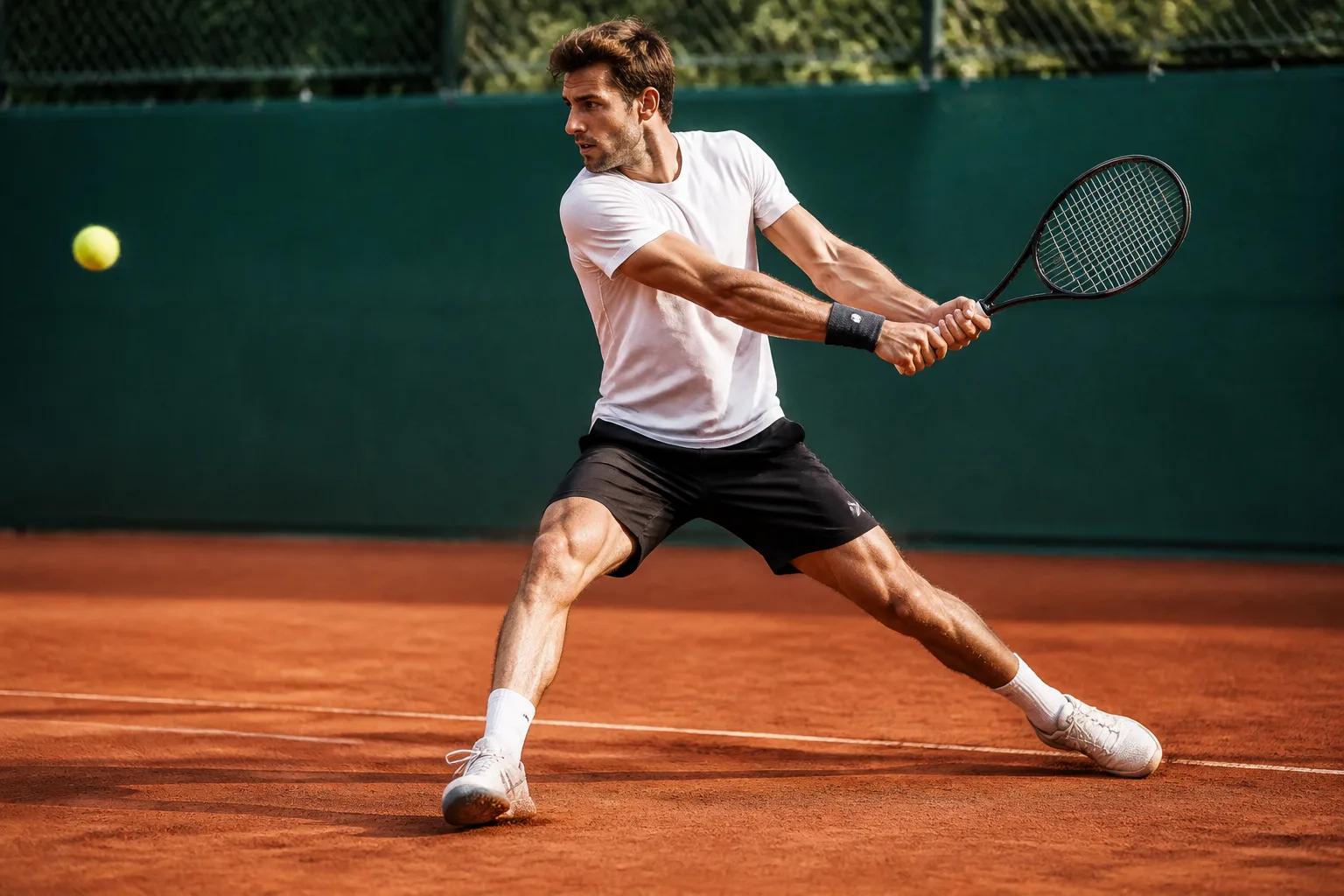
Tennis combines repeated accelerations and stops with hundreds of rotational strokes, while serving concentrates load through the shoulder, elbow and trunk.
The training year
One steady recovery rhythm
There is no universal off-season: recovery cadence should follow match density, tournament blocks and surface changes, with quieter weeks used to reduce stroke volume and rebuild capacity.
Jan–Dec
Year-round
Recreational, school, club and tournament calendars overlap across the year. Load rises with match density, long singles sessions and surface changes rather than one universal season.
Protocols for this phase →Wellness and training information, not medical advice. Recovery modalities are a support to good programming, sleep and nutrition — they do not treat, cure, or diagnose injury, and no session guarantees a performance outcome. Pain that persists or worsens deserves evaluation by a clinician or athletic trainer before you train through it.
The demands
What tennis asks of the body
Tennis alternates short, high-intensity points with brief recovery, and a match can run from under an hour to several hours. The legs absorb repeated starts, lateral cuts and decelerations; the trunk transfers rotation into every groundstroke; and serving places the highest repeated overhead load on the shoulder and elbow. Singles usually carries more court coverage, while doubles reduces running volume without removing serve and racquet load. Because recreational and competitive calendars can run year-round, the useful question is usually match density and court surface rather than the month.
Also known as lawn tennis, singles tennis, doubles tennis, court tennis
The load profile
- repeat acceleration and deceleration
- lateral change of direction
- overhead serving load
- rotational trunk power
- grip and forearm endurance
From demands to modalities
What studios pair with this load
The demands above are the input. These are the modalities recovery studios commonly pair with that kind of load — read what each actually does before you book.
The load
- repeat acceleration and deceleration
- lateral change of direction
- overhead serving load
- rotational trunk power
- grip and forearm endurance
What studios pair with it
Assisted stretch
Practitioner-assisted stretch
Pairs with: repeat acceleration and deceleration · lateral change of direction · overhead serving load
What it does →Percussion therapy
Percussive / vibration
Pairs with: overhead serving load · rotational trunk power · grip and forearm endurance
What it does →Compression therapy
Air-pressure compression
Pairs with: repeat acceleration and deceleration · lateral change of direction
What it does →A reading map, not a prescription — each page explains what a session involves and what the evidence shows. For condition-level evidence, start at the conditions library.
Gear and surface
What changes how the load lands
Two athletes on the same schedule can accumulate very differently depending on what they train on and in.
Racquet mass, grip size, string setup and court surface can change forearm, elbow and lower-limb load. A recent equipment or surface change belongs in the same conversation as a recent volume increase.
What tends to show up
Common complaints, and where to read more
Plain-language descriptions of what athletes in this sport report. Where a cited evidence guide exists, the entry links to it.
Delayed Onset Muscle Soreness
Delayed onset muscle soreness is the one recovery target where the research is genuinely deep, and several modalities do reduce how sore you feel.
See the evidence →Knee Pain
Knee pain is discomfort in or around the knee joint from overuse, arthritis, injury, movement load, or irritation of muscles, tendons, ligaments, or cartilage.
Browse all conditions →Tennis Elbow / Lateral Epicondylitis
Tennis elbow is an overuse tendon problem on the outside of the elbow, usually from repeated gripping, lifting, twisting, or racquet/tool use.
Browse all conditions →For parents and coaches
For junior players, the hidden load is often the sum of lessons, school tennis and weekend tournaments. A calendar that looks reasonable one programme at a time can still leave no low-volume week.
Near you
Find recovery near you
The directory behind Praxium — studios by city and modality. Start where coverage runs deepest, or browse everything.
Questions
Frequently asked questions
Why does the serving shoulder get sore before the rest of the body?
The serve is the sport's most demanding repeated overhead stroke. Soreness that settles between sessions can reflect volume; pain that changes the service motion, persists at rest or reduces strength needs assessment rather than another recovery session.
Does singles require a different recovery plan than doubles?
Usually. Singles adds more court coverage, acceleration and deceleration, while doubles preserves most of the serving and racquet volume. The legs may need a different turnaround even when the arm workload looks similar.
My elbow hurts when I grip or hit a backhand. Is that tennis elbow?
That pattern can fit lateral epicondylitis, but a page cannot diagnose it. Persistent pain, weakness or symptoms that worsen from match to match deserve an assessment and a review of stroke volume, grip size and equipment.
Does the court surface change the load?
Yes. Surface changes alter movement, sliding and point length, so the same player can feel a different calf, ankle or knee load on hard court, clay and grass. Build exposure progressively when the surface changes.
Can recovery work replace a lighter day after a long match?
No. Recovery work may support comfort and readiness, but it does not erase several hours of match load. The next training decision should still account for match duration, soreness and any loss of normal movement.
Keep exploring
Conditions referenced
Recovery goals
Guides
The beginner's guide to recovery modalities: what each one does and where to start →How often should you cold plunge? Dose, duration, and when more backfires →Contrast therapy: how to alternate hot and cold, and why the order matters →Red light therapy: what the evidence supports, and what it doesn't →Compression therapy: how pneumatic boots work and what they actually do →PEMF therapy explained: what pulsed magnetic fields can and can't do →Is whole-body cryotherapy worth it? A cost-benefit look →
Turn a season into a plan
Take the 2-minute Modality Match quiz and get a starting point built around how you train — which modalities to look at first, and which to run past a clinician.
Wellness and training information, not medical advice. Recovery modalities do not treat, cure, or diagnose any injury or condition and never replace care from a qualified clinician, athletic trainer, or physical therapist.