Loading…
Endurance
Obstacle Course Racing — Recovery Through the Training Year
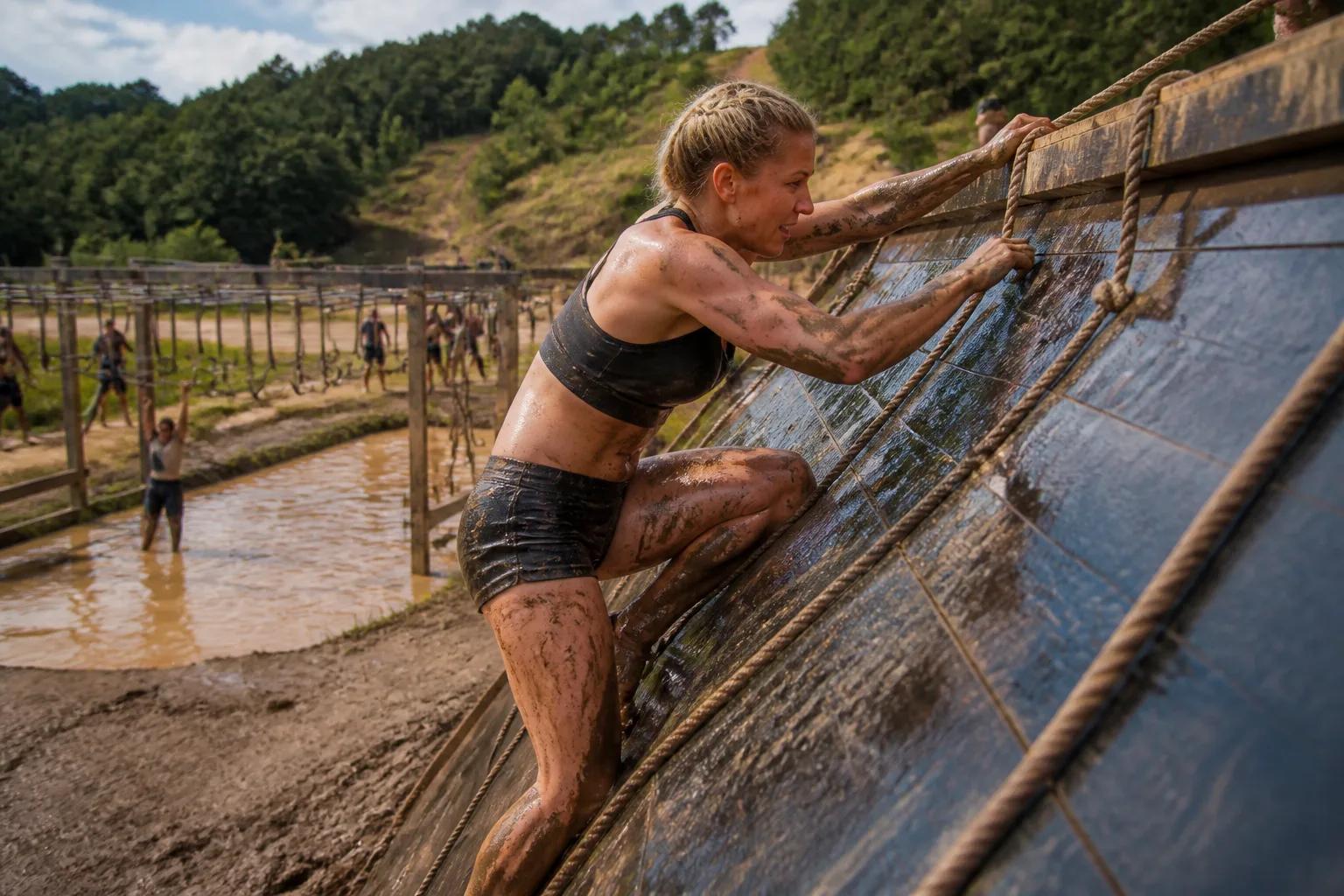
Obstacle course racing layers trail running with climbing, hanging, carries, crawls and high-impact landings, so endurance and grip fatigue rise together.
The training year
Recovery changes with the season
Preparation builds running, grip and landing capacity; in-season recovery must turn around the combined trail and obstacle load between events.
Apr–Oct
In-season
Primary outdoor race season, with repeated events, technical terrain and variable weather.
Protocols for this phase →Jan–Mar
Event prep
Strength, grip, trail-running and obstacle-skill build before the main event calendar.
Protocols for this phase →Wellness and training information, not medical advice. Recovery modalities are a support to good programming, sleep and nutrition — they do not treat, cure, or diagnose injury, and no session guarantees a performance outcome. Pain that persists or worsens deserves evaluation by a clinician or athletic trainer before you train through it.
The demands
What obstacle course racing asks of the body
Obstacle course racing changes rhythm constantly. Trail running supplies the aerobic base, then walls, carries, monkey bars, crawls and water or mud interruptions demand grip, pulling strength, bracing and rapid changes of movement. Fatigue matters twice: it slows the running and also degrades obstacle technique, especially during landings and descents. Courses range from short events to marathon distance, so kilometres alone do not describe the session; obstacle count, terrain, carries, water exposure and the time between races are equally important.
Also known as OCR, obstacle racing, mud run, Spartan Race, Tough Mudder
The load profile
- trail-running endurance
- grip and forearm endurance
- upper-body pulling
- loaded carries and trunk bracing
- jump landing and deceleration
From demands to modalities
What studios pair with this load
The demands above are the input. These are the modalities recovery studios commonly pair with that kind of load — read what each actually does before you book.
The load
- trail-running endurance
- grip and forearm endurance
- upper-body pulling
- loaded carries and trunk bracing
- jump landing and deceleration
What studios pair with it
Assisted stretch
Practitioner-assisted stretch
Pairs with: grip and forearm endurance · loaded carries and trunk bracing · jump landing and deceleration
What it does →Percussion therapy
Percussive / vibration
Pairs with: grip and forearm endurance
What it does →Float therapy
Quiet float tank
Pairs with: loaded carries and trunk bracing
What it does →Compression therapy
Air-pressure compression
Pairs with: jump landing and deceleration
What it does →A reading map, not a prescription — each page explains what a session involves and what the evidence shows. For condition-level evidence, start at the conditions library.
Gear and surface
What changes how the load lands
Two athletes on the same schedule can accumulate very differently depending on what they train on and in.
Shoe traction and drainage change footing in mud and water; gloves can alter grip feedback; weighted carries and obstacle dimensions change trunk and shoulder demand. Race-specific equipment should be tested before event day.
What tends to show up
Common complaints, and where to read more
Plain-language descriptions of what athletes in this sport report. Where a cited evidence guide exists, the entry links to it.
Muscle Strain / Pulled Muscle
A muscle strain is a stretch or tear of muscle fibers, commonly from sudden force, twisting, overuse, under-recovery, or insufficient warm-up.
Browse all conditions →Delayed Onset Muscle Soreness
Delayed onset muscle soreness is the one recovery target where the research is genuinely deep, and several modalities do reduce how sore you feel.
See the evidence →Knee Pain
Knee pain is discomfort in or around the knee joint from overuse, arthritis, injury, movement load, or irritation of muscles, tendons, ligaments, or cartilage.
Browse all conditions →TBI/concussion recovery
Concussion is a traumatic brain injury that can cause headache, fogginess, dizziness, light sensitivity, sleep changes, mood changes, and trouble concentrating. Studio routing…
Browse all conditions →Anterior cruciate ligament injury
A documented concern in obstacle-course research, especially around high-impact landing and deceleration. No matching condition record was found in the library, so it remains unlinked.
Browse all conditions →Near you
Find recovery near you
The directory behind Praxium — studios by city and modality. Start where coverage runs deepest, or browse everything.
Questions
Frequently asked questions
Is OCR basically trail running?
Trail running is the base, but the obstacles add hanging, pulling, carrying, crawling and landing under fatigue. Training only the run leaves grip and obstacle technique unprepared.
Why does grip fail so suddenly in a race?
Grip is repeatedly taxed after running, carries and wet or muddy contact. The forearms may look rested during running sections while still accumulating fatigue that appears at the next hanging obstacle.
What makes landings risky late in the course?
Fatigue can reduce control during jumps, drops and deceleration. Reviews identify high-impact landing features as an important lower-extremity concern, so obstacle technique and conservative decisions matter more than forcing one last attempt.
How close together should races be?
There is no single safe interval, but injury research associates denser competition exposure with more problems. Consider event distance, obstacle count, injury status and whether running, grip and landing quality have actually returned.
Are cuts and mud exposure just cosmetic?
No. Clean and protect broken skin, follow event hygiene guidance and seek care for deep wounds or signs of infection. Temporary soreness relief does not address skin or infection risk.
Keep exploring
Conditions referenced
Recovery goals
Guides
The beginner's guide to recovery modalities: what each one does and where to start →How often should you cold plunge? Dose, duration, and when more backfires →Contrast therapy: how to alternate hot and cold, and why the order matters →Red light therapy: what the evidence supports, and what it doesn't →Compression therapy: how pneumatic boots work and what they actually do →PEMF therapy explained: what pulsed magnetic fields can and can't do →Is whole-body cryotherapy worth it? A cost-benefit look →
Turn a season into a plan
Take the 2-minute Modality Match quiz and get a starting point built around how you train — which modalities to look at first, and which to run past a clinician.
Wellness and training information, not medical advice. Recovery modalities do not treat, cure, or diagnose any injury or condition and never replace care from a qualified clinician, athletic trainer, or physical therapist.